
The first thing my travelling companion said when we stepped into the Roman theatre at Salamis in late September was: "I had no idea it was this big." She was 71. She had bad knees. And she had just walked — slowly, with one rest on a fallen column — from the car park to the front row of seating, a distance of perhaps 400 metres across uneven limestone. She managed it. Just. But it took planning, the right month, and a realistic conversation beforehand about what the day would actually look like.
That is the central tension of a Famagusta family holiday with older children or grandparents in tow: east Cyprus rewards curiosity and patience, but it does not reward wishful thinking about distances, heat, or the absence of shade. Get the timing right, however, and this stretch of coastline — from Famagusta's Venetian walls down to the Karpas peninsula — offers something genuinely rare: serious history and genuinely swimmable beaches within a few kilometres of each other, without the package-holiday crowds of the south.
The Problem: East Cyprus Does Not Forgive Bad Timing
Families booking a Cyprus east coast holiday often make the same mistake. They look at the map, see Long Beach Iskele sitting alongside the ruins of Salamis, imagine a morning of culture followed by an afternoon in the sea, and book for July. Then they arrive to find 38°C heat, no shade at the archaeological site, and a grandparent who has quietly decided the hotel pool is quite sufficient, thank you.
July and August on the east coast of Cyprus are brutal by any honest measure. Daytime temperatures regularly exceed 37°C, and the limestone ruins at Salamis — which cover roughly 1.5 square kilometres — offer almost no natural shade. The gymnasium and baths complex, the most impressive section, is entirely exposed. The Roman theatre faces south. By 10am the stones are hot enough to be uncomfortable to touch.
There is also the question of crowds. Long Beach, the long sandy strip running north from Iskele (also called Trikomo) toward the Karpas, is quieter than Ayia Napa — but in high summer it fills with Turkish and Turkish Cypriot families, and the beach bars around Bogazi get genuinely busy on weekends. For a grandparents Cyprus trip built around slow mornings and uncrowded water, this is not ideal.
The second timing mistake is the opposite: booking November through February expecting mild Mediterranean warmth and finding instead grey skies, choppy seas, and heritage sites that feel melancholy rather than atmospheric. The ruins are open year-round, but swimming at Long Beach before late April or after mid-October is, for most people over 60, more theoretical than practical.
Why the Month You Choose Changes Everything
East Cyprus has a sharper seasonal swing than many British travellers expect, partly because it sits further east than anywhere else in the EU — closer to Beirut than to Athens — and partly because the Mesaoria plain behind Famagusta has no mountains to moderate summer heat the way the Troodos does in the south.
Here is what that actually means in practice, month by month:
| Month | Avg High (°C) | Sea Temp (°C) | Heritage Comfort | Beach Viability | Crowds |
|---|---|---|---|---|---|
| April | 22 | 19 | Excellent | Marginal (brave swimmers) | Very low |
| May | 27 | 22 | Very good | Good | Low |
| June | 32 | 25 | Acceptable (early mornings only) | Excellent | Moderate |
| July | 37 | 27 | Poor | Excellent | High |
| August | 38 | 28 | Poor | Excellent | High |
| September | 34 | 27 | Good (late afternoon) | Excellent | Moderate–Low |
| October | 28 | 25 | Excellent | Very good | Very low |
| November | 22 | 22 | Good | Marginal | Minimal |
For multi-generational groups — say, parents in their 50s, grandparents in their 70s, and teenagers who want actual beach time — the sweet spots are May and October. Both offer manageable heat at the ruins, warm enough sea for enthusiastic swimmers, and a noticeable absence of the August crush.
The Solutions: Month-by-Month Strategies That Actually Work
May: The Consensus Choice
May is the month that tends to satisfy everyone without requiring military-level logistics. Temperatures at Salamis hover around 26–28°C by midday, which is warm but not punishing. The sea at Long Beach reaches 22–23°C — cold enough to feel refreshing, warm enough that a 70-year-old will actually get in. Wildflowers are still visible on the Karpas, the beach bars at Bogazi are open but not rammed, and you can get a sunbed at Long Beach without arriving at 8am.
A workable May day for a mixed-age group: arrive at Salamis by 9am (the site opens at 8am, entry is around 6 euros per person as of 2026). Spend two hours at the gymnasium and theatre, with a rest at the cisterns. Leave by 11am before the heat builds. Drive the four kilometres to Long Beach, claim sunbeds, eat grilled fish at one of the beachfront places near the Karpas Gate Marina end of the strip, and spend the afternoon in the water. Back to the hotel by 5pm. Nobody is destroyed.
October: The Underrated Month
October is arguably better for heritage, worse for beach purists. The sea stays at 24–25°C well into the month — perfectly swimmable — but afternoons can cloud over from mid-October onward. What October gives you is Salamis in genuinely comfortable temperatures, the possibility of having the site almost to yourself on a weekday, and a quality of light on the ruins in the late afternoon that is, frankly, extraordinary. The low sun catches the columns of the gymnasium at about 4pm and turns them amber. If you have a teenager who is indifferent to Roman history, that light might change their mind.
The practical issue with October for families flying from the UK is that school half-term (usually the last week of October) coincides with the tail end of the season, and flights from regional airports get expensive. Book early — by January 2026 for October travel — and you can still find reasonable fares from Manchester, Birmingham, or Bristol to Larnaca, from where the drive to Famagusta is around 45 minutes.
June: Possible, With Discipline
June works if the group accepts a strict timetable: heritage before 10am, beach from 11am to 5pm, nothing strenuous after lunch. The ruins at Salamis are manageable in early June; by late June you are pushing into July territory and the heat becomes genuinely oppressive by mid-morning. The beach at this point is excellent — sea temperature around 25°C, long evenings, the fish restaurants at Bogazi buzzing pleasantly. For families where the teenagers' votes carry more weight than the grandparents', June is probably the compromise.
September: The Late Booker's Option
Late September is increasingly popular with British travellers who have figured out what the east coast offers. School has restarted, so families with younger children have left, but for those with older children or grandchildren, the third week of September is a genuine find. Heat is dropping — 32–34°C rather than 38°C — the sea is at its warmest of the year, and Salamis is quiet. The one caveat: some of the smaller beach bars at Bogazi start winding down from mid-September, and the sunbed concessions on Long Beach thin out. Come prepared to bring your own shade.
What to Skip: Honest Advice Nobody Puts in the Brochure
A Famagusta family holiday guide that only tells you what is wonderful is not doing its job. Here is what genuinely does not work for multi-generational groups:
- Salamis in July or August without a very early start. The site has no café, no consistent shade, and the paths between sections are unpaved. If you must go in high summer, be there at 8am and leave by 10am. This is not a casual suggestion.
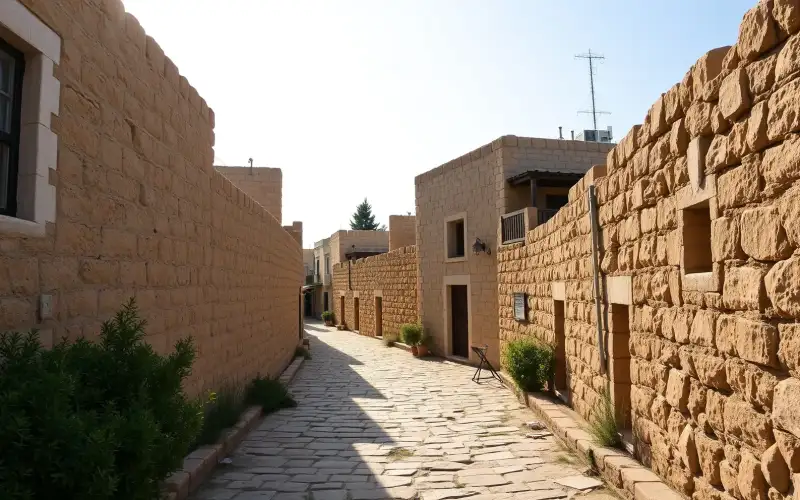
- The old walled city of Famagusta (Gazimağusa) at midday in summer. The streets are narrow and trap heat. The Lala Mustafa Pasha Mosque (the former Cathedral of Saint Nicholas) is magnificent, but visit it in the morning or late afternoon. The walk from the Land Gate to the cathedral is about 600 metres but feels longer in 37°C heat on cobblestones.
- The Karpas peninsula as a day trip with elderly travellers in July. The drive from Famagusta to the tip of the Karpas at Cape Apostolos Andreas is around 100 kilometres on roads that become progressively narrower and less maintained. It is a wonderful journey in May or October. In August, with air conditioning working hard and a grandparent who needs regular stops, it becomes an ordeal. Save it for a cooler month or make it a two-day trip with an overnight at one of the small guesthouses near Dipkarpaz.
- Long Beach on a Saturday in August. The beach is long enough that it never becomes Nissi-level chaotic, but the northern end near the marina gets genuinely busy on summer weekends. Weekday mornings are a different experience entirely.
Practical Logistics for Multi-Generational Groups
A few things that make a material difference and that travel agents rarely mention:
Getting Around
There is no useful public transport between Famagusta, Salamis, and Long Beach Iskele. A hire car is not optional for a family holiday in this part of Cyprus — it is the entire infrastructure of the trip. Book a vehicle large enough to be comfortable: a seven-seater if you have four or more people, because the roads to the Karpas are narrow and the luggage space in a standard saloon disappears fast. Driving is on the left, as in the UK, which removes one anxiety.
Accommodation
The hotel strip along Long Beach Iskele has expanded considerably since 2020. Several large resort hotels now operate along the seafront, some with the shallow-entry pools that matter for older swimmers. For grandparents Cyprus trip logistics, ground-floor rooms or lifts are worth confirming before booking — not all hotels in the area have been built with accessibility in mind.
The Currency Question
Northern Cyprus uses the Turkish lira, not the euro. In 2026, with the lira continuing its long decline against sterling, east Cyprus remains extremely good value for British visitors. A full lunch for four at a fish restaurant in Bogazi — grilled sea bass, salads, bread, local beer — typically costs under £25 total. Sunbed hire on Long Beach runs around 5–8 lira per bed per day, which at current rates is negligible. Carry some cash; smaller beach bars and car parks do not always take cards.
Heritage Site Access
Salamis is the main site and the most accessible. The gymnasium section has a reasonable path surface. The theatre has stepped seating but no lift — grandparents who struggle with steps can view it from the lower level, which is still impressive. The Royal Tombs, a few kilometres north of the main site, involve more uneven ground and are better suited to the more mobile members of the group. Enkomi, the Bronze Age site near Tuzla, is extraordinary but entirely without facilities — worth it in April or October, less so in July.
"The thing about Salamis," a Cypriot archaeologist told me years ago, "is that it was never finished being excavated. What you see is maybe thirty percent of what is there. The rest is still underground." That sense of incompleteness — of a city still being discovered — is part of what makes it unlike any other site on the island.
The Honest Verdict: April, May and October Win
If you are planning a Famagusta family holiday for 2026 and the group includes anyone over 65 or anyone under 18 with opinions about beach quality, the answer is May or October. April works beautifully for the heritage and the walking, less so for committed swimmers. June is a reasonable compromise if the teenagers are lobbying hard. July and August are for beach-only holidays where Salamis is a brief, early-morning excursion rather than the centrepiece.
East Cyprus rewards the traveller who arrives with realistic expectations and a loose itinerary. The ruins are extraordinary. Long Beach on a quiet Tuesday in May, with the Karpas hills visible to the north and almost nobody else on the sand, is one of those places that makes you wonder why everyone is still queuing for a sunbed in Protaras. The answer, presumably, is that they have not been told.
The east is not the easiest part of Cyprus to navigate — politically, logistically, or emotionally. But for families willing to do a little homework, it offers something the package resorts cannot: the feeling that you have found something real.


Comments (4 comments)