
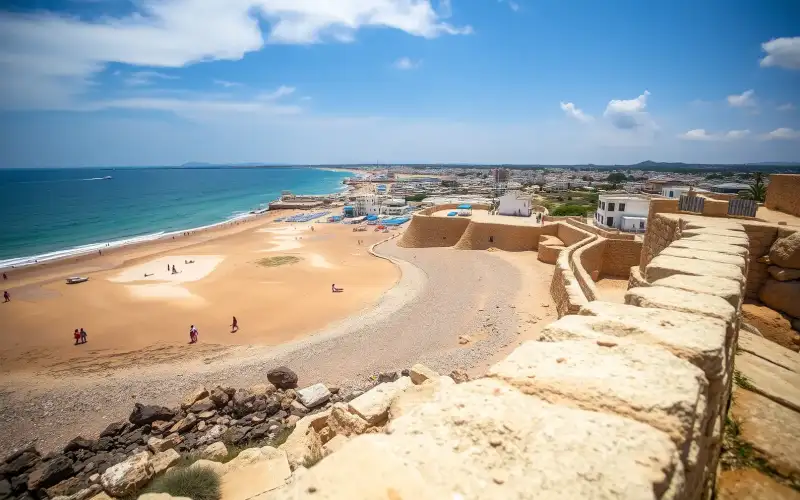
The first time I drove the dirt track to Nangomi — the name locals still use for what the tourist maps call Golden Beach — I arrived in late October to find the beach entirely empty. Not a sunbed in sight, no quad bikes, no ice cream van. Just four kilometres of pale sand, a herd of semi-wild donkeys wandering the dunes, and the kind of silence that makes you check your ears. I sat there for two hours and saw exactly three other people. That experience ruined me for every other beach on the island.
But timing is everything at Golden Beach. Come in the wrong month and you're fighting heat that would flatten a camel, or arriving to find turtle nesting zones roped off, or discovering the one beach café has shut for winter. Get it right and you have one of the Mediterranean's last genuinely wild beaches almost to yourself. This breakdown is designed to help you make that call.
Why Golden Beach Is Different From Every Other Cyprus Beach
Golden Beach sits at the very tip of the Karpas Peninsula — the long finger of land that points northeast toward Turkey and Syria. It's about 100 kilometres from Famagusta, and the last 15 of those are on roads that range from rough tarmac to pure adventure. That distance is the point. It keeps the day-trippers honest.
The beach itself — Nangomi Bay — stretches for roughly 4.5 kilometres and faces northeast, which means it catches the breeze differently from the south-coast resorts. The sand is fine and pale gold, the water extraordinarily clear, and the dunes behind it are protected habitat. Loggerhead sea turtles (Caretta caretta) nest here every summer, making Golden Beach one of the most important nesting sites in the entire eastern Mediterranean. That fact shapes the entire seasonal calendar.
"Nangomi isn't a beach you visit casually. It asks something of you — a long drive, a bit of planning, a willingness to arrive without guarantees. In return it gives you something no resort beach ever could."
There are a handful of small guesthouses and a beach restaurant near the northern end, but no hotels, no water sports concessions, no beach bars pumping music. The infrastructure is minimal by design. If you want sunbeds, they exist in small numbers near the café. If you want four kilometres of empty sand, walk south.
The Turtle Nesting Calendar: What It Means for Your Visit
This is the non-negotiable factor. Loggerhead turtles begin coming ashore to nest from late May, with peak nesting running through June and into early July. Hatchlings emerge from late July through September. During this period, sections of the beach are cordoned off — typically with low rope barriers and signs — to protect active nests.
The restrictions are real but not dramatic. You won't be turned away from the beach. What you will find is that certain stretches are off-limits for sunbathing or walking after dusk, and that the beach is patrolled in the evenings by conservation volunteers. Night swimming near nesting zones is discouraged because artificial light disorients hatchlings trying to find the sea.
What the nesting season actually looks like on the ground
In June and July, you might see turtle tracks in the morning sand — the distinctive flipper drag marks leading up from the water and back. Nest markers (small cages or flags) dot the beach. Volunteers from the Society for the Protection of Turtles (SPOT) are often present at dawn and dusk. For wildlife-focused travellers, this is genuinely thrilling. For families wanting an unrestricted beach day, it requires a bit of awareness about where you pitch your towel.
Hatchling emergence is the real spectacle. From late July onward, tiny turtles appear at night and scramble toward the sea. If you're camping near the beach (there's a basic campsite at the northern end) and you're lucky with timing, you might witness this without any organised tour. It's one of those wildlife moments that stays with you for years.
Month-by-Month Breakdown
January and February: Absolute solitude
The beach café is closed. The guesthouses may be shut or running skeleton service — ring ahead. Daytime temperatures sit around 14–17°C, which is fine for walking but cold for swimming. The sea temperature drops to around 17°C. What you get is the Karpas entirely to yourself, dramatic winter light, and the kind of raw coastal landscape that feels genuinely remote. I've walked the full length of the beach in February without seeing another soul. The donkeys are always there, though.
March and April: The sweet spot opens up
This is when the peninsula wakes up. Temperatures climb to 19–23°C, wildflowers carpet the scrubland behind the dunes, and the sea reaches a swimmable 19–20°C by late April. The beach café typically reopens around Easter. Turtle nesting hasn't started yet, so the beach is completely unrestricted. Crowds are minimal — you might share the beach with a handful of other travellers and some local families at weekends. For slow travellers who want beauty without heat stress, April is arguably the single best month.
May: The last quiet month before summer
Early May still feels uncrowded and the weather is glorious — mid-20s, low humidity, sea around 22°C. By the third week of May, the first turtles are coming ashore at night and nesting season officially begins. Daytime visits are still unrestricted, but you'll notice the first conservation markers appearing. This is also when the peninsula's guesthouses start filling up at weekends. Book accommodation at least three weeks ahead if you're visiting in late May.
June: Hot, busy, but spectacular for wildlife
Peak nesting season. Temperatures regularly hit 32–35°C by midday, and the drive out from Famagusta takes on a slightly punishing quality if your hire car's air conditioning is marginal (ask me how I know). The sea is a perfect 25–26°C. The beach sees its highest visitor numbers of the year, though "busy" at Golden Beach means perhaps 200–300 people spread across 4.5 kilometres, which by any normal beach standard is still quiet. Come early — before 9am — to see turtle tracks and have the sand to yourself before the heat builds.
July and August: Peak summer, maximum heat
This is the full Mediterranean summer experience. Temperatures can reach 38°C inland, though the northeast-facing beach catches more breeze than the south coast. Sea temperature peaks at 28°C. Hatchlings begin emerging from late July. If you're visiting in August specifically to see hatchlings, contact the SPOT volunteers in advance — they can sometimes advise on which nests are close to emergence, though nothing is guaranteed. Bring more water than you think you need. The road to the beach offers no shade and no services for the final 15 kilometres.
September: The best of both worlds
Temperatures drop to a more manageable 28–30°C. The sea is still 27°C and gorgeous. Hatchling season continues into mid-September. The summer visitor numbers thin out noticeably after the first week of September as European school terms begin. By the third week, you can find long stretches of beach with almost no one on them. September is my personal favourite month — the wildlife is still active, the swimming is perfect, and the oppressive heat has backed off.
October: Autumn gold
The beach café may start reducing hours from mid-October. Sea temperature is still around 24–25°C — excellent swimming. Turtle season is over, all nesting zones are open. The light is extraordinary in October, that low golden afternoon quality that makes the sand look almost luminous. Karpas wildflowers begin their autumn flush. This is the month I keep recommending to friends who are nervous about heat but still want a proper swim.
November and December: Closing down
The café closes, usually by early November. Guesthouses may stay open but with limited service. Swimming is possible on warm days — sea temperature around 22°C in November, dropping to 19°C in December. The peninsula has a melancholy beauty in winter that genuinely appeals to a certain type of traveller. If you're combining Golden Beach with exploring Famagusta's old city or the ruins at Salamis, a November trip makes perfect sense — you won't be fighting anyone for a parking space at either.
Practical Comparison: Choosing Your Month
| Month | Air Temp (°C) | Sea Temp (°C) | Turtle Activity | Crowds | Café Open |
|---|---|---|---|---|---|
| Jan–Feb | 14–17 | 17 | None | Empty | No |
| March | 18–21 | 18–19 | None | Very low | Sometimes |
| April | 20–24 | 19–21 | None | Low | Yes |
| May | 24–28 | 22–23 | Nesting begins late May | Low–moderate | Yes |
| June | 30–35 | 25–26 | Peak nesting | Moderate | Yes |
| July–Aug | 34–38 | 27–28 | Nesting + hatchlings | Moderate–high | Yes |
| September | 28–31 | 26–27 | Hatchlings to mid-Sept | Low–moderate | Yes |
| October | 23–27 | 24–25 | None | Low | Reduced hours |
| Nov–Dec | 17–21 | 19–22 | None | Very low | No |
Expert Tips for Getting the Most From Golden Beach
The drive matters — plan it properly
From Famagusta, take the main road north through Iskele (Trikomo) and follow signs for Dipkarpaz (Rizokarpaso). From Dipkarpaz, it's around 20 kilometres to the beach on a road that deteriorates progressively. A standard hire car handles it fine in dry conditions, but after winter rain the final stretch can be muddy. Fill up with fuel in Dipkarpaz — there are no petrol stations beyond the village. In 2026, the road has seen some improvement works near the village, but the final approach remains unmade track in places.
Water and supplies: bring everything
The beach café (when open) sells drinks, simple food and ice cream. That's it. For anything else — sunscreen, snacks, a proper lunch — bring it from Famagusta or Dipkarpaz. There's a small market in Dipkarpaz that's reliable for basics. I always pack a cool box: the drive back in July heat with nothing to drink is genuinely unpleasant.
Camping at the northern end
There's a basic campsite near the Nangomi restaurant at the north end of the beach. Facilities are minimal — toilets, cold showers in summer, a tap. Pitching fees in 2026 are around 10–15 euros per night. If you're planning to camp during turtle season, be scrupulous about leaving no light sources pointing toward the beach after dark, and keep noise down near the dune areas. The conservation volunteers appreciate it and you'll have a better chance of witnessing hatchling activity undisturbed.
Respect the donkeys
The semi-wild donkeys of the Karpas are famous and they do wander onto the beach, especially in the early morning and evening. They're not aggressive but they will investigate your picnic. Don't feed them human food — it causes genuine digestive problems — and don't approach foals. Enjoy them from a distance. They're part of what makes this place feel like it exists outside normal time.
"The donkeys appeared at six in the morning, seven of them walking single file along the waterline. The light was pink and the sea was flat. I had set up my tent the night before and was making coffee on a small stove. There was nowhere else I would rather have been."
Making Your Decision: Matching Month to Motive
If your priority is wildlife — specifically turtles — then June through mid-September is your window, with late July to early September offering the best hatchling chances. Accept the heat as part of the deal and plan your beach time for early morning and late afternoon.
If you want the best swimming with manageable temperatures and some life on the beach, September and October are the months to target. The sea is still warm, the worst of summer has passed, and you'll have the place largely to yourself.
If you want absolute solitude and don't mind forgoing a swim, January to March delivers an experience that's genuinely hard to find anywhere in the Mediterranean. You'll need to be self-sufficient — bring all your own food and water — but the reward is a wild beach in winter that feels like a secret the rest of the world hasn't found yet.
April and May sit in a middle ground that suits most travellers: good weather, swimmable sea, open café, no extreme heat, and the wildlife season just beginning. For first-time visitors to Golden Beach who want a reliable, comfortable experience, I'd start there.
Whatever month you choose, leave Famagusta early. The drive is part of the experience — the Karpas unfolds slowly, and Golden Beach is not a place that rewards rushing.


Comments (2 comments)