
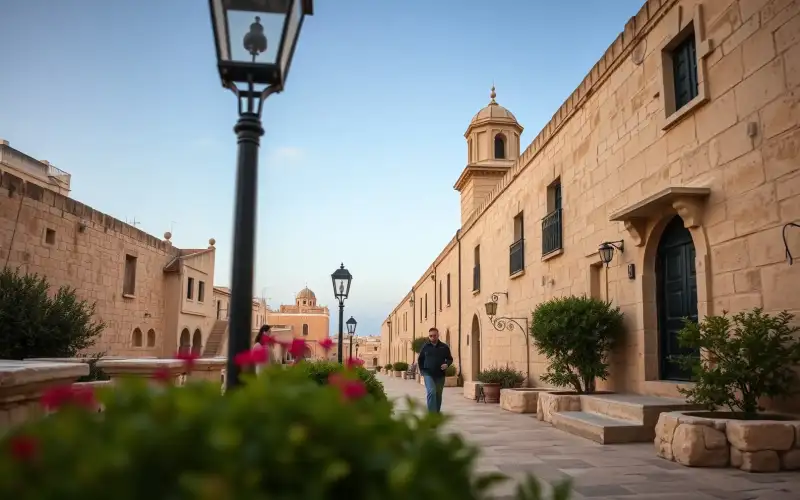
The first time I arrived in Famagusta in late March, I stepped through the Venetian walls into a city that smelled of orange blossom and old stone — and found a cat asleep on a Byzantine capital in the middle of the street. Nobody else was there. That, more than any guidebook statistic, is what spring in this corner of Cyprus actually feels like.
If you're weighing up when to come, let me be direct: March to May 2026 is almost certainly the best window you'll find. The temperatures are civilised, the Karpas peninsula is smothered in wildflowers, Salamis is walkable without sunstroke, and the tourist infrastructure is functioning without being overwhelmed. By June, the heat arrives in earnest and the day-trippers follow.
What Spring Actually Feels Like Here
Famagusta sits on the eastern coast of Cyprus, sheltered from the Troodos mountains that wring the rain from westerly weather systems. The town gets a drier, warmer spring than Nicosia or Paphos — which suits it perfectly. March mornings can be brisk enough to want a light jacket at seven o'clock, but by eleven you're in shirtsleeves walking along the old harbour wall.
Average daytime temperatures in Famagusta run roughly 18–20°C through March, climbing to 22–25°C in April and nudging 27–28°C by mid-May. Rain is possible in March — usually short, dramatic showers rather than grey drizzle — and by April it becomes increasingly rare. The sea temperature in March is around 18°C, which is bracing rather than inviting for swimming, but by mid-May it's reached 22°C and perfectly pleasant.
There's a particular quality of light in April on this coast — low-angled, honey-coloured in the morning, turning almost white at noon — that I've tried to capture in watercolour more times than I can count. It makes the sandstone of the Venetian walls glow like something from a manuscript illumination.
Evenings in April and May are the real gift. You can sit outside at a restaurant on Namik Kemal Square until ten at night without a coat, watching swifts wheel above the Lala Mustafa Pasha Mosque (the former Cathedral of Saint Nicholas), and feel entirely content with the world.
The Wildflowers: What to Expect and Where
Cyprus has around 1,800 plant species, of which roughly 140 are endemic — found nowhere else on earth. Spring is when this botanical wealth becomes visible, and the Karpas peninsula is where it reaches its most spectacular expression.
The Karpas in March and April
Drive northeast from Famagusta towards Rizokarpaso (Dipkarpaz) and the roadside verges become extraordinary from mid-March onwards. Wild orchids — including the bee orchid, mirror orchid, and the endemic Cyprus bee orchid — push up through the red soil. Anemones in purple, white and scarlet carpet the fields around Koma tou Yialou (Kumyali). Crown daisies turn whole hillsides yellow. By early April, the cistus — rock roses in pink and white — are opening on the scrubby hillsides above the coast road.
The Apostolos Andreas Monastery at the peninsula's tip makes a natural destination for a wildflower drive. The road there passes through some of the least-disturbed garrigue habitat in the eastern Mediterranean, and in April you'll see asphodels, wild gladioli, and if you stop and look carefully, the tiny Cretan bee orchid in the rough grass beside the road. Allow a full day for this excursion — it's 75 kilometres from Famagusta to the monastery, and you'll want to stop repeatedly.
Wildflowers in and Around Famagusta Itself
Don't overlook the ruins within the walled city. The abandoned district of Varosha (Maraş), partially reopened since 2020, has decades of undisturbed growth pushing through cracked concrete — wild figs, capers cascading from old walls, and in spring, scarlet poppies in improbable quantities. The area around Salamis, just four kilometres north of the city, is equally rewarding: Roman columns standing in meadows of wild barley and chamomile, with hoopoes bobbing between them.
Salamis in Spring: The Practical Case
Salamis is, by any measure, one of the most significant archaeological sites in the eastern Mediterranean. Founded, according to tradition, by the Trojan War hero Teucer, it flourished under the Ptolemies and Romans before earthquakes and Arab raids reduced it to the magnificent ruin we see today. The site covers several square kilometres of gymnasium, theatre, royal tombs, basilicas and colonnaded streets — and in summer, visiting it is genuinely punishing.
In April, it's a different proposition entirely. The temperature at ten in the morning is around 22°C, there's usually a sea breeze off Famagusta Bay, and the site receives perhaps a tenth of its July visitor numbers. You can stand in the gymnasium — that extraordinary colonnade of re-erected Roman columns reflected in the ancient swimming pool — and have it almost to yourself.
Practical Details for Salamis
- Opening hours (spring 2026): Daily 08:00–19:00 (last entry 18:30)
- Entry fee: Approximately 7 TL per person (check current rates — North Cyprus prices fluctuate with the lira)
- Getting there from Famagusta: Dolmuş (shared minibus) from the bus station on Gazi Mustafa Kemal Bulvarı, or a 15-minute taxi ride costing around £6–8
- Time needed: Allow a minimum of two hours; three is more comfortable if you want to reach the tombs of the kings section
- Facilities: Small café near the gymnasium entrance, basic toilets; bring water
The Royal Tombs site, a separate ticket and a short drive north of the main Salamis entrance, is worth the extra stop. In spring, the dromos — the long processional corridors leading down to the burial chambers — are lined with wild herbs: thyme, sage, oregano. The smell alone is worth the detour.
Famagusta's Walled City: Spring Rhythms
The Venetian walls of Famagusta enclose one of the most intact medieval city cores in the world. Within them, the Cathedral of Saint Nicholas (now the Lala Mustafa Pasha Mosque), the Othello Tower, the ruins of the Church of Saints Peter and Paul, and dozens of smaller chapels and palaces create a landscape that rewards slow exploration rather than a rushed tour.
Spring is when the walled city feels most alive. The local community — predominantly Turkish Cypriot, with a growing number of settlers from mainland Turkey — is out in the streets in a way that simply doesn't happen in the heat of summer. The market near the Land Gate is busy on weekday mornings with produce from the Mesaoria plain: early tomatoes, bundles of fresh herbs, the first strawberries from the fields around Trikomo.
A Suggested Half-Day Walk
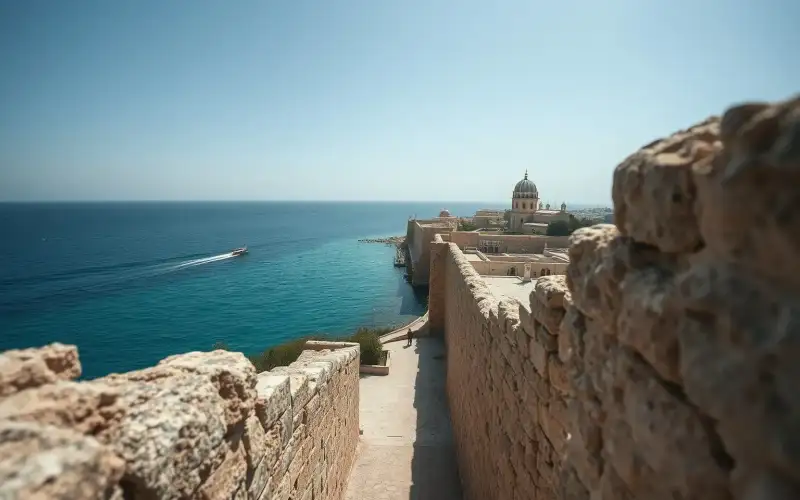
Start at the Land Gate (Porta del Terre) at nine in the morning, when the light is still low and the stone still cool. Walk north along the inside of the walls to the Ravelin bastion, then cut through the old streets to the cathedral square. Spend an hour in and around the mosque — non-Muslim visitors are welcome outside prayer times, and the Gothic interior, stripped of its Catholic furnishings but retaining its soaring proportions, is remarkable. From there, walk east to the Othello Tower, where you can climb the battlements for views across the harbour and, on clear days, the mountains of the Turkish coast forty miles away.
Allow time to simply sit in one of the small cafes near the square. Order a Cyprus coffee — served with a glass of cold water — and watch the square do its morning business. This is slow travel in its truest form.
Planning Your Spring 2026 Itinerary
| Day | Focus | Key stops | Best time of day |
|---|---|---|---|
| Day 1 | Famagusta walled city | Land Gate, cathedral/mosque, Othello Tower, harbour | Morning walk, afternoon café |
| Day 2 | Salamis & Royal Tombs | Gymnasium, theatre, Royal Tombs, Enkomi (Bronze Age site nearby) | Early morning start |
| Day 3 | Karpas wildflower drive | Koma tou Yialou, Rizokarpaso, Apostolos Andreas | Full day, start by 8am |
| Day 4 | Varosha & beach | Maraş open area, Glossa Beach or Palm Beach | Morning exploration, afternoon swim |
This four-day structure gives you the core of the region without rushing. If you have a fifth day, the drive inland to Kantara Castle — the easternmost of the three great Lusignan mountain fortresses — takes you through the Five Finger Mountains with views back down to Famagusta Bay that are genuinely arresting in spring light.
Getting There and Staying
Most British visitors in 2026 will arrive via Ercan Airport (ECN) in the north, served by charter flights from several UK airports, or via Larnaca in the Republic of Cyprus with a land crossing at Metehan or Akyar. The crossing is straightforward with a British passport — typically fifteen minutes each way — and opens up the option of basing yourself in Famagusta while using Larnaca for arrival and departure.
Famagusta has a handful of hotels within or immediately outside the walls — the Portofino Hotel on the harbour and the Palm Beach Hotel south of the city are the most established options. In spring 2026, expect to pay £60–90 per night for a decent double room with breakfast. Self-catering apartments, increasingly available through the usual booking platforms, offer more flexibility and typically run £45–70 per night.
I've always found that staying inside the walls, even in a modest room, changes the quality of the experience entirely. At six in the morning, before the day begins, you can walk those empty streets and feel the weight of the centuries in a way that no day-tripper ever quite manages.
Who Is This Trip For — And Who Should Wait
Spring Famagusta is genuinely well-suited to independent travellers who want substance over spectacle. History enthusiasts will find the density of significant sites — Salamis alone could occupy three days for a serious student of the ancient world — almost overwhelming in the best possible way. Walkers and slow travellers will appreciate the manageable temperatures and the fact that the region rewards unhurried exploration on foot or by bicycle.
Birdwatchers should note that the Karpas in April is on a major migration flyway, and the peninsula's wetlands and scrubland attract significant passage migrants — warblers, flycatchers, rollers, and occasional rarities blown in from Africa. The small reservoir near Rizokarpaso is worth checking.
If you're travelling with young children who need beach entertainment and water parks, or if you're primarily interested in nightlife and resort amenities, spring Famagusta is probably not your destination. The infrastructure is modest, the pace is slow, and the pleasures are largely intellectual and sensory rather than recreational in the conventional sense. That is precisely its appeal for the traveller who knows what they're looking for.
Come in March if you want the wildflowers at their absolute peak and don't mind the occasional shower. Come in April for the best all-round balance of weather, flowers, and uncrowded sites. Come in early May if you want the warmest swimming and the longest evenings — but book accommodation early, as the better places fill up as the season builds.

Comments (4 comments)