
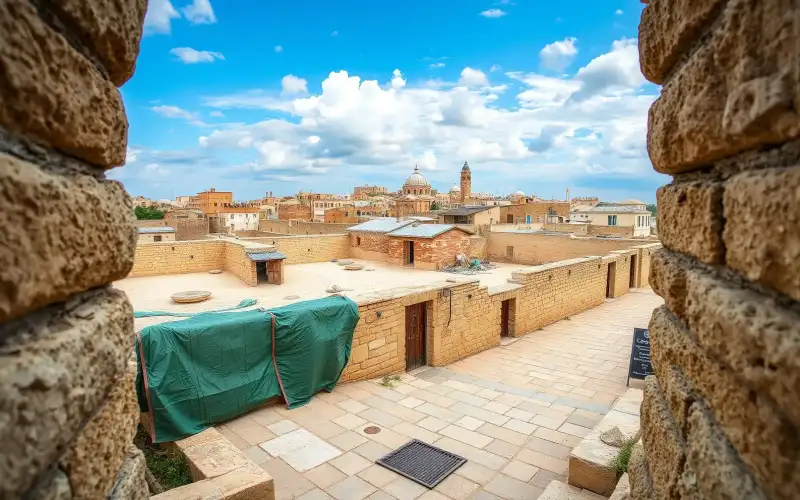
The first time I drove through the Land Gate into Famagusta old town, I nearly stalled the car. Not because of the traffic — there isn't much — but because the sight of those honey-coloured Venetian bastions rising fifteen metres above the moat stopped me cold. I'd been told to expect something special. I hadn't been told to expect something that felt genuinely untouched, a medieval city still wearing its sixteenth-century skin.
Famagusta's walled city is, by most measures, the best-preserved Venetian fortification in the eastern Mediterranean. The walls stretch nearly three kilometres in a rough rectangle around the old town, punctuated by fifteen bastions and two main gates. Inside, Gothic cathedral ruins stand next to functioning Ottoman mosques, Lusignan palaces crumble beside Cypriot coffee shops, and cats sleep on cannon emplacements that once defended the island against the Ottoman fleet. It is, in short, extraordinary — and in 2026 it remains far less visited than it deserves.
This guide is built for slow travellers who want to do it properly: on foot, with context, knowing where to stop and when to start. I've walked these streets more times than I can honestly count. Here's what I know.
Before You Go: Practical Essentials
Famagusta sits in the north of Cyprus, administered by the Turkish Cypriot authorities. You enter via the Metehan/Agios Dometios crossing from the Republic of Cyprus side, or directly from the north if you're already there. The crossing is straightforward — bring your passport, not just an ID card — and takes around fifteen minutes in normal conditions.
The old town is compact enough to walk entirely in a day, but two half-days is a more civilised approach, especially in summer. From June to September, temperatures regularly hit 38°C by early afternoon. Start walking by 8am, retreat for lunch and a long coffee around noon, then head back out after 4pm when the light turns golden and the heat backs off.
| Attraction | Opening Hours (2026) | Entry Fee |
|---|---|---|
| Lala Mustafa Pasha Mosque (St Nicholas Cathedral) | Daily, closed during prayer times | Free (donations welcome) |
| Othello Tower (Citadel) | Mon–Fri 09:00–17:00, Sat 09:00–14:00 | Approx. 3 TL / £1 |
| Venetian Walls rampart walk | Open access, dawn to dusk | Free |
| Namık Kemal Prison Museum | Mon–Sat 09:00–13:00, 14:00–17:00 | Nominal fee |
| Church of St Peter and St Paul (Sinan Pasha Mosque) | Occasionally open; check locally | Free when open |
Wear proper shoes. The cobblestones are uneven, the rampart paths are rough in places, and the heat radiates up from the stone in summer. A hat and a water bottle are not optional accessories — they're survival gear.
1. The Land Gate: Where Every Walk Should Begin
Start at the Land Gate, the main southern entrance to the walled city. Built by the Venetians in the 1490s, it's a double-arched structure flanked by the Ravelin — a triangular outwork designed to make attackers' lives miserable. The gate still functions as a road entrance, which means you get the slightly surreal experience of walking through a five-hundred-year-old military fortification while a delivery van trundles past.
Stand on the wooden bridge over the dry moat and look up. The moat itself is now a park, planted with eucalyptus and palms, where local families walk in the evenings. The scale of the engineering here is humbling — the moat is twelve metres deep in places. The Venetians weren't messing around.
Just inside the gate, on your right, is a small café that opens early. Get a coffee here before you start. It sets the tone.
2. The Venetian Walls: Walking the Ramparts
The walls themselves are the main event, and you can walk significant stretches of them for free. The best accessible section runs from the Ravelin northward along the western wall, passing the Martinengo Bastion — widely considered the finest example of Venetian military architecture in the world. The Martinengo is a masterpiece of angled geometry, designed by Girolamo Sanmicheli specifically to deflect cannon fire. It has never been breached.
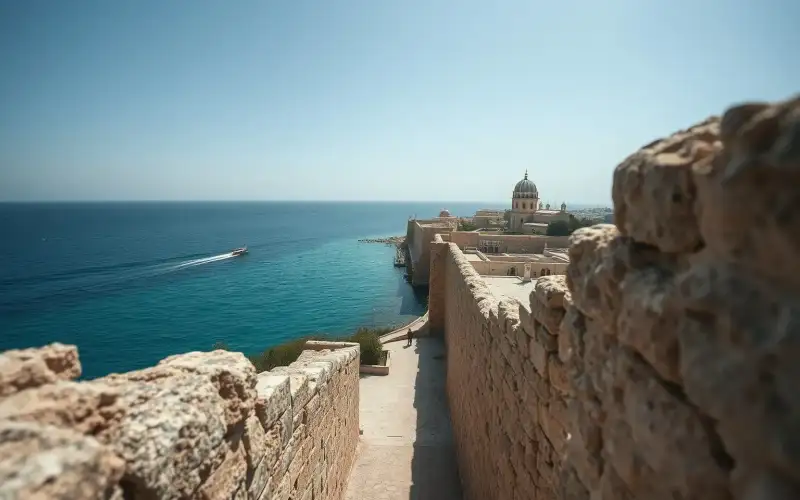
The rampart walk gives you elevated views over the old town rooftops and, on the eastern side, out toward the sea and the Karpas peninsula beyond. On a clear morning you can see the Kyrenia mountains to the west. The path is uneven and unguarded in places — not suitable for anyone with mobility concerns — but for anyone who can manage a rough track, it's one of the great free walks in the eastern Mediterranean.
The Martinengo Bastion alone is worth the trip to Famagusta. I've shown it to architects, historians and people who just like big things, and it stops all of them in their tracks.
Allow at least an hour for a partial rampart circuit. A full circuit on foot, where access permits, takes around two and a half hours at a leisurely pace.
3. Lala Mustafa Pasha Mosque: The Cathedral That Became a Mosque
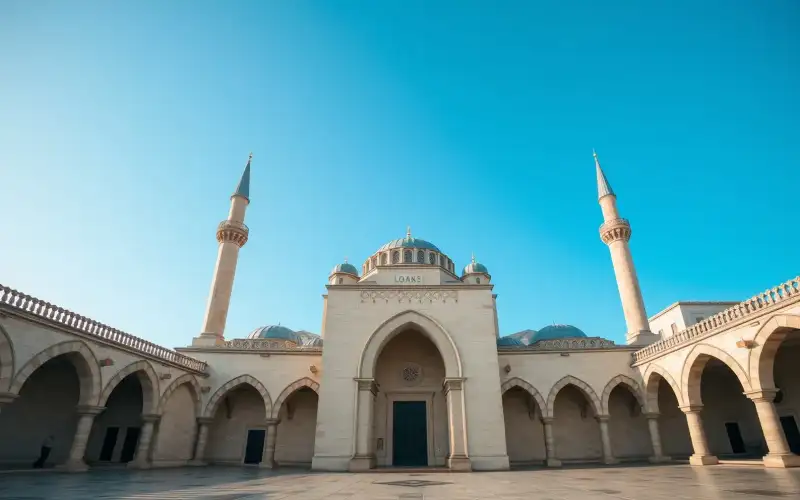
This is the centrepiece of the old town and one of the most astonishing buildings I've encountered anywhere. The Lala Mustafa Pasha Mosque was, until 1571, the Cathedral of Saint Nicholas — a Gothic masterpiece begun in 1298 and modelled closely on Reims Cathedral in France. The Lusignan kings of Cyprus were crowned here as nominal kings of Jerusalem, which gives you a sense of how seriously this place took itself.
When the Ottomans took Famagusta after their famous eleven-month siege, the cathedral was converted to a mosque. The bells were removed, the figurative art was plastered over, a minaret was added to the southwest tower, and the building became the Lala Mustafa Pasha Mosque — named after the Ottoman commander who led the siege. The Gothic facade, with its three elaborately carved portals and enormous rose window, remains almost entirely intact. It is a genuinely startling sight: a French Gothic cathedral fronted by a whitewashed mosque interior, with a single minaret rising where a bell tower once stood.
Remove your shoes at the entrance. The interior is cool, calm and carpeted. The whitewash that covers the medieval frescoes is, depending on your perspective, either an act of cultural erasure or a form of preservation — the paintings beneath are reportedly in reasonable condition, protected from light and air for four and a half centuries. Photography is permitted outside prayer times. The five daily prayers follow the Islamic calendar, so times shift throughout the year — check locally or listen for the call to prayer and wait fifteen minutes before entering.
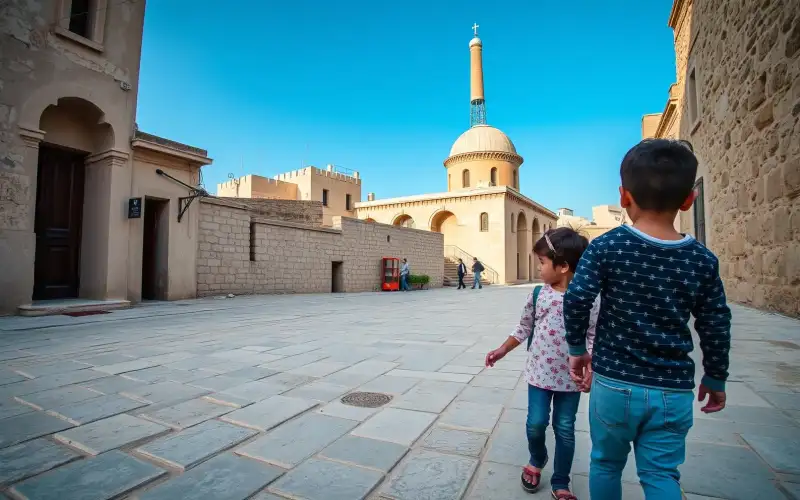
The square in front of the mosque — Atatürk Meydanı — is the social heart of the old town. The Venetian column at its centre was originally from Salamis, relocated here by the Venetians as a symbol of their authority. It still stands, slightly lopsided, in the middle of the square.
4. The Gothic Ruins: Churches in Various States of Survival
Famagusta once had more churches per square kilometre than almost any city in the medieval world. Most are ruins now, but they are magnificent ruins, and they're scattered throughout the old town in a way that rewards wandering.
Church of St Peter and St Paul (Sinan Pasha Mosque)
A few minutes' walk from the main square, this fourteenth-century church is one of the best-preserved in the city. It was built by a wealthy Famagusta merchant named Simon Nostrano, reportedly from the profits of a single trading voyage — which tells you something about the extraordinary wealth that passed through this port in the medieval period. The building is now used intermittently as an exhibition space. If the door is open, go in. The vaulted interior is spectacular.
The Church of the Knights Templar and Knights Hospitaller
Two small twin churches near the northern wall, now roofless but structurally sound. They date from the fourteenth century and are associated with the military orders that used Famagusta as a base after the fall of Acre in 1291. Sit on the low wall and eat your lunch here — it's quiet, shaded in the afternoon, and you'll probably have the place to yourself.
The Nestorian Church (Church of St George of the Greeks)
Don't confuse these two — they're separate buildings. The Nestorian Church, also known as Ayios Yeoryios Exorinos, is a fourteenth-century structure that served the Syrian Christian community of medieval Famagusta. The frescoes inside are fragmentary but visible. The Church of St George of the Greeks, near the sea wall, retains some of the finest surviving medieval frescoes in Cyprus, though access is not always guaranteed — ask at the Othello Tower ticket office about current opening arrangements.
5. Othello Tower: The Citadel and Its Shakespeare Problem
The citadel at the northeastern corner of the walls is known as Othello Tower, a name that has stuck despite being historically dubious. The connection to Shakespeare's play rests on the fact that the play is set in Cyprus and features a Moorish general — the actual historical figure is thought to be Cristoforo Moro, a Venetian lieutenant governor of Cyprus in the 1500s. Whether Shakespeare ever had Famagusta specifically in mind is a matter of academic debate that has been going on for roughly four hundred years.
None of which matters when you're standing on the roof of the citadel looking out over the harbour. The views are genuinely excellent — the old harbour, the sea wall, the minarets of the mosque, the ruined churches, the Karpas peninsula stretching away to the northeast. This is the place to orient yourself, and it's worth paying the small entry fee (currently around 3 TL, roughly £1) just for the roof.
The interior rooms include a great hall that would have functioned as the main military and administrative space of the Venetian garrison. The carved Venetian lion of St Mark above the entrance gate is one of the best-preserved examples on the island.
6. The Namık Kemal Prison Museum: An Unexpected Detour
Adjacent to the Land Gate, in a vaulted chamber that formed part of the Ravelin, is a small museum dedicated to Namık Kemal — the nineteenth-century Ottoman poet and political reformer who was exiled to Famagusta by Sultan Abdülaziz in 1873. He spent three years imprisoned here, during which time he wrote one of the most celebrated plays in Turkish literature.
The museum is small and the displays are modest, but the space itself is extraordinary — a barrel-vaulted Venetian chamber repurposed first as a prison, then as a memorial. It's the kind of layered history that Famagusta does better than anywhere else: a Venetian military structure used as an Ottoman prison, now a museum to a Turkish national hero, sitting inside walls built to keep the Ottomans out. Opening hours are roughly 09:00–17:00 on weekdays; check locally as these can vary.
7. The Sea Gate and the Old Harbour: Where the Grain Ships Docked
The Sea Gate, on the eastern wall facing the harbour, is the second of the two main Venetian gates and arguably the more elegant. It was built in 1496 and still bears the carved Venetian lion and the inscription recording its construction. The gate opens directly onto the old harbour, which is now used by small fishing boats and the occasional charter yacht.
Stand here in the early morning, when the light comes in low off the sea and the fishing boats are heading out. The harbour was, in the fourteenth and fifteenth centuries, one of the busiest in the Mediterranean — grain, sugar, silk and spices all passed through here, and the merchants of Famagusta were among the wealthiest in the known world. The old warehouses along the waterfront are largely derelict now, but the bones of the medieval port are still visible if you know what you're looking at.
Famagusta's harbour at dawn is one of those places that makes you understand why people built empires. The light, the scale, the silence — it's not hard to imagine the grain ships coming in.
8. Where to Eat, Drink and Find Shade
The old town has a handful of cafés and restaurants clustered around Atatürk Meydanı and along the main street running north from the Land Gate. For coffee and shade, the café on the square itself — usually operating under umbrellas in the shadow of the mosque's west facade — is the obvious choice. Prices are modest by any standard: a Turkish coffee or a glass of tea will cost around 40–60 TL (roughly £1.20–£1.80 at 2026 rates).
For lunch, look for the small lokanta-style restaurants on the side streets east of the square. These serve simple Turkish Cypriot food — grilled meats, salads, fresh bread, ayran — at prices that will seem almost comically cheap if you've been eating on the Republic of Cyprus side. A full lunch with drinks rarely exceeds 300 TL per person (around £9).
The best shade in the old town, outside of a café, is in the courtyard of the Lala Mustafa Pasha Mosque and in the ruins of the twin Templar/Hospitaller churches. Both are quiet in the middle of the day.
Bonus Tip: The Evening Light Walk
If you can arrange your day to be back in the old town between 6pm and 7:30pm in summer, do it. The light on the Venetian walls in the hour before sunset is something genuinely special — the honey-coloured limestone goes amber, then almost orange, and the shadows in the carved portals of the cathedral facade deepen to something theatrical. The temperature drops to something bearable. The square fills with local families. The call to prayer echoes off five-hundred-year-old stone.
Walk the stretch of rampart above the Sea Gate at this hour if you can access it. The view north along the coast toward the Karpas, with the sun going down behind you and the sea turning dark gold, is one of those travel moments you carry with you for a long time.
Planning Your Route: A Suggested Order
- Morning (8am–12pm): Land Gate → Ravelin and Namık Kemal Museum → rampart walk west wall → Martinengo Bastion → back through old town to Atatürk Meydanı
- Midday (12pm–4pm): Lunch and coffee near the square; visit Lala Mustafa Pasha Mosque (check prayer times); explore the Church of St Peter and St Paul if open
- Afternoon (4pm–7pm): Othello Tower → Sea Gate and harbour → Templar/Hospitaller churches → evening rampart walk above Sea Gate
That itinerary covers the major sites without rushing, includes time for food and rest, and positions you perfectly for the evening light. If you're doing it over two days — which I'd recommend — split the rampart walk and the interior sites between days and spend more time simply sitting in the ruins with a book. Famagusta rewards that kind of attention.
One last thing: the old town is quiet by 9pm. If you're staying nearby, the streets after dark are eerie and beautiful — the floodlit mosque, the dark shapes of the ruined churches, the cats moving silently between the cannon emplacements on the walls. It's worth a short walk before bed. Just watch your footing on the cobblestones.

Comments (3 comments)