
The first time I drove the length of the Karpas, I ran out of road before I ran out of peninsula. That's the point, really. The asphalt narrows, the donkeys multiply, and eventually you're parked on a limestone headland with the Syrian coast somewhere beyond the haze. Finding somewhere to sleep out here used to mean a blanket in someone's barn. That's changed, but only slightly — and in the best possible way.
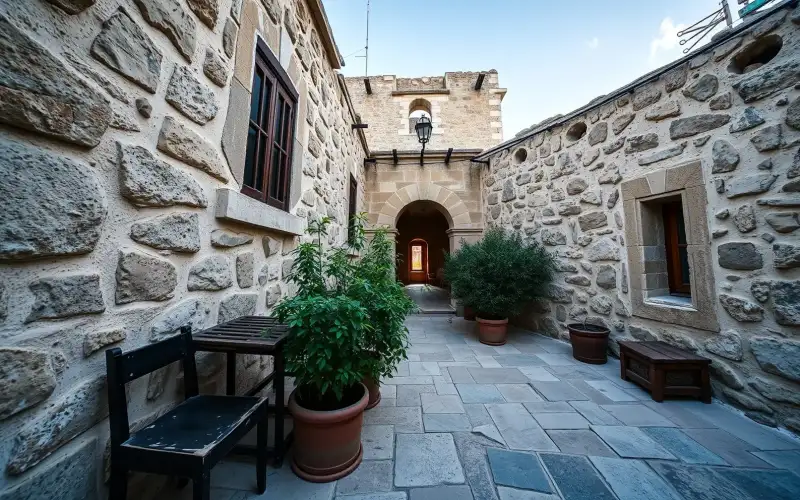
Accommodation on the Karpas Peninsula remains sparse by design. There are no resort complexes, no all-inclusive behemoths, no beach clubs with DJs. What you get instead is a scatter of family-run guesthouses, a few small hotels with genuine personality, and one or two coastal eco-lodges that justify the word without embarrassment. For the kind of traveller this peninsula attracts — people who want silence, history, and a breakfast that comes with conversation — that's exactly right.
Overview: What Kind of Place Is the Karpas for Accommodation?
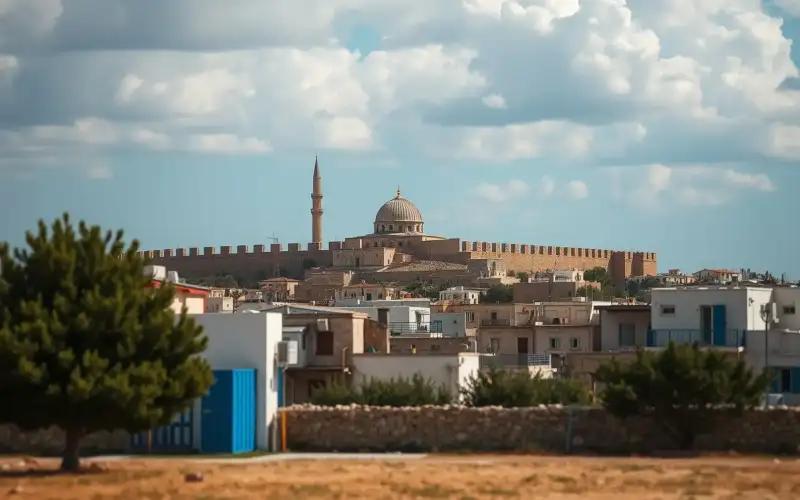
The peninsula stretches roughly 70 kilometres northeast from Iskele (Trikomo) toward Cape Apostolos Andreas, and most of the accommodation clusters in two loose zones. The first is around Dipkarpaz (Rizokarpaso in Greek), the largest village on the peninsula and home to the remaining Greek Cypriot community — a few hundred elderly residents who stayed after 1974. The second zone is the far tip, near the monastery of Apostolos Andreas, where a couple of eco-lodges have established themselves on or near the coast.
Between these two zones, there's almost nothing. A few villages — Yialousa (Gazimagusa road), Koma tou Yialou, Leonarisso — have the occasional room above a café, but these are informal arrangements rather than bookable accommodation. If you're planning more than one night on the peninsula, Dipkarpaz is your most reliable base.
The Infrastructure Reality
Mobile signal is patchy beyond Dipkarpaz. Most guesthouses have Wi-Fi in the main building, but don't count on it in outbuildings or garden rooms. Power cuts are infrequent but not unknown, particularly in summer storms. Water pressure varies. None of this is a hardship — it's a feature, as the more honest hosts will tell you — but it's worth calibrating expectations before you arrive with a laptop and a deadline.
Roads within the peninsula are mostly tarmac but narrow, and the final 15 kilometres toward the cape are rough enough that a hire car with low clearance will suffer. Several guesthouses will advise you on road conditions when you book, which is itself a sign of how attentive these places tend to be.
Booking in 2026
Very few Karpas properties appear on mainstream booking platforms. Some have a Facebook page, many have an email address, a handful have a basic website. The most reliable method remains direct contact — either by email or phone. The tourist office in Famagusta (Gazimağusa) keeps an updated list, and the Karpaz Gate Marina, about 35 kilometres west of Dipkarpaz, can sometimes point you toward current openings. Book at least six weeks ahead for July and August; in May, June, September and October, two weeks is usually fine.
The Pros: What Makes Karpas Accommodation Genuinely Good
The Hosts Make the Difference
This is not a cliché when applied to the Karpas. I've stayed in guesthouses across the eastern Mediterranean where 'family-run' means a laminated menu and a teenager on a phone. Here, the hosts are frequently the reason people return. At several of the Dipkarpaz guesthouses, the owner will sit with you over breakfast and explain the history of the village — the Greek Cypriot families who remained, the relationship with the Turkish Cypriot administration, the slow changes since the checkpoints opened in 2003. You won't get that at a Holiday Inn.
Many hosts have lived through the political history of this peninsula in a direct, personal way. They're not performing local colour; they're telling you what happened to their neighbours. That context transforms a holiday into something more substantial.
Breakfast Is Taken Seriously
Across almost every property I've stayed in or visited on the Karpas, breakfast is a genuine meal. Expect village bread, local halloumi (often made by the host or a relative), olives from trees you can see from the table, honey, eggs cooked to order, and strong coffee. This is not the continental-breakfast-in-a-basket model. At some guesthouses, breakfast alone is worth the stay — and it's almost always included in the room rate.
Prices Remain Honest
By 2026, a double room with breakfast in a Dipkarpaz guesthouse runs between £45 and £75 per night. The eco-lodges near the cape charge slightly more — typically £80 to £110 — reflecting their coastal position and the cost of operating sustainably off-grid. These prices have risen modestly since 2022 but remain substantially below what you'd pay for equivalent character accommodation in the south of the island or in comparable rural areas of Greece or Turkey.
| Accommodation Type | Location | Price per Night (2026) | Breakfast Included? |
|---|---|---|---|
| Village guesthouse | Dipkarpaz | £45–£75 | Yes, usually |
| Small hotel (6–12 rooms) | Dipkarpaz / Kaplıca | £60–£90 | Yes |
| Coastal eco-lodge | Near Apostolos Andreas | £80–£110 | Yes |
| Informal room above café | Various villages | £25–£40 | Rarely |
The Quiet Is Real
At night, the Karpas is genuinely dark and genuinely silent. If you've spent years sleeping in cities or coastal resorts, the absence of traffic noise, air-conditioning hum and ambient light takes a night to adjust to. After that, most visitors sleep better than they have in years. Several guesthouses are positioned so that the first sound in the morning is birdsong — the peninsula is on a significant migratory route — and the last light before bed is stars.
Access to the Peninsula's Best Bits
Staying on the Karpas rather than commuting from Famagusta (about 90 minutes each way to Dipkarpaz) means you can visit Apostolos Andreas Monastery in the early morning before the day-trippers arrive, reach Nangomi Bay (Golden Beach) at dawn when the loggerhead turtles are finishing their night, and have dinner in Dipkarpaz before the village goes quiet at nine. The peninsula rewards slow travel, and slow travel rewards staying put.
The Cons: Where Karpas Accommodation Falls Short
Comfort Is Variable
Let's be direct. Some guesthouses are beautifully maintained; others are showing their age. Mattresses vary considerably. Air conditioning is not universal — some rooms have ceiling fans only, which is adequate in May and October but challenging in July and August when temperatures regularly exceed 35°C. Before booking for a summer trip, ask specifically about cooling. A host who answers this question honestly is a host worth trusting.
Bathrooms in older guesthouses tend toward the functional rather than the luxurious. Hot water is generally reliable, but water pressure is sometimes not. If you need a power shower and a rainfall head, the Karpas is not your destination. If you're comfortable with a decent shower and a clean towel, you'll be fine.
Limited Dining Options After Dark
Dipkarpaz has a small number of restaurants and cafés, but several close early or operate reduced hours outside peak season. If you arrive after 8pm on a Tuesday in October expecting a full dinner service, you may be disappointed. The guesthouses that offer evening meals — not all do — tend to provide simple, good food: grilled fish, mezze, village salads. It's worth asking when you book whether dinner is available and what the arrangement is.
The Booking Process Can Be Frustrating
Not everyone who runs a guesthouse on the Karpas checks their email daily. Some don't have a booking system at all — they operate on trust, memory and a handwritten ledger. This is charming in retrospect and occasionally maddening in the planning stage. If you send an email and don't hear back within a week, call. If you can't reach anyone by phone, try again in the evening. Persistence is rewarded.
Getting There Without a Car Is Difficult
There is no regular bus service to Dipkarpaz from Famagusta. A shared taxi (dolmuş) runs irregularly, and the timings don't suit most travellers. In practice, a hire car is close to essential for staying on the Karpas — both to reach your accommodation and to explore the peninsula once you're there. Factor this into your budget. Hire cars from Famagusta or Ercan Airport cost roughly £35–£55 per day in 2026 for a basic model.
Who Is Karpas Accommodation Right For?
The honest answer is: not everyone, and that's fine. The Karpas suits travellers who are comfortable with a degree of improvisation, who find character more important than consistency, and who regard a conversation with their host as part of the experience rather than an imposition on their time.
The peninsula is best for people who want to feel like they've found somewhere, rather than arrived somewhere that was waiting to be found.
More specifically, Karpas accommodation works well for:
- History-focused travellers — the combination of Byzantine churches, Lusignan ruins, the Apostolos Andreas Monastery and the living memory of 1974 makes this one of the most historically layered corners of the Mediterranean. Guesthouse hosts often know the local history in detail.
- Wildlife and nature enthusiasts — loggerhead and green turtles nest on the beaches between June and August, the peninsula is an important bird migration corridor, and the wildflower season in March and April is exceptional. Eco-lodges near the cape are particularly well-positioned for all of this.
- Couples travelling without children — the slow pace, the limited evening entertainment and the physical remoteness suit adults looking to decompress rather than families needing activity and structure.
- Repeat visitors to Cyprus — people who've done Paphos and Limassol and want to see what the island looks like when the development stops.
- Solo travellers — the guesthouse format, with communal breakfasts and attentive hosts, is considerably less isolating than a hotel room. Several solo travellers I've spoken to over the years cite the Karpas as one of the friendliest destinations they've encountered.
It's less suited to travellers who need reliable Wi-Fi for work, families with young children who need pools and entertainment, or anyone whose holiday satisfaction depends on a guaranteed standard of room.
Specific Properties Worth Knowing About
I'm cautious about naming specific guesthouses as definitive recommendations, because the Karpas accommodation scene shifts — places close, change hands, improve or deteriorate. What I can say is that as of 2026, the most consistently recommended properties in Dipkarpaz are the handful of guesthouses clustered around the village centre and the road leading toward the monastery. Ask locally when you arrive: the village is small enough that everyone knows who's open and who's having a difficult season.
The eco-lodges near the cape — there are currently two operating with any consistency — are best contacted through the Karpaz Gate Marina or through specialist tour operators in the UK who focus on northern Cyprus. Companies like Sunvil and a small number of independent operators have relationships with these properties and can confirm availability and current standards in a way that a cold email cannot.
One host I spoke to in Dipkarpaz last spring put it simply: 'We don't have stars. We have breakfast and a garden and we know where the turtles are.' That's the Karpas offer in one sentence.
Verdict: Is the Karpas the Right Place to Stay?
For the right traveller, the Karpas Peninsula offers some of the most rewarding accommodation in the eastern Mediterranean — not because the rooms are exceptional, but because the context is. You're sleeping in a village that carries the weight of recent history, on a peninsula that the twentieth century largely bypassed, within reach of a coastline that looks much as it did a thousand years ago.
The guesthouses and small hotels here are not luxury products. They're honest places run by people who chose to stay — or chose to come — and who have a genuine investment in the landscape and community around them. That's rarer than it sounds.
If you're travelling from the UK and want somewhere genuinely different from the package-holiday end of Cyprus, the Karpas deserves more than a day trip. Budget for three nights minimum: one to decompress and find your bearings, one to explore, one to appreciate what you've found. The peninsula rewards that investment. The accommodation, for all its variability, is part of what makes it work.
Book direct, confirm by phone, arrive with low expectations for the room and high ones for the experience. That combination rarely disappoints on the Karpas.


Comments (3 comments)