
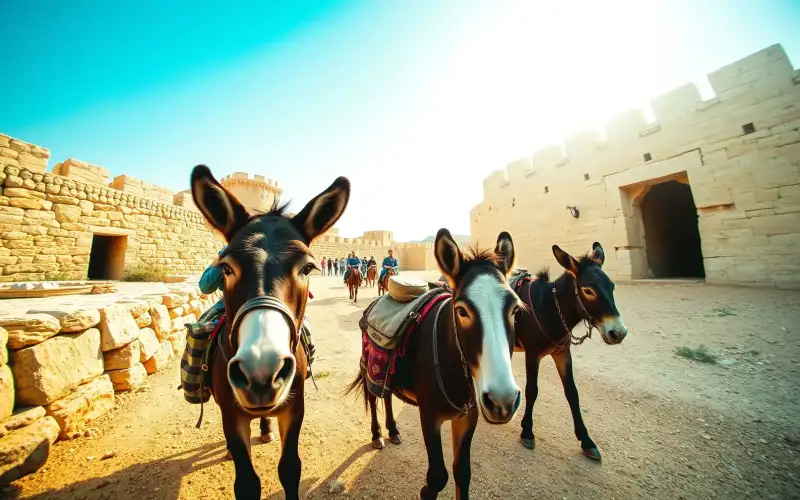
I watched a donkey pause mid-stride on a dusty track near Dipkarpaz, ears swiveling toward the sound of our footsteps. It was late March, the peninsula's wildflowers still bright, and the animal—lean, sun-weathered, utterly unbothered—simply turned and trotted away into the scrub. That moment crystallised something I'd been grappling with for years: the Karpas's wild donkeys are not tourist attractions to be chased, but inhabitants of a landscape we're merely passing through.
Donkey trekking has become synonymous with the Karpas Peninsula, especially among British visitors seeking something more intimate than the crowded beaches of the west. Yet the reality is far more complex than Instagram suggests. These animals—descendants of working donkeys abandoned or gone feral over decades—live in a delicate equilibrium with a peninsula that's simultaneously fragile, historic, and increasingly pressured by tourism. This guide exists to help you experience that landscape responsibly.
Understanding the Karpas Donkey Population
The Karpas Peninsula, stretching roughly 70 kilometres northeast from Famagusta toward the island's finger-like tip, hosts somewhere between 200 and 400 wild donkeys. No one keeps exact numbers. They're descended from working animals left behind when villages depopulated—some after 1974, others earlier—and from animals that simply escaped domestic life over the decades. They're not native wildlife; they're feral livestock. This distinction matters.
These donkeys are semi-wild at best. Some tolerate human presence; others avoid it fiercely. They congregate around water sources and vegetation, particularly in spring and early autumn. The herds move seasonally—you might encounter a group of eight or nine near Agia Trias one month and find the same area empty the next. They eat whatever scrub, thistles, and dried grasses the peninsula offers, supplemented by whatever locals or visitors leave behind.
The animals themselves are typically small—around 1.2 metres at the shoulder—with coats ranging from grey to brown to piebald. Most are visibly thin, ribs often prominent. This isn't cruelty; it's the reality of survival in a semi-arid landscape. They're hardy, adapted to scarcity, and mostly indifferent to human activity unless food is involved.
The Ethical Trekking Question
Let's be direct: there's no such thing as "donkey trekking" in the Karpas if you mean riding them. The animals are wild, unpredictable, and many are not habituated to carrying weight. Attempting to ride them is harmful and irresponsible. What you can do is trek through the landscape where donkeys live, observing them as part of the ecosystem rather than as entertainment.
Several tour operators—mostly small, locally-run businesses based in Dipkarpaz and Agia Trias—offer guided "donkey walks" or "donkey spotting" treks. The better ones keep groups small (four to six people), move slowly, and emphasise observation over interaction. They avoid feeding the animals, discourage touching, and stick to established paths rather than pursuing herds into fragile habitats.
If you choose a guide, ask directly: Do they feed the donkeys? Do they pursue animals that move away? What's their policy on photography—are they encouraging close approaches for Instagram moments? A responsible operator will answer frankly and seem genuinely concerned about animal welfare, not just revenue.
The alternative—and often the most ethical—is to trek independently. The Karpas's network of old tracks, farm roads, and coastal paths is extensive. You'll encounter donkeys naturally as you walk, without the pressure of a guide's itinerary or a group's collective desire to "see" them. This requires patience and acceptance that you might not see any animals at all on a given day.
When to Go: Seasonal Considerations
Timing dramatically affects both your experience and your impact. The Karpas in summer—June through September—is punishing. Temperatures regularly exceed 35°C, water sources dry up, and the landscape becomes a study in browns and greys. The donkeys cluster near the few reliable wells and coastal areas. Trekking then concentrates visitor pressure on already-stressed animals and habitats.
Spring (March to May) is ideal. Rainfall during winter and early spring creates temporary water sources. Vegetation is abundant. Donkeys disperse across the peninsula, reducing localised pressure. Temperatures are manageable—typically 18–26°C—and the light is soft, perfect for observation and photography. Wildflowers bloom through April and May, adding colour to the scrubland.
Autumn (October to November) is your second choice. The worst heat has passed. Some water returns as autumn rains begin. Vegetation revives slightly. Donkeys become more visible again as they move between feeding grounds. By late November, the peninsula can be damp and muddy, but still walkable.
Winter (December to February) is possible but challenging. The peninsula can be wet, windy, and occasionally flooded. Visibility drops. Donkeys cluster near shelter. Most casual visitors avoid this season, which paradoxically makes it less impactful if you're equipped for it.
Practical Preparation: What to Bring
The Karpas is not a manicured hiking destination. Tracks are often rough, unmarked, and occasionally impassable. Your preparation matters for both safety and minimising impact.
- Footwear: Sturdy walking boots with ankle support. The terrain includes loose stones, dried scrub, and occasional rocky outcrops. Trainers will leave you with blisters and increase erosion on fragile paths.
- Water: Carry at least three litres per person. Water sources are unreliable and often contaminated. Don't rely on finding anything mid-trek.
- Sun protection: High-SPF sunscreen, a wide-brimmed hat, and sunglasses. Reflection off pale limestone is intense. Dehydration happens fast.
- Clothing: Lightweight, breathable layers. Mornings can be cool; afternoons are hot. Loose, long sleeves protect skin from sun and scrub. Avoid bright colours or patterns—they stress wildlife.
- Navigation: Download offline maps (Google Maps works offline; so do apps like Maps.me). Phone signal is patchy. A paper map of the peninsula is invaluable.
- First aid: Blister treatment, pain relief, antihistamine (insects are present), and any personal medications.
Leave nothing behind. Carry all rubbish out, including organic waste like fruit peels. Donkeys eat discarded food, which disrupts their natural diet and creates dependency. Locals also report that litter attracts rats and damages the landscape's aesthetic.
Where to Trek: Key Routes and Areas
The peninsula's best trekking areas balance accessibility with minimal human infrastructure. The coastal paths around Agia Trias, in the peninsula's northeast, offer views of the Mediterranean and frequent donkey sightings, particularly in spring. The track is roughly four kilometres return from the village, mostly flat, and passes through scrubland typical of the peninsula's interior.
The inland routes near Dipkarpaz—Cyprus's northernmost village—are less touristy. Old farm roads wind through abandoned fields and semi-wild olive groves. Donkeys are common here, but fewer visitors means less habituation to human presence. Treks can be extended to five or six kilometres without difficulty.
The southern approach via Boğaz offers a different perspective. The landscape transitions from cultivated land to scrub more gradually. Donkey populations are sparser but less pressured. The village itself has basic facilities—a shop, a café—making this a good base for multi-day exploration.
Avoid the far northeastern tip near Cape Apostolos Andreas during peak season (April–May). The monastery and its surroundings attract coach tours. The concentration of visitors stresses both donkeys and the fragile ecosystem. If you visit, go early morning or late afternoon when groups have departed.
Respecting Local Communities
The Karpas is home to roughly 2,000 people, mostly concentrated in Dipkarpaz, Agia Trias, and smaller villages like Boğaz and Büyükkanak. Tourism is relatively new here—significant numbers of foreign visitors only arrived in the last 15 years. The relationship between locals and tourists remains delicate.
Many villagers depend on tourism for income, but many also resent the pressure it brings. Water is scarce; tourism increases demand. Donkey populations are viewed with mixed feelings—some locals feed them, others see them as pests eating cultivated vegetation. Your trek affects local perceptions of tourism's value.
Practical respect: Stay on established paths, not private land. Ask permission before photographing people. Buy supplies locally—a coffee in Dipkarpaz, fresh bread from a village shop. Eat at local restaurants rather than bringing packed lunches. Tip guides fairly. Support small, family-run businesses rather than larger tour operators based in Famagusta.
Learn basic Turkish phrases. "Merhaba" (hello), "Teşekkür ederim" (thank you), and "Affedersiniz" (excuse me) go far. Locals appreciate effort, however imperfect. Avoid discussing politics, the division, or land disputes—these are sensitive topics with complex histories.
Environmental Impact and Best Practices
The Karpas's ecosystem is fragile. Scrubland vegetation recovers slowly from trampling. Water sources are limited. Soil erosion is visible on popular routes. Your choices matter.
Stick to established paths. Creating shortcuts or new routes damages vegetation and increases erosion. If a path is too eroded, that's a sign to avoid it or use it minimally. Don't cut vegetation for any reason—firewood, shelter materials, or plant specimens.
Never feed donkeys, even with good intentions. It creates dependency, disrupts natural foraging behaviour, and encourages animals to approach humans (increasing injury risk for both parties). The same applies to other wildlife—lizards, birds, even insects. Observe without interference.
Camp responsibly if you're staying overnight. Use designated areas or ask locals for permission. Avoid water sources and fragile vegetation. Leave no trace—no fires, no buried rubbish, no human waste near water. Pack a lightweight camping stove if cooking is necessary.
What to Expect: The Reality of Donkey Encounters
Honesty: most donkey treks involve minimal actual contact with animals. You might see tracks, droppings, or distant herds. You might hear them—their distinctive brays carry far across the scrubland. You might encounter a single animal, which will likely move away. This is normal and healthy.
If you do encounter donkeys, move slowly and quietly. Maintain distance—at least five metres. Let them set the pace of interaction. If an animal approaches (usually seeking food), back away calmly. Don't make sudden movements or loud noises. Take photographs from a distance using zoom rather than approaching for close-ups.
Expect to spend time observing the landscape itself. The Karpas's beauty isn't dramatic—it's subtle, built from light on limestone, the texture of scrub, the sound of wind, the occasional wildflower. This is what makes it compelling for slow travellers. You're not collecting experiences; you're inhabiting a place temporarily.
Verdict: Is Karpas Donkey Trekking Worth Your Time?
If you're seeking a packaged "donkey experience"—riding, feeding, close encounters—the answer is no. That's not what the Karpas offers, and attempting it harms both animals and the landscape.
If you're interested in slow travel, in understanding a landscape and its inhabitants, in observing wildlife ethically, and in supporting small rural communities, then absolutely yes. The Karpas Peninsula in spring, explored on foot with patience and respect, offers something increasingly rare: a genuinely wild corner of the Mediterranean where humans are visitors, not the main event.
The donkeys are part of that landscape, not its purpose. Trek to understand the peninsula. The donkeys will be there, living their lives, indifferent to your presence. That indifference is precisely what makes the experience authentic.

Comments (3 comments)