
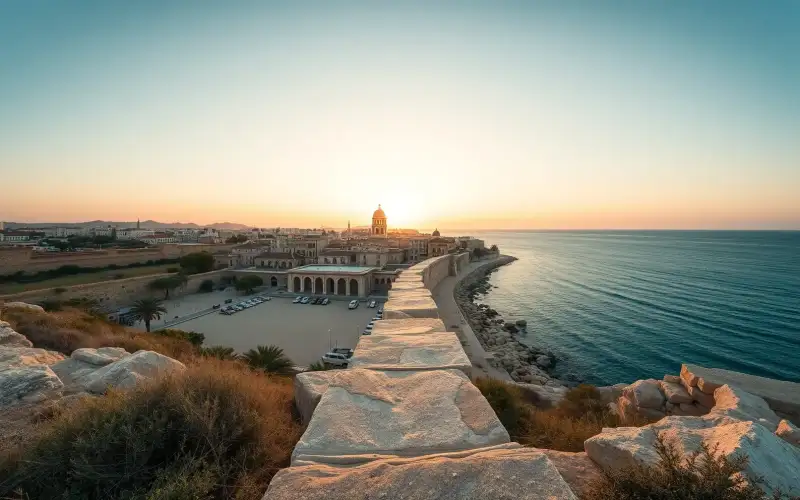
Last September, I stood at the edge of Golden Beach watching the light turn the sand almost amber, and a local fisherman told me something I hadn't expected: "Most tourists never make it here. They turn back at the first rough patch." He wasn't boasting. He was simply stating fact. Golden Beach—known locally as Nangomi—sits at the far northeastern tip of the Karpas Peninsula, roughly 90 kilometres from Famagusta town, accessible only by a track that transforms dramatically depending on season and recent weather. It's the kind of place that tests both vehicle and resolve, which is precisely why it remains so extraordinarily beautiful.
The beach itself stretches for nearly two kilometres of pale sand, backed by low dunes and virtually no infrastructure. There are no tavernas, no sun loungers, no vendors. What you find instead is a landscape that feels genuinely untouched—sea turtles still nest here, and the water carries that particular clarity you encounter only in the Mediterranean's remotest corners. But reaching it demands planning, realistic expectations, and a genuine commitment to leaving the place as you find it.
Understanding the Road to Golden Beach
The journey to Nangomi begins straightforwardly enough. From Famagusta, you head north through Salamis toward Boğaz (the checkpoint village that marks the entrance to the Karpas proper). The first 40 kilometres follow the main coastal road—paved, well-maintained, occasionally dramatic where it winds past rocky outcrops. The landscape here shifts gradually: you move from the developed fringe of Famagusta through increasingly sparse settlements, past the ruins of Salamis, and into the genuinely rural peninsula where olive groves thin out and the horizon becomes dominated by sea and sky.
Once you pass through Boğaz and the informal checkpoint, the character of the road changes. The asphalt continues, but it becomes narrower and less frequently maintained. By the time you reach Dipkarpaz (the largest village on the peninsula's east coast, roughly 75 kilometres from Famagusta), you've already noticed the diminishing traffic and the sense of having entered somewhere genuinely peripheral to Cyprus's main tourist routes. This is intentional geography—the Karpas has always been marginal, which is much of its appeal.
From Dipkarpaz, the final 15 kilometres to Golden Beach is where the road test begins in earnest. The asphalt ends. What follows is a dirt and gravel track, passable in ordinary vehicles during dry months (May through September) but requiring genuine caution. The surface is rutted in places, sandy in others, and scattered with stones that can catch an undercarriage. In winter or after heavy rain, the track becomes genuinely treacherous—muddy, slippery, and potentially impassable without four-wheel drive.
Vehicle Requirements and Seasonal Conditions
The honest assessment: a standard saloon car can reach Golden Beach in summer if driven slowly and carefully, but it's not advisable. A high-clearance vehicle—SUV, jeep, or similar—makes the journey substantially more comfortable and safer. A proper four-wheel-drive vehicle is genuinely necessary from October through April, and increasingly advisable from September onward as autumn rains begin.
The track itself is roughly 15 kilometres of what Cypriots call "agrá"—agricultural track. It's not maintained with any regularity. In 2026, the condition remains variable: some sections are relatively smooth, others feature deep ruts that could damage a low-slung vehicle's suspension. The journey takes between 30 and 45 minutes depending on conditions and how cautiously you drive. I've made it in a hired Suzuki SUV during July and it was manageable; I've also seen a determined couple in a Fiat Panda manage it in June, though they moved at walking pace for the final few kilometres.
If you're hiring a vehicle locally, be explicit with the rental company about where you're going. Many rental agreements specifically exclude off-road driving, and if you damage the vehicle on the track to Golden Beach, you may find yourself liable for repairs. Some rental companies in Famagusta now explicitly permit the journey; others don't. This matters legally and financially.
Navigation and Timing
The track is marked, though not obviously. There are occasional signs and some painted marks on rocks, but navigation requires attention. A GPS unit or offline maps (Google Maps works reasonably well, though occasionally suggests odd routes) is genuinely useful. Mobile signal is patchy—you may have coverage from the northern network, you may not. Download offline maps before you leave Dipkarpaz.
Timing matters significantly. The track is sunlit and visible in daylight, but attempting it in dusk or darkness is foolish. Leave Dipkarpaz by mid-afternoon at the latest if you want to reach the beach with comfortable daylight remaining. The drive out should happen well before sunset, especially in winter when darkness arrives by 5 p.m.
What Golden Beach Offers (and Doesn't)
The beach itself is genuinely remarkable. The sand is fine and pale, the water clear and typically calm, sheltered as it is by the peninsula's geography. There's a sense of arrival when you crest the final dune and see it—a long, empty sweep of coastline with nothing but sea, sky, and the occasional fishing boat in the distance. On a quiet day in June or September, you might share it with fewer than a dozen other people.
What you won't find here are facilities. There is no taverna, no café, no toilets, no fresh water, no sun loungers, no parasols, no lifeguards. There is no telephone signal (or only unreliable patches). There are no shops within 15 kilometres. The nearest accommodation is in Dipkarpaz—basic guesthouses and a couple of small hotels, nothing luxurious. This is the trade-off for the beach's beauty and emptiness: you must be entirely self-sufficient.
What to Bring
Preparation is non-negotiable. Bring everything you might need for an entire day:
- Water: At least 2 litres per person. The Mediterranean sun is deceptive; you dehydrate faster than you expect. More if you're staying multiple hours or visiting in July-August.
- Food: Pack a proper lunch or substantial snacks. There's nowhere to buy anything once you've left Dipkarpaz.
- Sun protection: High SPF sunscreen (50+), a hat, and ideally a lightweight long-sleeved shirt. The reflection off the sand intensifies UV exposure.
- Shade: A beach umbrella or pop-up tent. There are virtually no natural shade options on the beach itself.
- Footwear: The sand can be scorching in summer. Flip-flops or water shoes are essential.
- First aid: Blister plasters, pain relief, antihistamine. Medical help is 30 minutes away.
- Rubbish bags: Everything you bring, you take away. There are no bins.
Many visitors also bring a portable speaker (at low volume—respect the silence), a book or sketchpad, and binoculars for birdwatching. The peninsula's birdlife is remarkable, particularly in spring and autumn migration seasons.
Environmental Responsibility and Wildlife Protection
Golden Beach's fragility is its defining characteristic. The beach is a nesting site for loggerhead and green sea turtles, particularly from May through August. The dunes support rare plant species adapted to coastal conditions. The water, while appearing pristine, is genuinely sensitive to pollution and disturbance.
If you visit during nesting season (May-August), you may encounter turtle nests marked with protective fencing. These are not decorative. Respect the boundaries absolutely. Don't disturb the sand around marked nests, don't shine torches or take flash photographs at night (if you're staying late), and don't leave any rubbish that might attract predators or entangle hatchlings.
Responsible Beach Practices
The fundamental principle: leave nothing but footprints, take nothing but photographs. This isn't romantic rhetoric; it's the only way Golden Beach remains as it is.
- Rubbish: Collect everything you bring. This includes small items—bottle caps, sun cream tubes, food packaging. Microplastics harm marine life.
- Sunscreen: Use reef-safe sunscreen (oxybenzone and octinoxate-free). These chemicals damage coral and marine ecosystems even in tiny concentrations.
- Noise: Keep music low or absent. The quiet is part of the experience, and loud noise can disturb nesting turtles and other wildlife.
- Fires: No fires, barbecues, or burning rubbish. The dunes are flammable and fragile.
- Shells and stones: Take photographs, not specimens. Shells are homes for small creatures; removing them disrupts the ecosystem.
- Swimming: Swim carefully. Don't stand on or walk through seagrass beds (Posidonia). These underwater meadows are crucial nurseries for fish and protect the beach from erosion.
The temptation to take a souvenir is understandable. The beach is beautiful, and you want something tangible to remember it. Resist this. Photographs are the only souvenirs that don't diminish the place.
Best Times to Visit
June, September, and early October offer the ideal combination of reliable weather, manageable track conditions, and fewer visitors. The sea is warm enough for comfortable swimming (around 24-25°C), the sun is intense but not dangerously so, and the light at these times of year is extraordinary—the kind of light that makes you understand why painters are drawn to Mediterranean coasts.
July and August are warm but crowded by Karpas standards (you might share the beach with 30-50 people on a peak day). The track is reliably passable, but the heat is intense, and the water, while warm, can feel heavy and thick during these months.
November through March is possible but challenging. The track becomes muddy and requires four-wheel drive. The sea is cold (around 15-16°C in winter), and the light is shorter. But if you visit during this period, you'll have the beach almost entirely to yourself, and the winter light—pale, clear, sometimes dramatic—has its own beauty.
Practical Logistics and Planning
Most visitors base themselves in Famagusta or one of the Karpas villages. Famagusta offers the widest range of accommodation (from basic guesthouses to more comfortable hotels) and is where you'll find car rental agencies. The drive from Famagusta to Golden Beach takes roughly 2.5 to 3 hours, including the final track section. This is a full-day commitment: leave early (8 or 9 a.m.), spend 3-4 hours at the beach, and return by late afternoon.
Alternatively, stay in Dipkarpaz. The village has several small hotels and guesthouses—nothing fancy, but comfortable enough. The nearby Monastery of Apostolos Andreas is worth visiting (though currently undergoing restoration). Staying locally means you can reach Golden Beach in 30 minutes and return for a late lunch at one of Dipkarpaz's tavernas.
Fuel up in Famagusta or Boğaz before heading to the peninsula. There are no petrol stations beyond Dipkarpaz, and the track to Golden Beach consumes more fuel than you'd expect due to the slow speed and rough surface.
The Reality of Remote Travel
Golden Beach isn't for everyone. It requires planning, physical capability (the final walk across the dunes can be taxing in heat), and a genuine comfort with emptiness and self-reliance. It's not a destination for those seeking restaurants, shops, or social activity. It's a destination for people who travel to encounter landscape, silence, and genuine solitude.
The reward for this effort is a beach that feels genuinely untouched—a place where you can still experience the Mediterranean as it might have been before mass tourism. The light here is the light that drew painters and writers to Mediterranean coasts for centuries. The silence is profound. The sense of having reached somewhere genuinely remote, within a European country, is increasingly rare.
If you make the journey, respect what you find. Leave the beach as empty and clean as you arrived. The effort required to reach Golden Beach is precisely what preserves it. That difficulty is a feature, not a bug.

Comments (4 comments)