
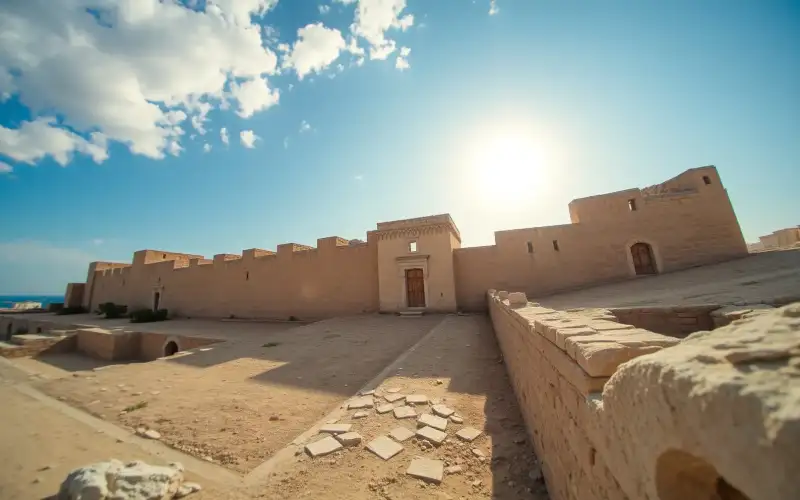
The road runs out somewhere past Dipkarpaz. Not dramatically — there is no cliff edge or barrier — it simply narrows to a single cracked lane, then to a track, then to a suggestion. On my first visit, I stopped the car and sat there for a while, engine off, listening to nothing except wind moving through dry scrub and, distantly, the sea. That silence is the Karpas Peninsula's opening offer. Everything else — the donkeys, the Byzantine frescoes, the three-kilometre beach with nobody on it — comes after.
The Karpaz (to use the Turkish spelling you will see on road signs in the north) is the long finger of land pointing north-east from Famagusta toward the coast of Turkey and Syria. It covers roughly 500 square kilometres and holds perhaps 3,000 permanent residents. In 2026, it remains the least-visited part of Cyprus, which is precisely why it rewards the traveller who makes the effort.
These eight highlights are ranked not by fame but by the quality of experience they reliably deliver. Access notes are based on conditions as of early 2026. All are within the territory administered by the Turkish Cypriot authorities; visitors crossing from the Republic of Cyprus should use the Famagusta or Metehan crossing points and carry their passport.
1. Apostolos Andreas Monastery — The Pilgrimage at Land's End
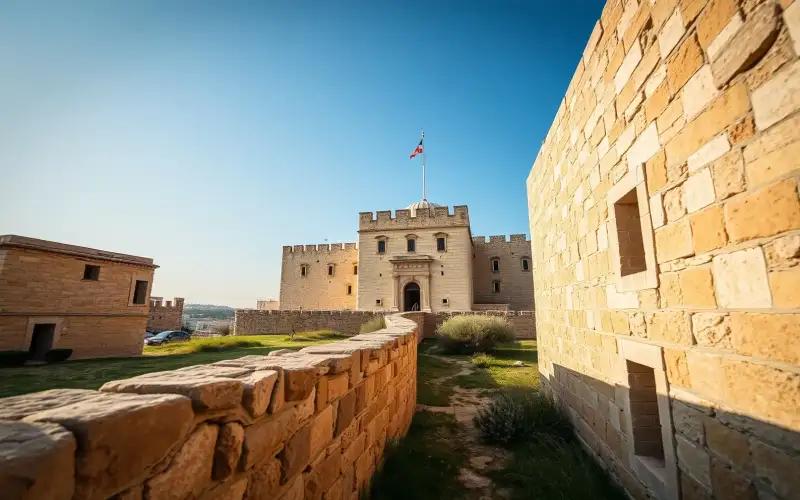
At the very tip of the peninsula, where the land finally does give up and drop into the sea, stands the Monastery of Apostolos Andreas. The building itself is not especially beautiful — centuries of ad-hoc construction have left it looking more like a small Anatolian village than a classical monastery — but its setting and its story are extraordinary. According to tradition, the Apostle Andrew stopped here on his way to Antioch and caused a spring to appear from the rock; the water is still dispensed in small bottles to pilgrims.
For decades after 1974 the monastery fell into serious disrepair, its frescoes blackened by damp, its roof partially collapsed. The restoration completed between 2015 and 2022, jointly funded by the United Nations Development Programme and both Cypriot communities, is one of the more quietly remarkable acts of cross-community cooperation on the island. The mosaics in the main church are now vivid again. A small museum in the east wing holds icons recovered from storage.
The monastery is open daily from 08:00 to 18:00 in summer (closing at 16:00 between November and March). Entry is free, though donations are welcomed. Modest dress is required. The drive from Dipkarpaz takes about 35 minutes on a road that becomes increasingly potholed after the village of Rizokarpaso — go slowly and your hire car's suspension will survive.
"People come here expecting a ruin and leave surprised by something that feels genuinely alive," a Greek Cypriot pilgrim told me on a Tuesday morning in October, lighting a candle in the small chapel by the spring. She had driven from Nicosia and planned to drive back the same day. That is devotion of a particular kind.
2. Golden Beach (Nangomi Bay) — The Best Undeveloped Beach in Cyprus
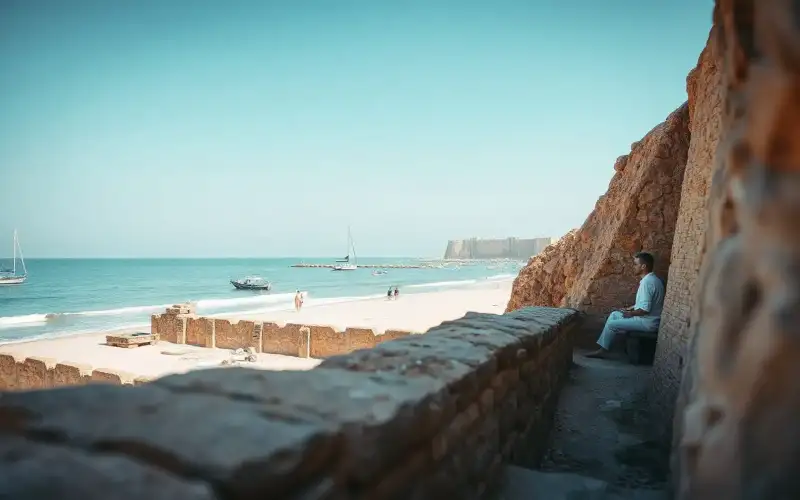
Golden Beach earns its ranking through sheer, stubborn magnificence. Three kilometres of pale gold sand, backed by low dunes and a single basic beach bar that operates roughly from May to October. No sunlounger rentals. No jet-ski concession. The water is clear enough that you can watch your feet on the sandy bottom at two metres' depth. Loggerhead turtles (Caretta caretta) nest here between June and August; during those months the eastern section is cordoned off after dusk.
Getting here requires commitment. From Dipkarpaz, head north on the road signposted Nangomi and follow it for approximately 7 kilometres until the tarmac ends and a dirt track descends to the beach. A standard hire car will manage it in dry conditions; after rain it becomes genuinely slippery. There is no shade on the beach itself, so bring your own. The beach bar — a corrugated-iron structure that has somehow survived several decades — sells cold Efes beer, water and occasionally grilled halloumi. Cash only.
The best time to visit is September or early October, when the summer crowds (such as they are) have thinned, the sea is still warm from three months of sun, and the light in the late afternoon turns the sand the colour of old honey.
3. Wild Donkeys of the Karpas — A Herd With an Unusual History
Somewhere between 100 and 200 feral donkeys roam the Karpas, and encountering them is one of those experiences that catches visitors off guard. You come around a bend in the road and there are eight of them standing in the middle of it, entirely unbothered, regarding you with the mild contempt that donkeys have perfected over millennia.
The herd's origins lie in 1974. When the population of the peninsula was displaced or relocated, many working donkeys were simply left behind. Over two generations they reverted to feral behaviour, though they remain relatively comfortable around humans — comfortable enough that feeding them has become a minor tourist ritual. The local authorities have asked visitors not to feed them bread or processed food, which causes digestive problems; if you want to offer something, a handful of dry grass or a carrot is acceptable.
The donkeys tend to congregate around the road between Dipkarpaz and Golden Beach, and also near the ruins of ancient Aphendrika, roughly 8 kilometres north-east of Dipkarpaz. Early morning is the best time to see them, before the heat of the day pushes them into whatever shade they can find. They are a protected species under local environmental regulations and must not be harassed or chased.
4. Dipkarpaz Village — The Last Enclave
Dipkarpaz (known in Greek as Rizokarpaso) is the largest settlement on the peninsula, with a population of around 500. It is also home to one of the most historically significant communities in Cyprus: a remaining enclave of Greek Cypriots who chose to stay in the north after 1974. At its peak in the mid-1970s this community numbered around 10,000; today perhaps 300 elderly Greek Cypriots remain, alongside a larger Turkish Cypriot population and some settlers from mainland Turkey.
Walking through the village, you see both communities coexisting in a way that is more complicated than either harmony or hostility — it is simply daily life in a place that history has made unusual. The church of Agios Synesios, in the centre of the village, is still used by the Greek Cypriot community and is open to visitors outside service times. The village has a handful of small restaurants serving Cypriot food; the one on the main square with the blue awning — I have never caught its official name — does a creditable kleftiko on Fridays.
There is also a small supermarket, a petrol station (the last one before the tip of the peninsula — fill up here), and a pharmacy. If you are spending more than a day in the Karpas, Dipkarpaz is your practical base.
5. The Ruins of Salamis's Shadow: Ancient Aphendrika
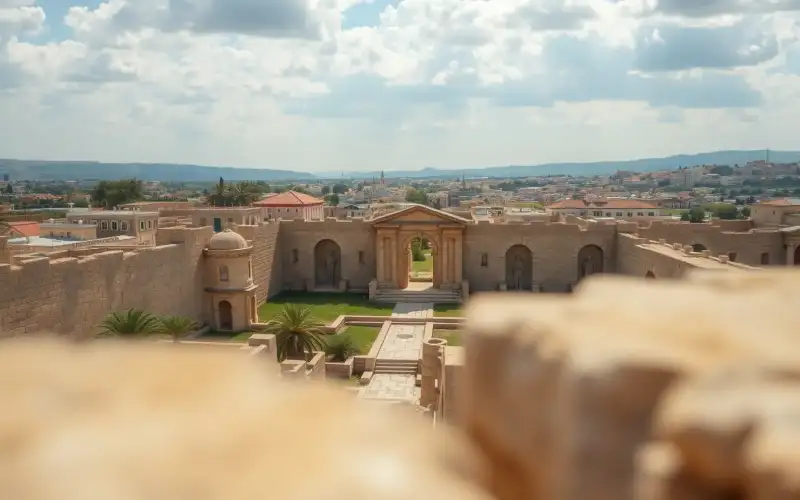
While ancient Salamis near Famagusta draws most of the archaeological visitors to northern Cyprus, the ruins at Aphendrika, near the north coast of the Karpas, see almost nobody. This was once a significant city-kingdom; three early Byzantine churches survive in various states of collapse, along with the outline of a harbour and stretches of city wall disappearing into scrub.
The largest of the three churches, Panagia Asomatos, retains substantial sections of its apse and nave walls, and on a clear morning the quality of light through the open roof is something an architect would struggle to improve on. There are no facilities, no entrance fee, no signage to speak of. You park on the track, walk fifty metres, and you are inside a sixth-century church with nobody else there.
Aphendrika is reached via a rough track running north from the road between Dipkarpaz and Apostolos Andreas. A 4WD is helpful but not essential in dry weather. Allow two hours to explore the site properly.
6. Panayia Eleousa Church, Melanarga — Frescoes in the Scrub
This small Byzantine church, standing alone in the fields a few kilometres south-west of Dipkarpaz, contains fragmentary frescoes dating from the 12th and 13th centuries. The building is locked, but the key is held by a resident of the nearest farmhouse — a five-minute walk away — and is handed over without fuss to anyone who asks politely. This arrangement, entirely informal and seemingly permanent, tells you something about the Karpas's relationship with its own heritage.
The frescoes show Christ Pantocrator in the apse and fragments of a Nativity scene on the north wall. They are damaged — moisture, time, and decades of neglect have taken their toll — but enough remains to understand what a skilled workshop produced here in the Lusignan period. The church is small enough that you feel the scale of the original decoration acutely. It takes perhaps twenty minutes to look properly, but those twenty minutes have a quality that larger, more managed sites rarely match.
7. Cape Apostolos Andreas — The Walk to the Tip
Most visitors drive to the monastery and turn around. The walk from the monastery car park to the actual tip of the cape — Apostolos Andreas Point — takes about 45 minutes on a rough path through low maquis. The path is not signposted and involves some mild scrambling over limestone outcrops, but it is not technically difficult. What you find at the end is a small lighthouse, a scattering of sea-worn rocks, and a view that takes in Turkey to the north, the Karpas coast to the south, and open sea to the east.
On a clear day in autumn you can sometimes see the mountains of the Hatay region of Turkey, about 100 kilometres away. The sea here is a deep, almost violet blue. It is worth the walk for the simple reason that very few people make it, and solitude at a geographical extreme has a particular quality.
Take water, wear shoes with some grip, and go in the morning before the midday heat. The return walk is slightly harder, as you are climbing back toward the monastery. Allow two hours in total including time at the tip.
8. The Karpas Panhandle Drive — The Journey as the Destination
The drive along the spine of the peninsula from Famagusta to Apostolos Andreas — roughly 130 kilometres — is itself one of the Karpas's highlights, and it deserves to be treated as such rather than simply as a means of getting somewhere. The road passes through a sequence of landscapes that feel increasingly remote: olive groves giving way to carob orchards, then to open garrigue, then to the bare limestone ridges of the peninsula's tip.
Several villages along the route merit a stop. Yialousa (Yeni Erenköy) has a bakery producing excellent sesame rings. Koma tou Yialou (Kumyalı) has a small fishing harbour where the catch is sometimes sold directly from the boats in the early morning. The village of Kaleburnu (Galinoporni) sits on a ridge with views over both coasts simultaneously — one of those geographical moments that makes you recalibrate your sense of scale.
The Karpas does not reward rushing. The traveller who allows three days rather than one will find that the peninsula gradually reveals itself, like a conversation that only becomes interesting after the initial pleasantries are done.
Comparing the Highlights: What to Prioritise
| Highlight | Type | Time needed | Access difficulty | Best for |
|---|---|---|---|---|
| Apostolos Andreas Monastery | Religious/historical | 1–2 hours | Easy (paved road, potholed) | History, pilgrimage, restoration stories |
| Golden Beach | Beach/nature | Half day | Moderate (dirt track) | Swimming, solitude, turtle watching |
| Wild Donkeys | Wildlife | 30 mins–1 hour | Easy (roadside) | Families, photographers |
| Dipkarpaz Village | Living history | 2–3 hours | Easy (main road) | Culture, food, community history |
| Ancient Aphendrika | Archaeological | 2 hours | Moderate (rough track) | Archaeology enthusiasts, solitude |
| Panayia Eleousa | Byzantine art | 1 hour | Easy–moderate | Art history, off-the-beaten-track |
| Cape Walk | Walking/scenery | 2 hours | Moderate (unmarked path) | Walkers, photographers |
| Panhandle Drive | Scenic/cultural | Full day | Easy (main road) | First-time visitors, slow travellers |
How to Plan Your Visit in 2026
The Karpas is best visited between late September and early November, or in April and May. July and August are hot — genuinely, uncomfortably hot, with temperatures regularly above 38°C — and the peninsula has almost no shade infrastructure. Spring brings wildflowers across the garrigue and cooler walking conditions. Autumn brings the light that photographers come for.
A hire car is effectively essential. There is no public transport beyond a single minibus that runs from Famagusta to Dipkarpaz a few times a week and is not timed for tourist convenience. Fuel up in Dipkarpaz before heading to the tip. Mobile coverage is intermittent from Dipkarpaz onward — download offline maps before you leave Famagusta.
- Crossing point: Famagusta (Gazimağusa) or Metehan — both open 24 hours; passport required
- Currency: Turkish lira in the north; some places accept euros at unfavourable rates
- Accommodation: A handful of small guesthouses in Dipkarpaz; the Oasis Hotel at Golden Beach operates May–October
- Driving: International licence accepted; hire cars from the Republic of Cyprus require specific insurance for the north — check with your hire company
- Emergency services: Dial 112; coverage is unreliable at the peninsula tip
The Karpas asks something of its visitors — a willingness to accept imperfect roads, limited facilities, and the occasional dead end. In return, it offers something increasingly rare in Mediterranean tourism: the genuine sensation of being somewhere that has not yet been entirely arranged for your benefit. That, in 2026, is worth quite a lot.
Comments (4 comments)