
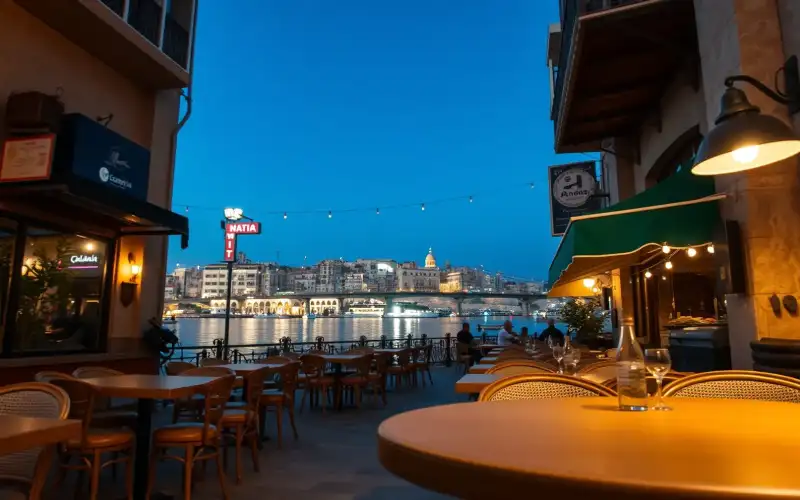
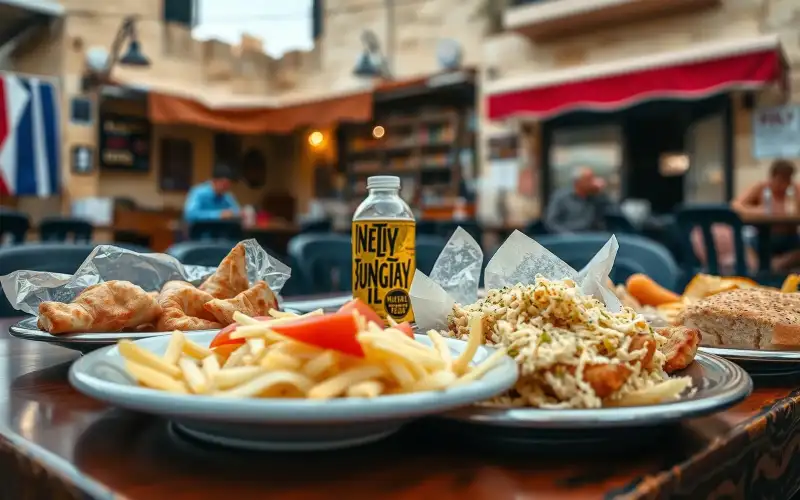
The first time I sat down to a proper Cypriot meze, I had no idea it would take three hours. The waiter at a small taverna just outside the Venetian walls — a place with plastic chairs, a hand-painted menu board and a cat asleep under the bread basket — kept arriving with plates. Olives. Taramosalata. Grilled halloumi. Loukanika sausages. Stifado. Kleftiko. At some point I lost count. By the time the fruit plate appeared, I had eaten more than I had in two days in Nicosia. That, in essence, is Cypriot meze. It is not a dish. It is a philosophy.
Famagusta — or Gazimağusa, depending on which side of the Green Line your map was printed — sits in the northeast of Cyprus and draws a particular kind of traveller. Not the pool-and-cocktail crowd of Ayia Napa, twenty minutes down the coast. The people who come here tend to want the Othello Tower, the ruins of Salamis, the silence of the Karpas peninsula. They also, if they are paying attention, want to eat well. And in 2026, the restaurant scene in and around the walled city rewards that attention handsomely.
This guide walks you through the process of making the most of Famagusta's food culture — step by step, from choosing the right type of experience to knowing what to order when the waiter looks at you expectantly.
What You Will Learn
By the end of this guide, you will understand the structural difference between a meze sitting and a fine dining experience in this part of Eastern Cyprus. You will know which restaurants are currently worth your time in 2026, what local ingredients define the cooking here, how to pace yourself across a long meze, and how to avoid the two or three pitfalls that catch most first-time visitors. There are also notes on price expectations, booking etiquette, and the question of whether the fine dining options in Famagusta can genuinely compete with what you might find in Limassol or Nicosia.
Before You Sit Down: What to Know First
A few things are worth establishing before you walk through any restaurant door in Famagusta.
The currency is the Turkish lira. Northern Cyprus operates under a different economic and political framework from the Republic of Cyprus to the south. Prices in 2026 have stabilised somewhat after the volatility of recent years, but it is still worth checking the exchange rate on the morning you plan to eat. A full meze for two, with house wine or local Efes beer, typically runs between 1,200 and 1,800 Turkish lira per person at a mid-range taverna — roughly £25–£38 at mid-2026 rates. Fine dining establishments near the walls tend to quote in euros or sterling equivalents and charge accordingly: expect £45–£75 per head with wine.
Lunch is the serious meal. Unlike the evening-focused dining culture of, say, Istanbul or Athens, many of the best traditional tavernas in the Famagusta area do their most interesting cooking at lunchtime. Kleftiko — slow-cooked lamb sealed in a clay pot overnight — is often ready by 1pm and gone by 3pm. If you want it, arrive early.
Booking matters more than it used to. The walled city has perhaps a dozen restaurants worth recommending; the fine dining options number three or four at most. In summer (June through September), tables at the better places fill by 7:30pm. Call ahead, or ask your accommodation to book for you.
Step 1 — Decide What Kind of Evening You Want
This sounds obvious. It is not. The choice between meze and fine dining in Famagusta is not simply about budget or formality. It is about what you want the meal to do for you.
A meze sitting is communal, loud, generous, and long. You will share everything with whoever is at your table. You will not choose individual dishes — the kitchen decides the sequence, and a good taverna will read the table and adjust. It is excellent for groups, for celebrating, for getting to know people. It is less suited to quiet conversation or a romantic dinner where you want to focus on each other rather than negotiating the last piece of halloumi.
Fine dining near the Venetian walls offers something different: considered cooking, attentive service, a wine list that goes beyond Efes and house red, and the architectural drama of eating in a city that has been continuously inhabited since the Bronze Age. It is quieter, more controlled, and — on a good night — genuinely moving.
Neither is better. They are different instruments playing different music.
Step 2 — Choose Your Restaurant
Here is where specifics matter. The following table covers the main options across both categories as of 2026.
| Restaurant | Type | Location | Approx. Cost Per Head | Best For |
|---|---|---|---|---|
| Petek Pastanesi & Restaurant | Traditional taverna / meze | Inside the walled city, near Namık Kemal Square | £22–£30 | Lunch meze, local atmosphere |
| Monk's Inn Restaurant | Meze / grills | Just outside the Land Gate | £25–£35 | Evening meze, mixed crowd |
| Archway Restaurant | Fine dining / Mediterranean | Venetian walls, near Ravelin bastion | £50–£70 | Special occasions, wine focus |
| Salamis Bay Conti (hotel restaurant) | Fine dining / international | Salamis Bay, 8km north of city | £45–£65 | Seafood, sunset dining |
| Karpaz Gate Marina Restaurant | Contemporary Cypriot | Marina, 2km north | £35–£50 | Fish, lighter plates, harbour views |
A note on Petek: it is primarily known as a pastry shop — the loukoumades and the baklava are exceptional — but the back room serves a respectable lunchtime meze that most visitors walk straight past. Do not walk past it.
Step 3 — Navigate the Meze
If you have chosen the meze route, here is how to approach it without either overeating in the first twenty minutes or missing the dishes that matter most.
The Opening Plates
A Famagusta meze typically begins with cold mezedes: hummus, tahini, taramosalata, olives cured in coriander and lemon, fresh village bread. These are the palate-openers, not the meal. Eat lightly here. The temptation is to fill up on bread and hummus because they are excellent. Resist.
The Middle Course
This is where the cooking becomes interesting. Grilled halloumi — made locally, not the rubbery export version — arrives alongside loukanika (pork sausages spiced with coriander and red wine), sheftalia (a kind of herbed meatball wrapped in caul fat, grilled over charcoal), and sometimes a plate of grilled octopus if the restaurant is near the coast. The village salad — tomatoes, cucumber, onion, dried oregano, a slab of local cheese — arrives somewhere in here, usually without being ordered.
The Main Event
Kleftiko is the dish to wait for. Lamb slow-cooked with lemon, garlic, bay and oregano until it falls from the bone. Some tavernas still cook it in sealed clay pots; others use foil-covered trays. The clay-pot version is noticeably better. Stifado — a beef or rabbit stew with shallots, cinnamon and red wine — is the other serious contender. At a good taverna, both will appear without you asking.
The kleftiko at Monk's Inn arrives in a sealed clay pot that the waiter cracks open at the table. The steam carries the smell of lemon and oregano across the room. It is, without question, one of the better things I have eaten in twenty-five years of travelling this part of the world.
Step 4 — Navigate Fine Dining
Fine dining in Famagusta is a smaller, more recent phenomenon. The Archway Restaurant near the Ravelin bastion opened in its current form around 2019 and has steadily built a reputation for cooking that takes Cypriot ingredients seriously without being slavishly traditional. The menu in 2026 includes dishes like slow-cooked pork belly with carob molasses and pickled green almonds, grilled sea bass with a sauce built on local capers and preserved lemon, and a dessert of halva ice cream with crushed pistachios and rose water that is considerably better than it sounds.
The wine list leans toward Lebanese and Turkish producers alongside a small selection of Cypriot wines from the south — a quietly political choice that the restaurant makes without comment. The Chateau Ksara Reserve from the Bekaa Valley works well with the lamb dishes. The Kyperounda Petritis white, if they have it, is worth ordering with the fish.
What Fine Dining Here Does Well
- Using local ingredients — carob, capers, halloumi, local honey — with genuine technique
- The physical setting: stone walls, candlelight, the sound of nothing much outside
- Service that is attentive without being theatrical
- Wine pairings that reflect the eastern Mediterranean rather than defaulting to French or Italian bottles
Where It Falls Short
- Consistency can be uneven mid-week when the head chef is off
- The dessert menu lags behind the savoury cooking
- Vegetarian options remain an afterthought at most establishments
Step 5 — Know Your Local Ingredients
Whatever type of restaurant you choose, certain ingredients define the cooking of this region and are worth knowing before you order.
Halloumi: The real thing, made from a mixture of sheep's and goat's milk, has a texture and saltiness that the exported version does not replicate. In Famagusta, you will often find it grilled over charcoal rather than in a pan, which produces a slightly smoky crust. If a menu lists it as simply 'cheese', ask.
Carob: Cyprus was once the world's leading carob exporter, and the dark, sweet syrup made from carob pods — sometimes called 'black gold' locally — appears in desserts, marinades and even drinks. It has a molasses-like depth that works surprisingly well with pork and duck.
Capers: The wild caper bushes that grow from the walls of old Famagusta itself — you can see them pushing through the limestone in summer — produce small, intensely flavoured capers that are pickled and used throughout the local cooking. They are sharper and more aromatic than the imported jars you find in supermarkets.
Louvi: Black-eyed beans, usually served warm with a generous pour of olive oil and a squeeze of lemon. Simple, filling, and one of the most honest dishes in the Cypriot repertoire. Often listed as a side dish; worth ordering as a starter.
A Cypriot friend once told me that you can judge a taverna by its louvi. If the beans are mushy and the olive oil is thin, leave. If the beans hold their shape and the oil is green and grassy, sit down and order everything.
Troubleshooting: Common Problems and How to Handle Them
Even well-prepared visitors run into difficulties. Here are the most common ones.
The meze arrives too fast. Some tavernas, particularly those catering to tourist turnover, pile plates on the table before you have finished the previous course. It is entirely acceptable to ask them to slow down — yavaş yavaş (slowly, slowly) is understood and appreciated. You are paying for the experience, not the speed.
The bill includes items you did not order. This is rare but happens. Bread is sometimes charged separately (usually 20–30 lira per person); so is the small dish of olives that appears automatically. Check the itemised bill if something looks off. Most restaurants will correct errors without fuss.
The fine dining restaurant is fully booked. The Archway seats around forty covers. In July and August, it books out days in advance. If you cannot get a table, the Karpaz Gate Marina restaurant is a credible alternative — the cooking is less ambitious but the setting, looking out over the harbour at dusk, compensates considerably.
You are vegetarian or vegan. Cypriot cuisine is not naturally vegetarian-friendly — much of the meze is built around grilled meats. That said, a good taverna will assemble a respectable spread from the cold mezedes, the louvi, grilled halloumi, village salad, and the various dips. Call ahead and explain; most kitchens will accommodate with some notice. The fine dining restaurants are slightly more flexible, particularly Archway, which has added a dedicated vegetarian tasting menu for 2026.
A Final Word on the Choice
Famagusta is not a city that performs its history for tourists. The Venetian walls are not a theme park. The ruins of Salamis, eight kilometres north, are not roped off behind gift shops. The food culture here has the same quality — it is doing what it has always done, largely for the people who live here, and visitors are welcome to join in if they pay attention.
The meze and the fine dining table represent two different ways of joining in. One asks you to surrender control and trust the kitchen. The other asks you to engage with what a small number of chefs are doing with the ingredients of this particular landscape. Both, done properly, are worth the journey to the east of the island.
Eat the kleftiko. Order the louvi. Ask about the carob dessert. And if the cat is asleep under the bread basket, take it as a good sign.
Comments (5 comments)