
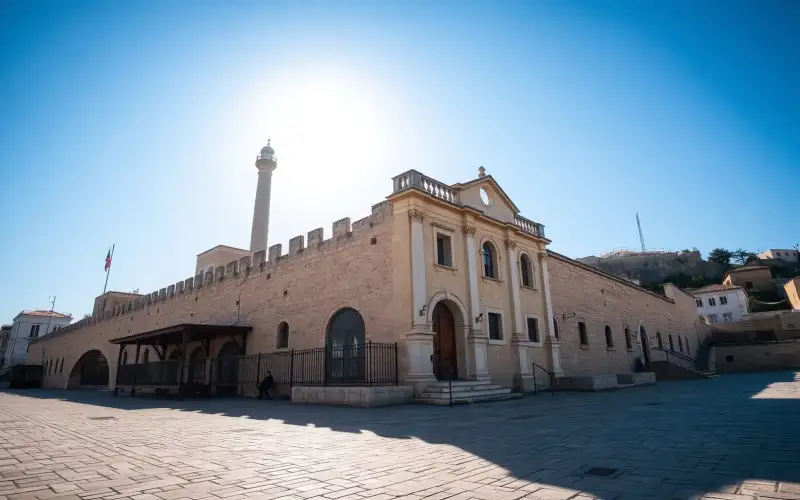
I arrived at the Land Gate on a Tuesday morning in March, when the light was still low and the shadows fell like brushstrokes across the limestone walls. The gate—that massive, angular structure completed in 1547—stood almost empty. A man on a motorcycle passed through without glancing up. I stood there for twenty minutes, watching how the sun caught the carved stone, how the archway framed the street beyond, and I understood why photographers return to Famagusta again and again. The city doesn't perform for the camera. It simply exists, and that's what makes it magnetic.
Why Famagusta's Walls Matter to Visual Storytellers
Famagusta attracts roughly 200,000 visitors annually, yet the walled city itself remains quieter than you'd expect for a place this historically significant. Built between 1300 and 1550 by Venetian and Ottoman engineers, the walls stretch 3.5 kilometres around the old town—a perfect perimeter for a day of photography. The city changed hands four times: Lusignan, Venetian, Ottoman, British, and now Cypriot. Each layer is visible if you know where to look.
What makes Famagusta different from other Mediterranean walled cities is the texture. The stone here has absorbed centuries of salt air, warfare, occupation, and neglect. Plaster peels in organised patterns. Iron grilles rust with purpose. The vegetation grows in cracks as if it's been invited. For photographers and painters alike, this decay is not a flaw—it's the subject itself.
The walled city measures roughly 800 metres north to south and 600 metres east to west. You can walk the entire perimeter in under ninety minutes, but you shouldn't. Photography here rewards patience and repetition. The same corner looks entirely different at 8 a.m., noon, and 4 p.m.
Lala Mustafa Mosque: Light, Height, and Composition
The minaret of Lala Mustafa Mosque rises 43 metres above the old town, visible from the Karpas peninsula on clear days. Originally built as the Cathedral of Saint Nicholas in the 14th century, the building was converted to a mosque after the Ottoman conquest in 1571. The architecture is Gothic-Venetian; the function is Islamic. This collision of histories is exactly what makes it photographically compelling.
The best approach is from Namık Kemal Square on the western side. Arrive between 6:45 and 7:15 a.m., when the sun rises behind the city and the mosque's eastern facade glows amber. Bring a wide-angle lens—24mm or wider—to capture the minaret against the sky without stepping too far back. The square itself is rarely crowded at this hour. Local people pass through on their way to work. A cat or two will be hunting in the corners.
If you're photographing at midday, position yourself on the southern side of the mosque, near the old Ottoman fountain. The shadows here are dramatic and geometric. The carved stone of the Gothic doorways becomes almost three-dimensional in harsh light. Exposure compensation is crucial—the white stone can fool your camera's meter, making the image appear underexposed. Bracket your shots, or use spot metering on the darkest shadow you want to retain detail in.
Inside the mosque (open to visitors outside prayer times; check locally for current hours), the light through the stained-glass windows creates pools of colour on the floor. Photographing inside requires sensitivity—this is an active place of worship, not a gallery. Respectful distance and quiet observation matter more than the perfect shot. The best interior images come from standing still and waiting, not hunting.
Othello Castle: Layers and Vantage Points
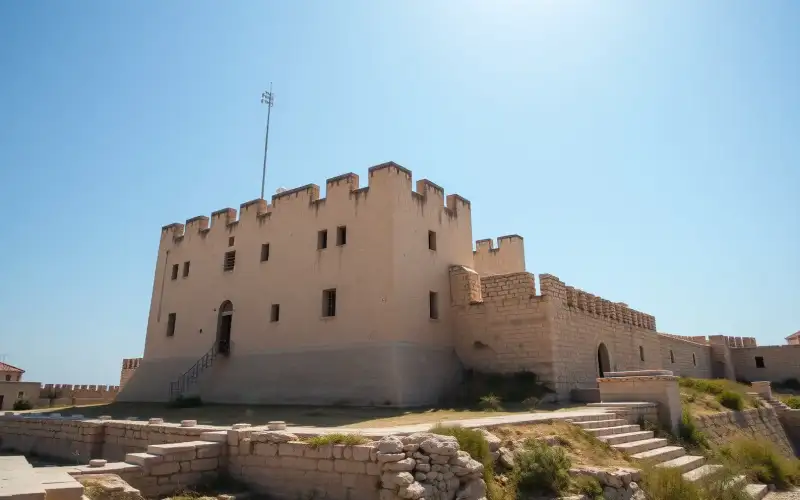
Othello Castle occupies the southeastern corner of the walled city, built by the Venetians in the 1490s and expanded by the Ottomans. The structure is less a castle than a fortress—a squared-off, functional defensive structure with casemates, gun ports, and bastions. It's also where Shakespeare's play is supposedly set, though the historical connection is tenuous at best.
The entrance fee in 2026 is €4.50 for adults. The castle is open daily from 9 a.m. to 5 p.m., though these hours shift seasonally. Inside, you can climb to the ramparts and photograph the city from above—a perspective that reveals the urban grid and the relationship between the walls and the streets within.
The most rewarding photographs here come from outside the castle, looking at it. Position yourself on the narrow street to the north (Lala Mustafa Caddesi) around 3 p.m. in winter, or 4:30 p.m. in summer. The western-facing walls catch the late afternoon light, and the shadows in the gun ports become almost black—perfect for high-contrast black-and-white work. The weathered stone shows centuries of cannon fire, repairs, and exposure. Every pockmark tells a story.
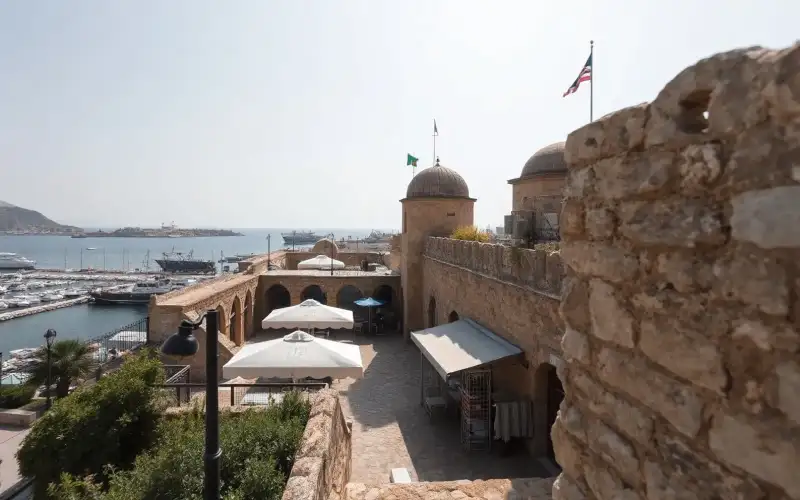
Climb the ramparts inside the castle for a different composition: looking outward toward the Varosha district and the sea beyond. The contrast between the preserved walled city and the abandoned hotels of Varosha (visible in the distance) creates a powerful narrative about tourism, politics, and time. This is the kind of shot that works best as a series rather than a single image.
The Gates: Where Boundaries Become Portraits
Famagusta has five main gates cut into the walls. Each one is a photograph waiting to happen.
- Land Gate (Porta Terraferma): The largest and most imposing, built 1547. Photograph it from inside the walls, looking outward, to capture the archway framing the modern city beyond. The contrast between medieval engineering and contemporary life is stark.
- Sea Gate (Porta del Mare): Located on the northern waterfront, this smaller gate is less visited. The stone here is more weathered, the light more dramatic, especially in late afternoon when the sun reflects off the water.
- Biddulph's Gate: A British-era addition on the western wall, less ornate than the Venetian gates. It's useful for understanding how the city evolved.
- Ravelin Gate: The eastern gate, often overlooked. The surrounding walls here have more vegetation, more texture, more visual interest for close-up work.
Each gate works best photographed at different times of day. The Land Gate is dramatic at sunrise and sunset. The Sea Gate benefits from bright midday light that catches the stone's texture. The Ravelin Gate is best in the soft light of overcast afternoons, when the colours are muted and the details emerge.
Streets, Shadows, and the Grammar of Stone
The real photography happens in the streets between the monuments. Famagusta's old town is a maze of narrow passages, some barely two metres wide. The buildings here are lower than the walls, so the streets are corridors of shadow. In summer, this is where locals retreat to escape the heat. In winter, the light that penetrates these alleys is soft and directional—ideal for colour work.
Walk slowly. Photograph the way light falls on a doorway. Notice how a single window can frame an entire story. Look for the patterns: the rhythm of shutters, the geometry of roof tiles, the way vines grow in spirals up a wall. These details are what distinguish a snapshot from a photograph.
The Namık Kemal Square (formerly Piazza San Marco) is the heart of the old town. Surrounded by Ottoman-era buildings, it's where locals gather to drink coffee and play backgammon. Photograph here in the late afternoon, when the light is golden and the shadows are long. The human element—the everyday life of the city—is as important as the architecture.
The Church of Saint Luke, on the western side of the square, is one of the oldest buildings in the city. Its weathered exterior is a study in texture and decay. Photograph the details: the carved stone above the door, the cracks in the plaster, the way the mortar has crumbled between the stones. These close-ups often tell more powerful stories than wide shots.
Technical Considerations: Light, Season, and Equipment
Famagusta's light changes dramatically by season. In summer (June to August), the sun is high and harsh, creating strong shadows and blown highlights. The best photography hours are 6 to 8 a.m. and 5 to 7 p.m. In winter (December to February), the sun is lower throughout the day, and the light is more usable for longer periods.
Spring (March to May) and autumn (September to November) offer the most consistent light. The sun isn't too high, the air is clearer, and the temperature is comfortable for walking with a camera all day.
| Season | Best Photography Hours | Light Quality | Visitor Density |
|---|---|---|---|
| March–May | 7 a.m.–6 p.m. | Soft, directional, ideal | Moderate |
| June–August | 6–8 a.m., 5–7 p.m. | Harsh midday, golden edges | High |
| September–November | 7 a.m.–5:30 p.m. | Warm, balanced | Moderate to low |
| December–February | 8 a.m.–4:30 p.m. | Cool, diffused | Low |
Equipment matters less than you'd think. A smartphone camera will capture the essence of these places. A mirrorless camera with a 24–70mm lens covers most situations. A tripod is useful for long exposures at dusk, but it's not essential. What matters is being present, patient, and willing to return to the same spot multiple times.
Bring a polarising filter if you're shooting digitally. It reduces glare off the stone and deepens the blue of the sky. Neutral density filters are useful for long exposures in bright light, especially near the waterfront where the light is intense.
Beyond the Obvious: Hidden Perspectives
Most visitors photograph Lala Mustafa Mosque from Namık Kemal Square. Most photograph Othello Castle from the street outside. These are good shots, but they're predictable. The more rewarding work comes from exploring the less obvious angles.
Climb to the top of the walls wherever access allows. The view from the ramparts shows the relationship between the city and the landscape beyond. Photograph the walls themselves—the texture of the stone, the patterns of repair, the way vegetation colonises the cracks. These are abstract compositions that speak to time and decay.
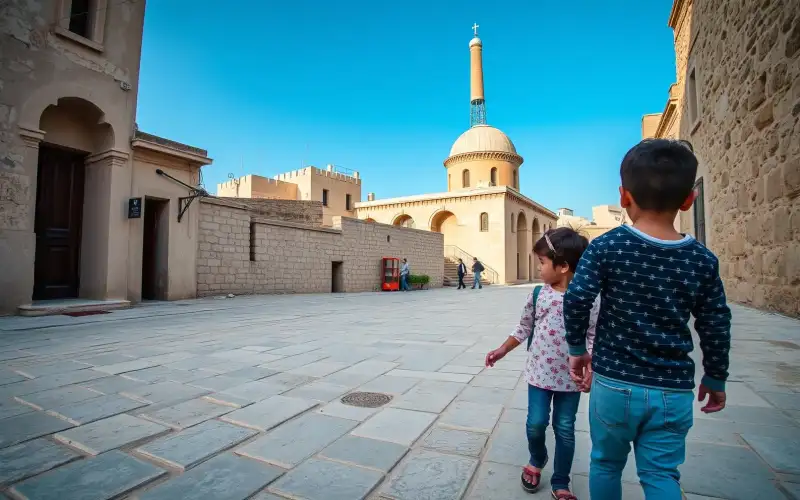
Photograph the people. A woman buying vegetables at a market stall. A group of men playing dominoes in the shade. A child chasing pigeons across the square. These moments are fleeting, but they're what make a city alive. They're also what distinguish a travel photograph from a travel brochure.
Return to the same location at different times of day. The same corner looks entirely different in morning light versus evening light. Photograph it multiple times. You'll find different compositions, different moods, different stories emerging from the same physical space.
Practical Logistics for a Photography Day
Most people explore the walled city as a half-day excursion. If you're serious about photography, dedicate a full day. Start before sunrise. Bring water—the walls provide little shade, and dehydration clouds your judgment about composition. Wear comfortable shoes with good grip; the stone is uneven and can be slippery, especially near the waterfront.
The walled city has several cafés and restaurants, mostly clustered around Namık Kemal Square. A coffee at one of these establishments costs €1.50 to €3. A simple lunch (grilled cheese, salad, bread) runs €6 to €10. There's no entrance fee to the walled city itself, though Othello Castle (€4.50) and the Lala Mustafa Mosque require respectful entry protocols.
Parking is available outside the walls. The Land Gate is the most convenient entry point if you're coming from the newer part of the city. The Sea Gate is quieter and offers direct access to the waterfront. Plan your route before you arrive, or simply wander—the city is small enough that you won't get truly lost, and the unexpected turns often yield the best photographs.
Photography in Famagusta isn't about capturing monuments. It's about witnessing how light, time, and human presence collaborate on stone. Every wall, every gate, every shadow tells a story that's been accumulating for five centuries. Your job is simply to notice.
The walled city of Famagusta rewards slow observation. Bring your camera—or your sketchbook—and spend time here. The light will teach you what to photograph. The stones will show you how to see.

Comments (4 comments)