
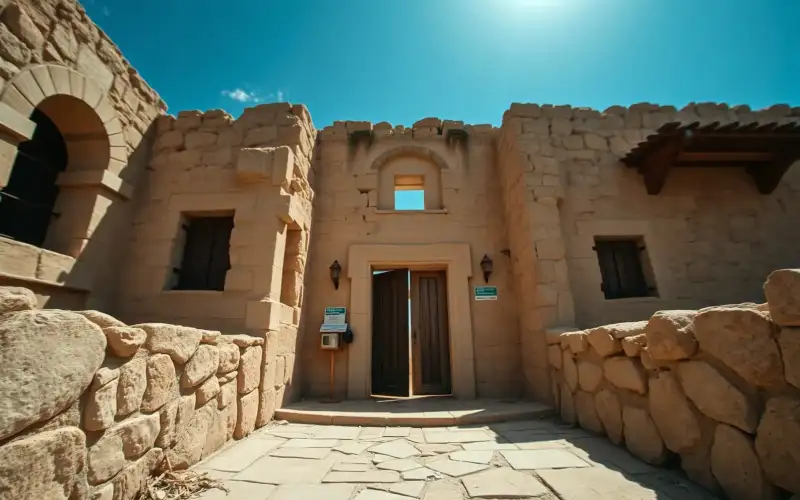
I first arrived at Salamis on a March afternoon when the light turned everything the colour of old parchment. The gymnasium's marble columns cast shadows like ink strokes across the ground, and I found myself standing still for twenty minutes, watercolour pad forgotten, just watching how the sun moved across the stones. That's when I understood why Salamis matters—it's not just a collection of ruins. It's a conversation between what was and what remains, and you have to stand there to hear it properly.
Salamis lies about 6 kilometres north of Famagusta, accessible by a short drive or taxi ride through the outskirts of the modern city. The archaeological site sprawls across roughly 150 hectares, though most visitors focus on a concentrated area that takes between two and three hours to explore at a leisurely pace. Unlike the crowded sites of mainland Greece, Salamis in 2026 remains refreshingly quiet—you'll encounter perhaps a handful of other visitors on most days, which means you can actually hear yourself think and, more importantly, hear the place itself.
Understanding the Site's Historical Weight
Salamis was founded by Greek colonists in the 11th century BCE, making it one of the oldest Greek settlements in Cyprus. The city flourished for over two millennia, serving as a major port and cultural centre under the Ptolemies, Romans, and Byzantines. What you see today is primarily Roman and Byzantine, layered atop earlier Greek foundations—a physical timeline that's genuinely moving if you take time to read it.
The site suffered catastrophically in 649 CE when Arab raids devastated the city. A massive earthquake in 1118 CE finished the job, and Salamis was eventually abandoned. What remained was buried under sand and vegetation until systematic excavations began in the 1880s. The Swedish Cyprus Expedition conducted the most significant work between 1889 and 1931, uncovering much of what you see today. This historical context matters because it shapes how you interpret the ruins—you're not looking at a snapshot frozen in time, but rather a palimpsest of overlapping civilizations.
The city's decline also explains its preservation. Unlike sites continuously inhabited and rebuilt over centuries, Salamis was abandoned and left to the elements. This means Roman and Byzantine structures survived relatively intact, giving us an unusually complete picture of urban life in the late antique Mediterranean.
The Gymnasium: Where Athletes and Philosophers Met
Start your visit at the gymnasium, the site's most visually impressive monument and the area where most first-time visitors spend the longest. The structure dates to the Roman period, probably the 2nd century CE, though it was rebuilt and modified multiple times. What makes it remarkable is the sheer scale—the colonnade that surrounds the central courtyard originally featured 200 columns, of which 40 still stand. Walking among them, you grasp the ambition of Roman Salamis in a way that photographs never convey.
The gymnasium functioned as far more than a place for physical training. It was a social and intellectual hub where young men received education in rhetoric, philosophy, and athletic pursuits. The columns you see supported a covered portico where instruction took place during the heat of the day. The open courtyard served for wrestling, running, and other athletic competitions. Beneath the portico, find the remains of stone benches where philosophers and teachers would have held forth, their voices echoing off the marble.
Look closely at the column bases and capitals—you'll notice that many columns are made from different stones and show signs of repair and replacement. This isn't carelessness. It reflects the site's long history. Damage from earthquakes, weathering, and the simple wear of centuries meant constant maintenance and replacement. Some columns are Roman originals; others are Byzantine replacements. This palimpsest of repair work is actually one of the gymnasium's most historically interesting features, if you know what you're looking at.
The gymnasium's western end contains a small museum space (though it's often locked—check with the site entrance for access). Here you'll find sculptures, inscriptions, and smaller finds that help contextualize what you're seeing in the open air. Spending ten minutes here transforms your understanding of the ruins.
The Roman Theatre: Spectacle and Survival
East of the gymnasium lies the theatre, a structure that tells its own complex story. Originally constructed in the Hellenistic period (probably 3rd century BCE), it was substantially rebuilt by the Romans, who expanded the seating capacity to accommodate around 15,000 spectators. The theatre's survival is remarkable—earthquakes toppled the upper seating tiers, but the lower sections remained relatively intact, buried under soil and vegetation.
The theatre's physical layout reveals Roman priorities. The orchestra—the performance space—is smaller than in classical Greek theatres, reflecting Roman preference for gladiatorial combat and wild beast hunts over dramatic performances. The stage building (scaenae frons) was originally three storeys high, decorated with marble columns and statuary. Today you see the brick and stone foundations, but imagine it as a glittering backdrop for performances that drew the city's entire elite.
What's particularly instructive about the theatre is how you can read the site's history in its stones. Look at the seating—the lower tiers are constructed from carefully dressed limestone blocks, the work of skilled stonemasons. Higher up, the construction becomes cruder, using smaller stones and more mortar. This wasn't laziness; it reflects the economic reality that as you climbed higher in the theatre, you were moving into less prestigious seating for poorer citizens. The physical structure literally encoded social hierarchy.
The theatre also demonstrates how the site was repurposed over time. In the Byzantine period, the theatre was converted into a fortress-like structure, with walls built across the seating to create a defensible enclosure. You can still see these later walls cutting across the original Roman design, a physical reminder that archaeology isn't about preserving a single moment but understanding how places transform across centuries.
The Basilica: Byzantine Piety and Architectural Ambition
Walking south from the theatre, you'll encounter the remains of a large Byzantine basilica, probably dating to the 5th or 6th century CE. This structure represents a completely different world from the pagan monuments you've been exploring—it's the physical manifestation of Salamis's transformation from a classical city to a Christian one.
The basilica's layout follows the standard Byzantine plan: a central nave with side aisles, separated by rows of columns, and an apse at the eastern end where the altar stood. The scale is impressive—the original structure would have been around 50 metres long and 30 metres wide, making it one of the largest churches in Byzantine Cyprus. The columns that once divided the nave from the aisles still stand in places, giving you a clear sense of the interior space and the rhythmic procession of columns that would have guided worshippers' eyes toward the altar.
The basilica's mosaic floor survives in fragments, though these are now protected under modern structures. The geometric and floral patterns visible in photographs and in the site museum demonstrate the sophistication of Byzantine decorative arts. The mosaics would have been breathtaking when new—brilliant blues, reds, and golds catching the light streaming through the windows.
What strikes many visitors is the basilica's position within the broader site. It doesn't replace the earlier monuments; instead, it coexists with them, suggesting a period when classical and Christian worlds overlapped. The gymnasium and theatre continued to function (though perhaps with diminished use) even as the basilica rose to dominate the city's spiritual life. This layering of religious and cultural values across the physical landscape is one of archaeology's most powerful lessons.
Practical Essentials for Your Visit
Salamis is open year-round, typically from 9:00 AM to 4:00 PM (check current hours before visiting, as these can shift seasonally). Admission costs €3.00 per person as of 2026, making it one of Cyprus's most affordable archaeological sites. The site is accessible by car or taxi from Famagusta—most visitors spend 2–3 hours exploring, though you can easily spend longer if you're interested in details.
Timing your visit matters. Early morning (9:00–11:00 AM) offers the best light for photography and the fewest crowds. The site offers minimal shade, so avoid the hottest part of the day in summer. In July and August, temperatures regularly exceed 35°C, making a mid-morning visit followed by an afternoon break your best strategy. Spring (March–May) and autumn (September–October) offer ideal conditions—warm but not scorching, with clear light and manageable crowds.
What to bring: water (at least 1.5 litres), a wide-brimmed hat, sunscreen, and comfortable walking shoes with good grip (the stones can be uneven and slippery). The site has no café or facilities, so plan accordingly. If you're seriously interested in understanding the site, bring or download a detailed site map before arriving—the on-site signage is minimal and sometimes unclear.
Guided tours are available through Famagusta hotels and tour operators, typically costing €40–60 per person for a half-day experience. A knowledgeable guide genuinely transforms your understanding of the site, particularly regarding the layered history and the connections between different monuments. If you're visiting independently, consider hiring a guide at the entrance—local guides typically charge €25–35 for a 90-minute tour and can answer specific questions as they arise.
Reading the Ruins: What to Actually Look For
The difference between a forgettable visit and a transformative one often comes down to knowing what to pay attention to. Here are the key things that reward close observation:
- Column capitals and bases: These often reveal which period a structure dates to and whether it's been rebuilt. Roman Corinthian capitals are ornate and precisely carved; Byzantine capitals are often simpler and cruder.
- Stone types and construction techniques: Different periods used different building methods. Roman work tends to be more regular and precisely fitted; Byzantine work is often cruder and uses more mortar.
- Damage patterns: Collapsed walls often tell you about earthquakes or military damage. The way stones have fallen can reveal something about the force that toppled them.
- Inscriptions: Even if you can't read Greek, the presence of inscriptions tells you that this was a place where people recorded important information—dedications to gods, commemorations of the dead, civic announcements.
- Mosaic and marble fragments: These humble pieces reveal the luxury and sophistication of daily life. A fragment of coloured marble or mosaic once formed part of someone's home or a public building's decoration.
The most rewarding approach is to move slowly, sit occasionally, and let the place work on you. Salamis isn't designed for rapid consumption. It rewards patience and observation in the way that a landscape painting rewards sustained looking.
Planning Your Salamis Visit Within a Broader Itinerary
Salamis works best as part of a longer exploration of the Famagusta region. The site sits about 6 kilometres from Famagusta's old city, making it easy to combine with a visit to the Venetian walls, the Cathedral of St. Nicholas, and the old town's labyrinthine streets. Many visitors rent apartments or villas in or near Famagusta for 3–4 days, which allows time for both the archaeological site and the medieval city without rushing.
If you're based in a villa or apartment in the area, consider visiting Salamis in the early morning, returning to your accommodation for a long lunch break during the hottest hours, then exploring Famagusta's old city in the late afternoon and evening when the light softens and the crowds thin. This rhythm respects both the climate and the pace at which these places reveal themselves.
For those interested in broader archaeological context, the Cyprus Museum in Nicosia (about 50 kilometres away) contains significant finds from Salamis, including sculptures, mosaics, and inscriptions. Visiting both sites gives you a fuller picture than either alone provides.
Why Salamis Matters: Beyond the Guidebook
Salamis's significance extends beyond its architectural monuments. The site represents a crucial period in Mediterranean history—the transition from classical antiquity to the Byzantine world, the arrival of Christianity, and the slow decline of urban civilization in the late antique period. Standing among these ruins, you're literally standing at the intersection of these vast historical forces.
There's also something profoundly moving about exploring a place that was abandoned, forgotten, and then rediscovered. The people who built these structures, who walked these streets and sat in the theatre, lived their entire lives here. They believed their city would endure forever. Instead, it vanished beneath sand and vegetation for over a thousand years. Then archaeologists arrived and slowly, carefully, brought it back to light. That process of recovery and revelation is what makes Salamis haunting in a way that more famous sites sometimes aren't.
Visit in the right frame of mind—unhurried, curious, willing to sit with questions rather than rushing toward answers—and Salamis will offer you something that guidebooks can't quite capture. It's a place where the past doesn't feel distant or abstract. It feels present, layered into the stones beneath your feet.

Comments (5 comments)