

Last October, I watched a couple from Bristol sit on the terrace of a rented villa near Dipkarpaz, nursing coffee as the morning light caught the Karpas peninsula's empty beaches. They'd booked for two weeks. Three days earlier, they'd nearly chosen an apartment overlooking Famagusta's Venetian walls instead. The difference between those two choices would have reshaped their entire holiday—not better or worse, but fundamentally different. That tension between remote seclusion and urban proximity defines the decision facing most travellers considering self-catering accommodation in this corner of Cyprus.
The choice between a Karpas villa and a Famagusta apartment isn't simply about aesthetics or price. It's about how you want to spend your time, what you're willing to sacrifice for privacy, and whether you prefer exploring from a fixed base or using your accommodation as a launching pad for daily excursions. Both options suit the 45–70 demographic increasingly drawn to eastern Cyprus, but they demand different temperaments and different travel rhythms.
Understanding the Geography and Access
Famagusta sits roughly 80 kilometres south of the Karpas peninsula's tip. That distance sounds modest on a map, but the drive—particularly once you venture past Dipkarpaz toward Agia Trias or the northernmost beaches—takes between 90 minutes and two hours along a road that deteriorates the further north you travel. The walled city occupies the southern coast, anchored by the medieval fortifications that dominate the skyline. Karpas stretches northeast like a finger pointing toward Syria, narrower and progressively more remote.
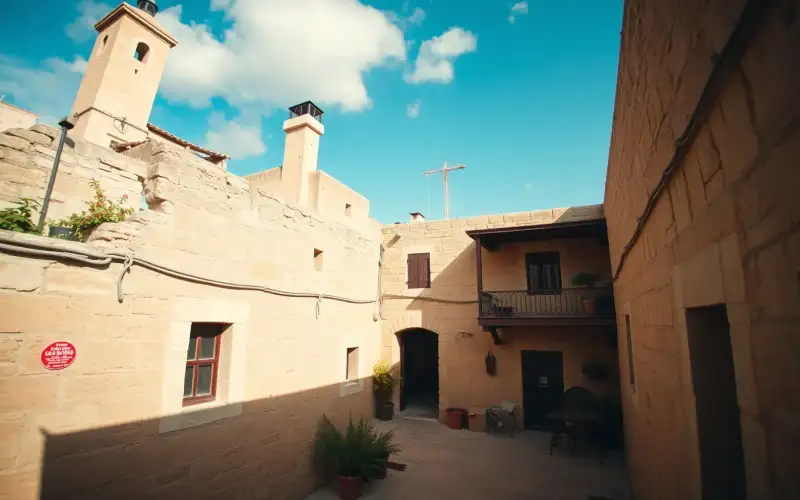
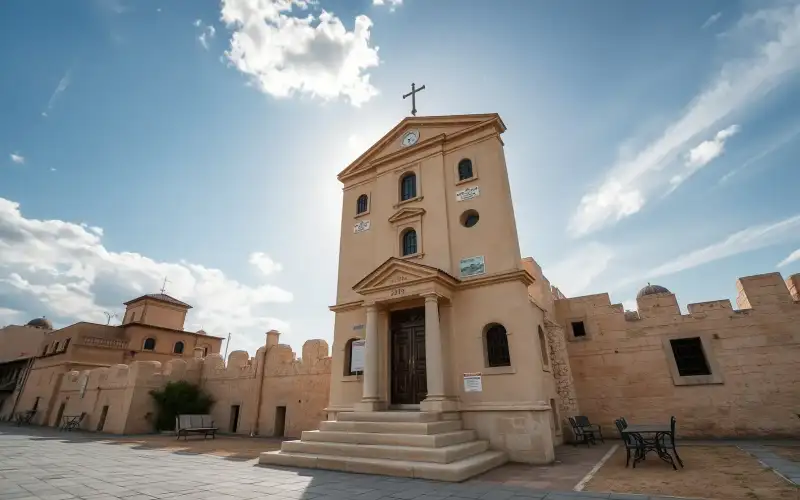
For those renting in Famagusta, the medieval old town is walkable. The Venetian walls, the Lala Mustafa Pasha Mosque (the former St. Nicholas Cathedral), and the warren of narrow streets are on foot. The modern seafront—Glossa Beach, the promenade—is accessible by a short walk or a five-minute drive. Ruins cluster within reasonable reach: Salamis lies 12 kilometres north, Nagidos 35 kilometres northeast, and Enkomi roughly 20 kilometres west. A couple staying in the old town can breakfast in their apartment, walk the walls before 9 a.m., and reach Salamis by mid-morning without rushing.
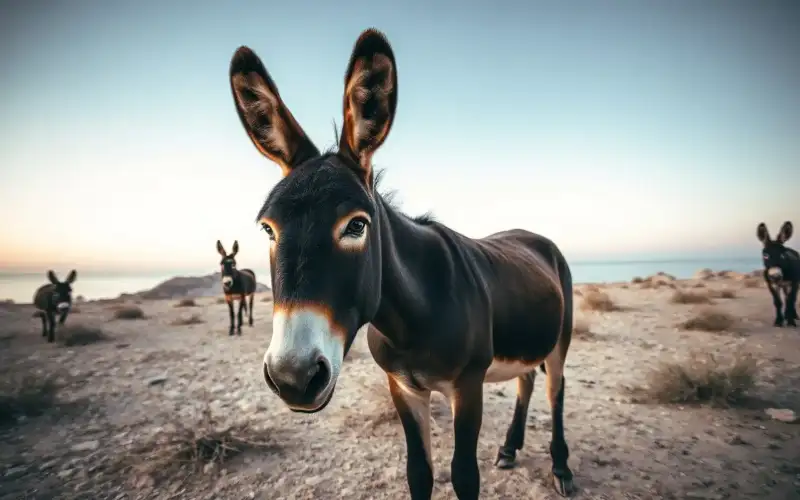
A villa on Karpas inverts that logic. The peninsula's appeal is precisely its isolation. Villas cluster around Dipkarpaz (the largest settlement), scattered along the coast near Agia Trias, or perched on headlands overlooking beaches accessible only by narrow tracks. The nearest significant ruins—Kantara Castle, roughly 45 kilometres south—requires a 50-minute drive. Salamis is an hour and a half away. But what you lose in proximity to archaeological sites, you gain in uninterrupted access to empty beaches and a rhythm dictated entirely by your own preferences.
Accommodation Costs in 2026
Pricing in 2026 reflects post-pandemic stabilisation with modest seasonal variation. A one-bedroom apartment in Famagusta's old town or nearby Varosha district rents for approximately €45–65 per night in shoulder seasons (April–May, September–October), rising to €70–90 in July–August, and dropping to €35–50 in winter months. Two-bedroom apartments typically range €70–100 shoulder season, €110–140 summer, €55–75 winter. These are modest properties—often converted traditional houses with basic kitchens and shared courtyard spaces.
Karpas villas command different economics. A modest two-bedroom villa with sea views near Dipkarpaz costs €80–120 nightly in shoulder season, €140–200 in summer, €60–90 in winter. Three-bedroom villas with pools and modern amenities run €150–250 shoulder season, €250–400 summer, €100–180 winter. The premium reflects both scarcity and the infrastructure required to maintain properties in a less densely developed area. Utilities—particularly water and electricity—cost more on Karpas due to distance from municipal grids.
For a two-week stay in May 2026, a Famagusta apartment averages €630–910 total. The same period in a comparable Karpas villa averages €1,120–1,680. Over a month, the gap widens: Famagusta roughly €1,400–2,100; Karpas €2,400–3,600. Neither includes food, transport, or activities, but the structural cost difference favours Famagusta for budget-conscious travellers.
Privacy, Space, and Self-Catering Reality
An apartment in Famagusta's old town means proximity to neighbours. Walls are often thin. You'll hear voices from adjacent units, footsteps overhead, the occasional late-night gathering on shared terraces. The trade-off is convenience: a small grocer is steps away, a bakery opens at 6 a.m., restaurants and tavernas are immediate. Self-catering is possible—many apartments have functional kitchens—but the temptation to eat out is constant.
Karpas villas offer genuine privacy. You're alone, or nearly so. A villa near Agia Trias might have no other occupied properties within 500 metres. You can move between rooms without considering neighbours' schedules. Terraces are private. The silence, for some travellers, is restorative; for others, it's unsettling. Self-catering becomes the default rather than an option. You shop weekly in Dipkarpaz, plan meals carefully, and accept that spontaneous dining out requires a 20-minute drive.
This distinction matters more than it initially appears. A couple seeking romantic seclusion will find a Karpas villa transformative. A solo traveller or someone travelling with young children might find the same villa isolating. Families benefit from the space villas offer—children can run safely, adults can separate into different rooms—but they also need services close at hand. A family with a toddler will struggle with a villa 15 kilometres from the nearest pharmacy.
Curated Comparison: Five Key Scenarios
Scenario 1: Retired Couple, Three Weeks, History Focus
A couple with serious archaeological interests and time to spare should favour a Famagusta apartment. The proximity to Salamis, Nagidos, and the Venetian fortifications allows unhurried exploration. You can visit Salamis three times across three weeks—once for overview, once for detail, once to sit quietly in the theatre and read. Famagusta's old town itself is a living museum; wandering its streets in early morning or late afternoon, before and after the heat, becomes part of the experience. Costs are lower, and the ability to walk to a taverna after a day of site visits reduces decision fatigue. An apartment near the old town costs €45–65 nightly; over 21 days, you're budgeting €945–1,365 for accommodation alone, leaving resources for site entries (€4–8 each), guides (€30–50 per day), and meals.
Scenario 2: Couple, Two Weeks, Relaxation Primary
For couples prioritising beach time, quiet mornings, and minimal planning, a Karpas villa wins decisively. Two weeks allows you to settle into a rhythm: morning swims at private or near-empty beaches, afternoon reading or short local drives, evening cooking and wine on the terrace. The villa becomes a retreat rather than a base. You're not trying to
Comments (0 comments)
No comments yet — be the first!