
The Taverna as Anchor: A Morning in Dipkarpaz
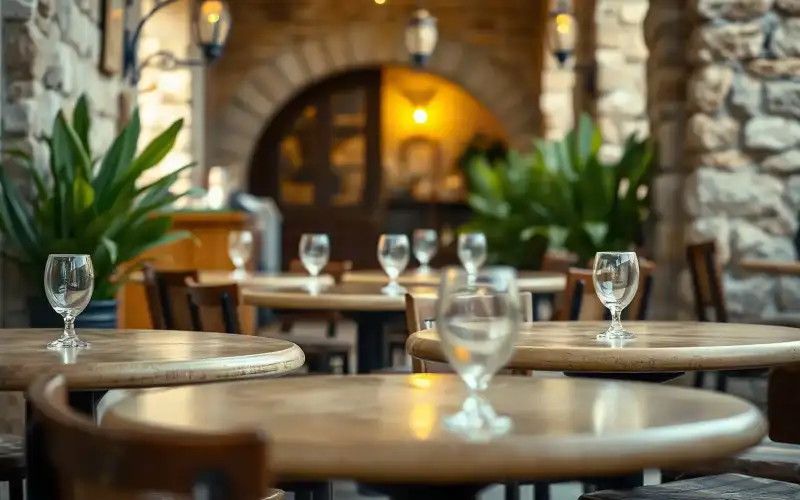
I arrive at Taverna Eleni just as the morning light catches the whitewashed walls, turning them the colour of old cream. It's 8:30 a.m., and already three elderly men are seated at a corner table, nursing small cups of coffee so strong it might strip paint. The owner, Eleni herself—a woman of perhaps seventy with silver hair pinned back with a tortoiseshell clip—nods at me without surprise. In villages like Dipkarpaz, the taverna isn't a restaurant in the sense a London diner might understand. It's a living room with a kitchen attached.
Eleni pours me a glass of water without asking, sets down a small plate of olives that haven't been on the menu for three years because they don't need to be, and disappears into the kitchen. I later learn she's been running this taverna for forty-two years, since her husband died and she needed to feed her two sons. Now her sons run their own lives in Nicosia, but Eleni remains, and the taverna remains with her. This is what the Karpas peninsula does to you—it holds you gently in its rhythms.
The Karpas, that long finger of land pointing northeast from the island's body toward the Turkish coast, exists in a different temporal register than Famagusta or Kyrenia. Villages here—Dipkarpaz, Yialousa, Agia Trias, Kantara—feel suspended in a slower version of Cyprus, one where tourism hasn't yet overwhelmed tradition, where tavernas still function primarily as gathering places for locals rather than photo opportunities for visitors. This distinction matters enormously when you're trying to understand what authentic Karpas cuisine actually is.
The Geography of Flavour: What Makes Karpas Food Distinct
Before I can explain the food, I need to explain the place. The Karpas peninsula is geographically isolated—a forty-five minute drive from Famagusta along a winding coastal road that passes through villages that seem to have negotiated a private peace with modernity. The peninsula's landscape is scrubland and olive groves, fishing villages and Byzantine churches half-swallowed by time. This isolation has preserved something crucial: a regional cuisine that isn't trying to be anything other than what it is.
The Ingredients That Define the Region
Karpas food is built on what grows here and what the sea provides. The olive groves produce oil that tastes like grass and stone and time. The goats that wander the scrubland become the halloumi that appears in nearly every taverna, sometimes grilled with just lemon, sometimes wrapped in vine leaves. The wheat that once sustained the villages now appears mainly in trahana—those hard, granular pasta-like pieces made from cracked wheat and yoghurt, dried in the sun and stored for winter. Fish comes fresh from boats that leave Yialousa at dawn.
What's notable about Karpas cuisine is what it doesn't do. There are no foam reductions, no molecular gastronomy, no Instagram-bait plating. There are no fusion experiments or chef's tasting menus. What you get instead is the direct language of hunger and bounty translated into dishes that have been made the same way for decades, sometimes centuries. This isn't food designed to impress. It's food designed to nourish, to connect, to mark the seasons and the years.
The Core Dishes and Their Stories
Kleftiko appears on nearly every taverna menu in the Karpas, though you'll rarely see it actually being made during lunch service. The dish—slow-roasted lamb wrapped in parchment, traditionally cooked in a wood oven overnight—belongs to village feasts and special occasions. At Taverna Maria in Agia Trias, owner Maria tells me that she still makes kleftiko the way her grandmother taught her: lamb marinated with tomatoes, onions, and local herbs, wrapped in paper and sealed with flour paste, then baked for hours until the meat falls from the bone. She'll make it on order, but you need to call ahead. It's a dish that refuses to be rushed. At Taverna Maria, a full kleftiko for two people costs 32 euros—expensive by Karpas standards, but reasonable when you understand that Maria has been tending her oven since dawn.
Trahana soup appears in winter. I taste it first at a small taverna in Dipkarpaz whose name I never quite catch—the owner simply calls it "the place by the church." The soup is thick, almost porridge-like, made from those dried trahana pieces simmered in a broth made from lamb bones, onions, and the kind of seasoning that comes from experience rather than measuring spoons. It costs 3.50 euros for a bowl, and it tastes like it contains the memory of every winter that's ever happened in this village. An elderly woman at the next table eats hers methodically, occasionally adding more olive oil from a small bottle she's brought from home.
Halloumi, of course, appears everywhere. But in the Karpas, it's often served simply—grilled until the outside develops those brown-black char marks, dressed with nothing but lemon juice and perhaps a few dried oregano leaves. At Taverna Eleni, a plate of grilled halloumi costs 7 euros. It arrives still sizzling, the cheese squeaking slightly between your teeth as you bite, the contrast between the warm interior and the crisp exterior one of those small perfect moments that make slow travel worthwhile.
The Social Architecture of the Taverna
To understand a Karpas taverna, you must understand that it functions as something between a restaurant, a café, a community centre, and a living museum. The same people sit at the same tables at the same times most days. Conversations that began decades ago continue at the exact point where they were paused yesterday. The taverna keeper knows not just what each regular will order, but what they ordered last week, and whether they prefer their coffee with sugar or without, their wine cold or at room temperature.
Daily Rhythms and Regular Patterns
A typical day at a Karpas village taverna follows a pattern that's existed for generations. Breakfast service (if it can be called that) begins around 8 a.m., with coffee and perhaps a pastry or some bread with cheese. Lunch service runs from approximately noon to 3 p.m., with the heaviest traffic between 1 and 2 p.m. Dinner begins around 7 p.m. and continues until 10 or 11 p.m., though the number of diners drops significantly after 9 p.m. Many tavernas close completely on Mondays. Most are family-run operations with one or two people managing the kitchen and the front simultaneously.
I spend an afternoon at Taverna Yialousa, a small establishment run by a man named Andreas who's been there for thirty-one years. The lunch crowd arrives in waves—first the fishermen who've just returned from the morning's work, then the construction workers from the road project north of the village, then the retired men who come primarily for company. Andreas moves between tables with the efficiency of someone who's done this ten thousand times. He doesn't write orders down. He doesn't need to. By the time he reaches the kitchen, he's already holding the entire afternoon in his head.
The Role of Food in Village Life
The taverna is where village news travels. It's where business deals are made—not with contracts, but with handshakes over coffee. It's where young people learn to cook by watching their parents cook. It's where disputes are resolved and alliances are formed. The food matters, but the gathering matters more. I watch an elderly couple sit in silence for twenty minutes, occasionally catching each other's eyes and smiling. They've been married for fifty-three years, Andreas tells me later. They come to the taverna three times a week, usually at the same time, and they rarely speak. But they're together, and for them, that's what the taverna provides.
The Menu Beyond the Menu: What's Really Available
Here's something crucial to understand about Karpas tavernas: the printed menu, if one exists, is largely aspirational. What's actually available depends on what arrived at the market that morning, what the cook feels like making, and what regulars have requested. At Taverna Eleni, I ask what's available for dinner. Eleni disappears into the kitchen and returns with a verbal list: grilled fish (red mullet today, 18 euros per kilogramme), meatballs in tomato sauce, a vegetable stew, salad, grilled cheese. There's no written menu. There doesn't need to be.
This requires a different approach to dining than most British travellers are accustomed to. You can't simply order from a laminated list. You must engage with the owner, ask questions, express preferences, accept suggestions. It's more like visiting someone's home for dinner than visiting a restaurant. This is precisely what makes it valuable—it forces you to slow down, to participate in the meal rather than simply consume it.
Seasonal and Daily Variations
Winter brings different food than summer. In winter, you'll find more soups, more slow-cooked stews, more of the preserved foods that villages have learned to make for the lean months. In summer, the menu lightens—more grilled fish, more salads, more fresh vegetables. Spring brings artichokes and wild greens. Autumn brings game. This isn't sentimentality; it's practical adaptation to what's available and what makes sense to cook given the season's natural rhythms.
I visit Taverna Yialousa in both March and September 2026. The March menu features a wonderful horta (boiled wild greens) that's simply dressed with olive oil and lemon, alongside a fish soup made from the morning's catch. The September menu features grilled octopus and fresh sardines. The difference isn't dramatic, but it's real. The taverna, like the village itself, breathes with the seasons.
Pricing, Practicalities, and What to Expect
One of the great pleasures of eating in Karpas tavernas is that they remain genuinely affordable. A full meal—starter, main, dessert, wine, and coffee—rarely exceeds 25 euros per person. Here's what you might expect to pay for common dishes across the peninsula's various establishments in 2026:
| Dish | Typical Price (EUR) | Notes |
|---|---|---|
| Grilled halloumi | 7–9 | Varies by quantity; often served with lemon |
| Grilled fish (red mullet, sea bream) | 16–22 per kg | Usually sold by weight; a portion is 300–400g |
| Meatballs in sauce | 8–10 | Often homemade; served with bread |
| Trahana soup | 3.50–4.50 | Winter only; deeply warming |
| Village salad | 5–7 | Tomatoes, cucumber, olives, feta cheese |
| Kleftiko (for two) | 28–35 | Must order ahead; takes 2+ hours |
| House wine (quarter litre) | 2–3 | Often local; quality varies |
| Coffee | 1.50–2 | Turkish-style; small but strong |
Most tavernas accept cash only, though this is slowly changing. Very few have functioning card readers, and attempting to pay with a card can create genuine confusion. There are no tipping expectations, though leaving 5–10% is appreciated and increasingly common among foreign visitors.
Practical Visiting Information
The best tavernas are often the hardest to find. GPS coordinates are unreliable in the Karpas—the peninsula's infrastructure simply doesn't support reliable satellite navigation in many areas. Instead, ask locals for directions. Say the owner's name if you know it. Ask which taverna serves the best food. You'll get recommendations, and you should follow them. These recommendations come from genuine experience, not from reviews written by people who visited once and took photographs.
Opening hours are flexible. A taverna that's listed as open until 11 p.m. might close at 9 p.m. if there are no customers, or stay open until midnight if a group of friends is playing cards in the corner. Don't rely on published hours. Call ahead, or better yet, arrive and see who's there. The unpredictability is part of the experience, not a bug to be fixed.
Lessons from the Margins: What Karpas Tavernas Teach
I've spent the better part of twenty years travelling through rural Europe, painting watercolours of village churches and landscape details that most people walk past without noticing. The Karpas peninsula's tavernas have taught me something important: that the places worth visiting are often the places that aren't trying to be visited. These establishments weren't built with tourism in mind. They exist because villages need places where people can gather, eat, and be together. That they're now available to travellers is almost accidental.
There's a particular kind of honesty in these spaces. A taverna owner isn't performing hospitality—they're simply feeding people the way they've always fed people. If the fish didn't arrive at the market, you don't get fish. If the cook is tired, the food might be simpler than yesterday. If a regular customer needs a quiet place to sit and think, they get a table without being pressured to order. This directness, this refusal to pretend, is increasingly rare in the tourism industry.
The food itself teaches a lesson about restraint. Every dish I've eaten in a Karpas taverna uses at most five or six ingredients. Trahana soup: trahana, lamb broth, onion, salt, olive oil. Grilled halloumi: halloumi, lemon, perhaps oregano. Meatballs: meat, breadcrumbs, onion, egg, spice. There's no hiding behind complexity. If the ingredients aren't excellent, if the technique isn't sound, the dish falls apart. This is cooking stripped to its essentials, which is perhaps why it's so satisfying.
Finding Your Own Taverna: A Practical Guide
If you're planning to visit the Karpas peninsula and want to eat well in its villages, here's what I'd suggest: arrive without fixed expectations. Don't book ahead at the famous places because there are no famous places. The best taverna is the one you stumble into on a random Tuesday afternoon, where the owner's mother is sitting at a corner table and the lunch crowd has just finished eating. Walk into villages. Look for the places where local cars are parked. These are your guides.
Visit in winter or spring if you can. These seasons reveal the tavernas in their truest form—feeding locals who've known each other their entire lives, not catering to tourists. The food is heartier, the atmosphere more genuine. If you must visit in summer, go early in the season, before the heat drives everyone indoors and the pace accelerates.
Learn a few words of Greek. "Kalispéra" (good evening), "efharistó" (thank you), and "ti prépi na piíte?" (what should I drink?) will open more doors than you'd expect. Taverna owners light up when visitors make even minimal effort with the language. It signals respect, genuine interest in their world, not just a desire to consume their food and move on.
Eat when locals eat. Lunch is typically 1–2 p.m., dinner 8–9 p.m. Eating at these times means you'll be surrounded by locals, which improves the experience immeasurably. You'll see the taverna functioning as it actually functions, not as a tourist attraction.
The Karpas peninsula's tavernas aren't destinations. They're the infrastructure of village life, places where food and community are inseparable. That they're now available to outsiders is a gift, but it's a gift that requires respect. Come slowly. Stay quiet. Watch. Listen. Order simply. Pay fairly. Thank the owner. And understand that you're not just eating—you're participating in something that's been happening in these villages for generations, and if you're very fortunate and very quiet, you might just understand why.
Comments (0 comments)
No comments yet — be the first!