
I watched a coach full of sun-burned tourists turn around at Famagusta's city gates in 2019, their driver muttering about a "mistake" in the itinerary. They'd expected another beach resort. What they'd stumbled into was something far more layered—a medieval fortress, Ottoman-era streets, and the ghostly amphitheatre of Salamis, where St Paul once preached. That confusion is precisely why Famagusta works so well as a day trip from Ayia Napa. You're only 40 kilometres away, but stepping off the minibus feels like leaving the package-holiday circuit entirely.
The journey from Ayia Napa to Famagusta takes between 50 minutes and 90 minutes depending on your transport choice and traffic patterns. Most travellers default to renting a car, but there are alternatives worth considering, especially if you want to avoid navigating unfamiliar roads or parking in the old town.
Getting There: Your Transport Options
The most straightforward option is hiring a car from one of the rental agencies clustered around Ayia Napa's main strip. Expect to pay €25–45 per day for a basic hatchback in 2026. The drive follows the coast road eastward, passing through Protaras and Paralimni before turning inland toward Famagusta. The route is well-signposted, and the road surface is good, though summer heat can make the drive feel longer than it is. Parking in central Famagusta is tight but available near the Lala Mustafa Pasha Mosque (the converted St Nicholas Cathedral) for around €2–3 per hour.
If you prefer not to drive, shared minibuses (known locally as service taxis) depart from Ayia Napa roughly every two hours between 07:00 and 17:00. The journey costs €8–12 per person and takes about 90 minutes, with stops in Paralimni. The downside is inflexibility—you're bound to the return schedule, which limits your time exploring. These minibuses are reliable and frequented by locals, so you'll get authentic company and overhear genuine conversations about Cypriot life, which has its own charm.
Organised tours from Ayia Napa hotels are abundant but tend to rush the experience, packing Salamis, Othello Castle, and the old town into five hours with a lunch stop at a predetermined restaurant. If you book one, negotiate for a later return or skip it entirely and manage your own day.
Salamis: The Archaeological Centrepiece
Salamis lies about 6 kilometres north of Famagusta proper, scattered across a low headland where sea pines and wild herbs grow between marble columns. The site sprawls across 13 hectares, and you'll need at least two hours to walk it properly. Entry costs €9 per adult (2026 rates), and the site is open daily from 09:00 to 17:00 in summer, closing earlier in winter months.
The ruins date from the 11th century BCE, when Salamis was a Phoenician settlement, though most of what you see today is Greco-Roman from the 1st to 3rd centuries CE. The theatre is the obvious draw—a well-preserved semicircle of limestone seats carved into the slope, once holding 15,000 spectators. Stand in the orchestra and imagine St Paul addressing the crowd in 45 CE, before his eventual arrest and execution. The acoustics are remarkable; even whispers carry to the back rows.
Beyond the theatre, the gymnasium and adjacent latrine reveal how Romans lived. The latrine is unexpectedly moving—a long bench with 44 stone seats, polished smooth by centuries of use. There's something oddly human about it. The columned portico of the gymnasium still stands in parts, and on a quiet morning, you can almost hear the scrape of athletes' strigils.
The museum at the site entrance holds smaller finds—pottery, coins, jewellery—and provides context. It's modest but well-curated. Allow 30 minutes here before heading out to the ruins proper. Bring water; there's no shade on much of the site, and the sun reflects off white stone intensely.
Othello Castle and the Medieval Town
Othello Castle (also called Famagusta Castle) dominates the walled old town. It's a 16th-century Venetian fortress, built after the Ottomans had already begun their conquest of the island. Entry costs €9, and it's open 09:00–17:00 daily. The climb to the ramparts is steep and uneven—wear proper shoes—but the views across the old town and toward the Karpas peninsula justify the effort.
The castle's interior is largely hollow, its rooms now open to sky. You walk through vaulted passages, peer into dungeons, and climb narrow staircases carved into thick walls. It's atmospheric rather than cluttered with exhibits. A few plaques explain the Venetian and Ottoman phases, but the place speaks mostly through its stone.
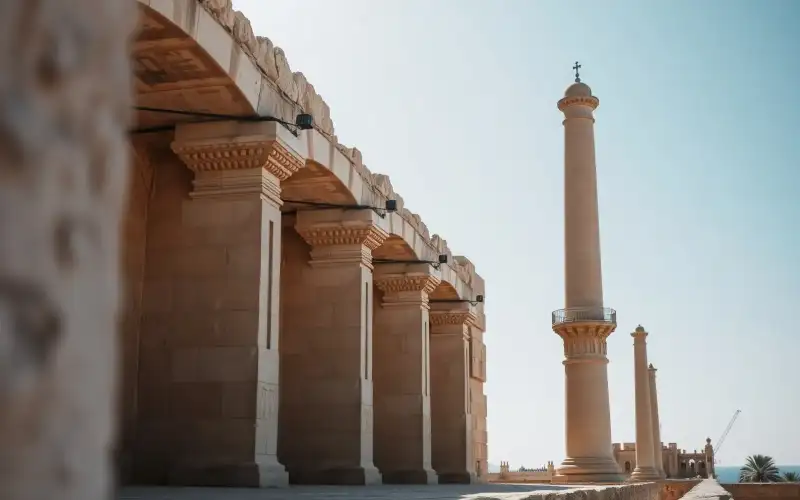
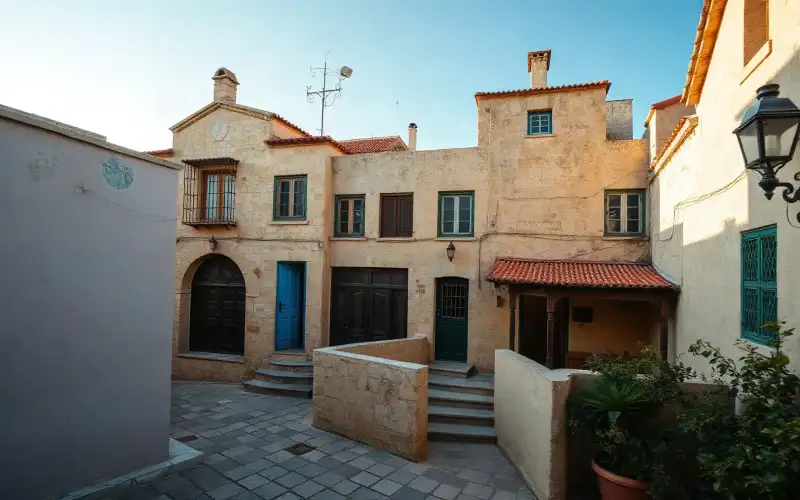
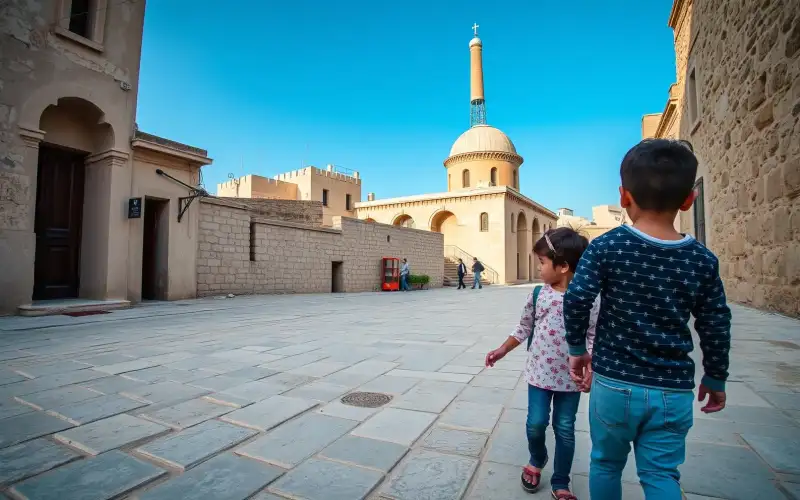
The old town itself—the walled quarter around the castle—is where Famagusta's real character emerges. The streets are narrow, some barely two metres wide, and many are still lined with 16th-century buildings in various states of repair. The Lala Mustafa Pasha Mosque (the converted St Nicholas Cathedral) sits at the heart. It's a striking Gothic structure, its interior stripped of Christian imagery but retaining its soaring proportions. Non-Muslims can enter outside prayer times; remove your shoes and be respectful of worshippers.
Wander the backstreets. You'll find a few small shops selling postcards and trinkets, but mostly you'll encounter locals going about their day—a woman hanging laundry from a balcony, a man sitting outside a kafeneio with a coffee and newspaper. The town feels lived-in rather than curated, which is precisely why it appeals to slow travellers.
Where to Eat: Tavernas and Local Spots
This is where many day-trippers stumble. The main tourist restaurants near the castle entrance serve acceptable but uninspired food at inflated prices. Instead, venture into the backstreets or head to the harbour area.
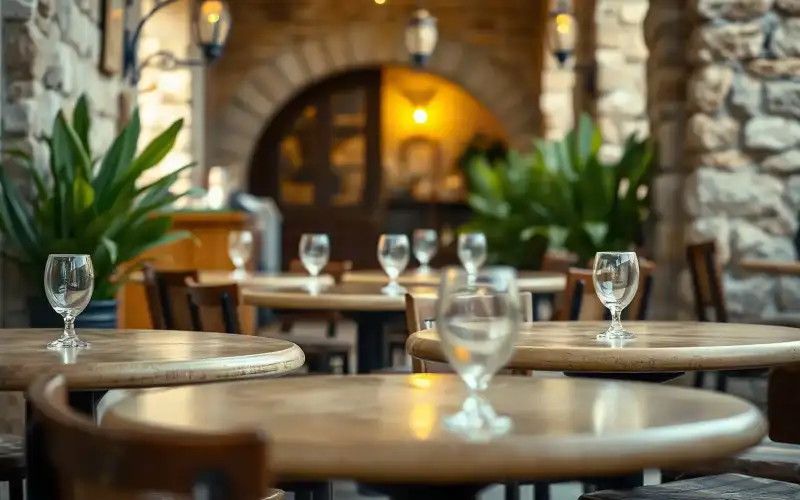
Harbour-side tavernas: The eastern harbour (Venetian Harbour) has several family-run establishments. Psaropoulo, a fish taverna operating since 1987, serves grilled octopus, sea bream, and mussels at €14–22 per main course. The owner, Dimitri, sources fish daily from local boats. Portions are generous, and the house white wine (from a local Karpas winery) is crisp and inexpensive at €4 per glass.
Old town tavernas: Walk into the warren of streets behind the mosque and you'll find Ta Pitharia, a meze house where a spread of 15–20 small dishes costs €18–25 per person. Saganaki (fried cheese), grilled halloumi, dolmades, and several salads arrive in succession. It's the way Cypriots eat—communal, unhurried, perfect for lingering.
For lunch on a budget, the souvlaki stands near the castle gates serve charred pork or chicken in pitta with tzatziki for €5–7. They're quick and authentic, frequented by construction workers and office staff.
A Practical Day Itinerary
Depart Ayia Napa by 07:30 if using a minibus, or 08:00 if driving. This gets you to Salamis by 09:00, when the site is quietest and the sun is manageable.
09:00–10:30: Museum and initial theatre exploration at Salamis.
10:30–12:00: Full site walk—gymnasium, latrine, harbour area, and secondary structures.
12:00–13:30: Drive to Famagusta (20 minutes), park near the castle, and have lunch. Choose a harbour taverna if weather permits; otherwise, a meze house in the old town.
13:30–15:00: Othello Castle and rampart walk.
15:00–16:30: Wander the old town streets, visit the mosque, explore side alleys, perhaps buy a coffee at a kafeneio.
16:30–17:00: Return to car or minibus rendezvous point.
This schedule is realistic and unhurried. It allows time to sit, absorb, and not feel rushed. If you're driving, you have flexibility to extend any segment. If using a minibus, confirm the return time with the driver when you arrive.
Practical Considerations
Summer heat (June–September) can be intense. Bring at least 1.5 litres of water per person, sunscreen, and a hat. Wear comfortable walking shoes with good grip; Salamis's paths are uneven, and the castle stairs are steep.
The old town has few public toilets. Use facilities at your restaurant or the castle entrance.
Mobile signal is good throughout the region. Download offline maps before leaving Ayia Napa, as navigation apps can be unreliable in the narrow old town streets.
Famagusta remains politically sensitive—the city is in the Turkish-controlled north, and the surrounding area shows signs of partition. This is historical fact, not political commentary. Visitors should be respectful and aware that some buildings and areas may be restricted. The main sites (Salamis, Othello Castle, the old town) are accessible and safe for tourists.
Most restaurants and shops close between 14:00 and 17:00 during summer, a siesta period. Plan accordingly.
Why Famagusta Works as a Day Trip
Famagusta offers something Ayia Napa cannot: depth. The ruins at Salamis are among Cyprus's most significant archaeological sites. Othello Castle is a tangible link to the island's Venetian and Ottoman past. The old town, for all its decay, retains an authenticity that resort areas have shed. And the food—when you find the right spots—is honest and inexpensive.
The journey takes effort. You can't walk out of your hotel and be there in minutes. But that friction is the point. It filters out the purely convenience-focused traveller and leaves space for those willing to spend a day engaging with history, archaeology, and local life. For visitors from Britain aged 45–70 who've already done the standard Mediterranean circuit, Famagusta and its surroundings offer a different pace and texture. You'll return to Ayia Napa with stories rather than just photos.

Comments (4 comments)