
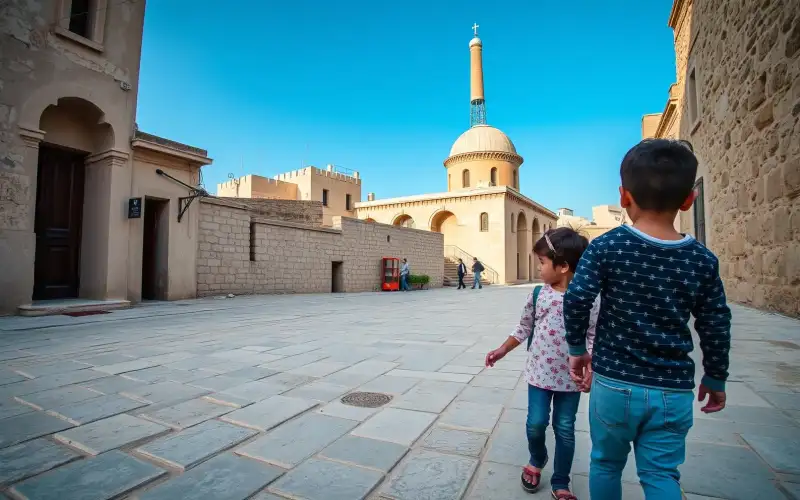
The Day My Daughter Asked Why the Horses Weren't Wearing Clothes
We were three kilometres into the Karpas peninsula on a July morning—already 38°C by 10 a.m.—when my eight-year-old spotted the first wild donkey. Not a horse, as it turned out, but she wasn't wrong about the absence of saddles. The animal stood motionless in the scrub, watching us with the indifference of something that had seen thousands of tourists come and go. My wife immediately turned the car around. "We're not equipped for this," she said, meaning we'd left the water bottles at the hotel.
That moment captures something essential about bringing children to Famagusta: it's not a destination that coddles families with theme parks and air-conditioned shopping malls. Instead, it offers something harder to manufacture—genuine discovery. The wild donkeys are real. The ancient mosaics at Salamis are 1,500 years old. The beaches are often empty because most families never venture this far east. This guide exists because we learned, over two weeks in summer 2026, what actually works with children aged 4 to 15 in this corner of Cyprus.
Getting the Heat Right: When to Go, Where to Hide
Timing Your Days Around Temperature
Famagusta in July and August isn't a gentle climate for children. The mercury regularly hits 36–39°C by midday, and the reflection off white stone at archaeological sites can add another 5–6 degrees to what your skin experiences. We made a critical mistake on day two: arriving at Salamis ruins at 11 a.m. By 1 p.m., our six-year-old was tearful and sunburned despite SPF 50.
The rhythm that worked for us became non-negotiable: beach or water activity from 7 a.m. to 10 a.m., indoor or heavily shaded activity (museums, covered bazaars) from 11 a.m. to 3 p.m., then return to water or town exploration from 4 p.m. onwards. This isn't laziness—it's the local pattern. Shops close at 1 p.m., reopen at 5 p.m. Schools finish at 1 p.m. Your family's schedule should match the island's, not fight it.
Shade Spots at Major Sites
Salamis archaeological site covers roughly 70 hectares. Most of it is open, unshaded stone. The exceptions matter:
- The gymnasium and baths (southern section, near the entrance) have partial roof coverage and are naturally cooler due to underground chambers. Spend 30–40 minutes here with children rather than trying to cover the whole site.
- The theatre has marble seating in full sun, but the upper tiers are slightly less exposed. Go early or late, never midday.
- The museum building at the entrance is air-conditioned and holds mosaics, pottery, and statuary. Children under 10 often prefer 20 minutes here to two hours wandering ruins.
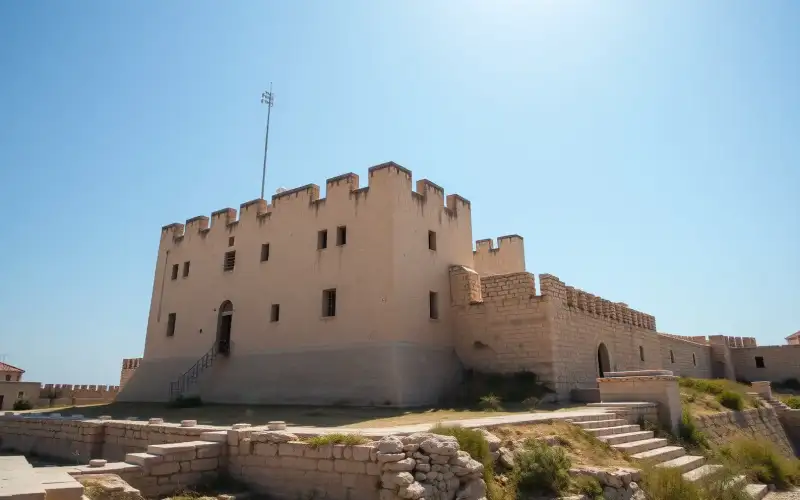
- Kantara Castle (40 km north, 45 minutes' drive) has a small café with a shaded terrace at the base. The castle itself is steep and exposed—suitable for children 10+ who enjoy climbing, but not younger ones in peak heat.
Pack a lightweight pop-up parasol (available at Carrefour in Famagusta town for €12–15) and position it near any sitting area. Children will actually sit and observe if they're not actively cooking.
Beaches That Work for Families
Salamis Beach: The Reliable Choice
Salamis beach sits directly below the archaeological site, 3 km north of Famagusta town. The sand is fine, the water is clear to 2–3 metres, and critically, there's a taverna 50 metres from the shore that serves cold drinks and simple food (souvlaki, Greek salad, fresh fish) from 10 a.m. to 10 p.m. daily. Shade is minimal—a few palm trees and the taverna's awning—so the parasol is essential.
Water temperature in July 2026 was 28–29°C, warm enough that even reluctant swimmers aged 5–6 entered without protest. The beach shelves gently for the first 15 metres, then drops. We used a children's inflatable ring for our youngest; it worked well. Lifeguards are not always present, so supervision is your responsibility. Parking is free in the gravel lot; arrive by 8 a.m. in summer to secure shade from the few trees.
Agia Trias Beach: The Quieter Option
Twelve kilometres north, near the village of Agia Trias, a smaller beach offers similar conditions with fewer crowds. It's technically more exposed—no taverna, minimal facilities—but the water is equally clear and the sand equally fine. Bring all food and water with you. Families with children 8+ who are self-sufficient swimmers prefer this beach because it feels less crowded and more adventurous. The drive from Famagusta town takes 25 minutes.
Karpas Peninsula Beaches: For the Committed
The Karpas peninsula extends 50 km northeast from Famagusta town, narrowing to a point. The further you drive, the emptier and more dramatic the landscape becomes. Beaches at Dipkarpaz (the village at the peninsula's tip) and the unnamed stretches between are stunning—golden sand, turquoise water, virtually no other families. The trade-off is distance: 90 minutes' drive each way from central Famagusta, rough roads in places, and zero facilities beyond a small shop in Dipkarpaz village.
This works for families with children 10+ who enjoy road trips and can entertain themselves. Younger children find the drive tedious and the isolation (no nearby help, no food options) stressful. If you go, leave Famagusta at 6 a.m., spend 4–5 hours at the beach, and return by 3 p.m. to avoid driving in peak afternoon heat.
Ancient History Without the Meltdown
Making Salamis Engaging for Different Ages
The instinct to march children through an entire archaeological site is understandable and almost always wrong. Salamis has enough ruins to occupy an adult for 4–5 hours. Children aged 4–8 have a useful attention span of 45 minutes to one hour. Children aged 9–12 might stretch to 90 minutes if genuinely engaged. Teenagers often surprise you—they'll spend two hours if you let them, especially if you've given them a specific task.
The approach we found most effective:
- Give them a mission. Provide a printed map (available free at the entrance) and ask them to find three specific things: the mosaic floor in the gymnasium, the theatre's marble seats, and the statue heads in the museum. Checking boxes keeps them motivated.
- Tell stories, not dates. Instead of "This was built in 300 CE," say "This is where athletes trained 1,500 years ago—they exercised naked, just like in the Olympics. That's why it's called a gymnasium." Children remember stories.
- Use the museum as a reward. After 45 minutes outdoors, move indoors to the air-conditioned museum. The mosaics are visually striking—fish, birds, geometric patterns—and children respond to them better than to empty stone foundations.
Other Sites Worth Brief Visits
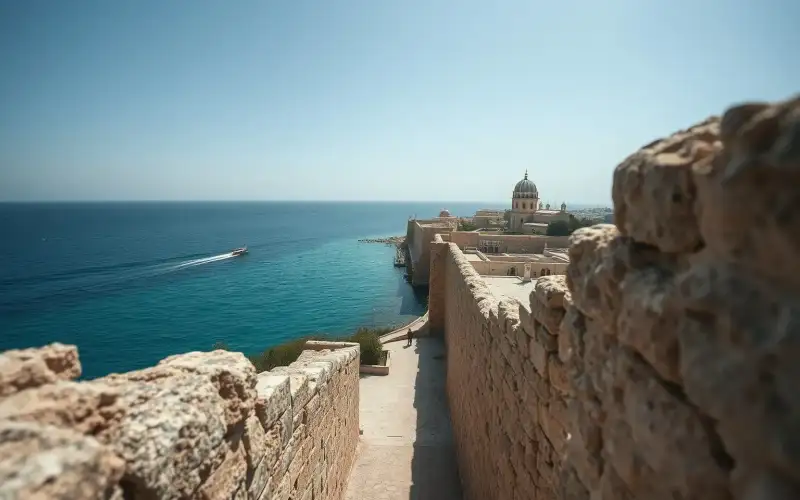
Famagusta town's medieval walls and the Venetian fortress are impressive but require climbing stairs in heat. The old town bazaar (inside the walls) is narrow, crowded, and genuinely interesting for children 8+, especially if you're buying ice cream and exploring side streets. Otocyst monastery, 40 km west, is peaceful and has a small café, but the drive is long for a 20-minute visit.
Skip Varosha (the abandoned resort area sealed since 1974) unless your children are teenagers interested in modern history. It's visible from a distance and the story is complex; close-up visits feel voyeuristic and are not particularly child-friendly.
The Karpas Peninsula: Wild Donkeys and Untamed Landscape
What to Expect and How to Prepare
The Karpas peninsula is not a theme park. It's a long, narrow strip of land that narrows to a point, with scattered villages, scrubland, and genuinely wild landscape. The wild donkeys (actually feral, descended from abandoned animals) are real and can be spotted, but sightings are not guaranteed. We saw them on three of our four trips to the peninsula—usually in early morning or late afternoon—but never on demand.
The drive itself is the experience. The main road is paved but narrow; side roads deteriorate quickly. Mobile phone coverage is patchy. The nearest petrol station is in Famagusta, 70 km south. These aren't obstacles for prepared families, but they're worth knowing.
Practical Logistics
If you're driving to Dipkarpaz (the village at the peninsula's tip), plan this itinerary:
| Time | Activity | Duration |
|---|---|---|
| 6:00–7:00 a.m. | Drive from Famagusta to Dipkarpaz | 90 minutes |
| 7:00–8:00 a.m. | Stop at Agia Trias or Dipkarpaz beach, swim | 45 minutes |
| 8:00–9:30 a.m. | Breakfast in Dipkarpaz village (café, simple food) | 45 minutes |
| 9:30 a.m.–12:00 p.m. | Explore village, spot donkeys, return south | 90 minutes |
| 12:00–1:30 p.m. | Drive back to Famagusta | 90 minutes |
This schedule keeps you off the peninsula during peak heat and returns you to Famagusta by early afternoon. A café in Dipkarpaz village serves coffee, juice, and basic snacks. Bring lunch or plan to eat in Famagusta.
Spotting Wild Donkeys
The donkeys are most active in early morning (6–8 a.m.) and late afternoon (5–7 p.m.). They gather near water sources and in scrubland away from the main road. Drive slowly, watch the roadside, and stop if you see movement. Never approach or feed them—they're wild and unpredictable, and feeding has made some aggressive. The experience is observing from a distance, which children find thrilling enough. Binoculars help if you have them.
Where to Stay and Eat
Hotels with Family Facilities
Famagusta town has several mid-range hotels suitable for families. The Dome Hotel (Larnaca Avenue, town centre) offers family rooms, a small pool, and a restaurant. Rates in July 2026 were €80–120 per night for a family room. The Atlantica Oasis (north of town, near Salamis) has a larger pool and more space but is slightly pricier (€110–150). Both have restaurants and are within 10–15 minutes of beaches and archaeological sites.
Avoid ultra-budget options without air-conditioning—the heat makes sleep difficult for children. Avoid resort-style all-inclusives north of Famagusta; they're isolated and don't reflect the character of the region.
Eating with Children
Famagusta's food culture is straightforward: grilled meat, fresh fish, salads, and bread. Children often thrive on this simplicity. Tavernas near Salamis beach (Taverna Thalassa, Taverna Poseidon) serve grilled fish and souvlaki from 10 a.m. to 10 p.m. Prices are €8–15 per main course. The old town bazaar has a few family-friendly restaurants; avoid the ones aimed purely at tourists.
Supermarkets (Carrefour, Lidl) in Famagusta town stock everything you need for picnics: bread, cheese, cold meats, fruit, juice, water. Buying supplies for beach days is cheaper and often more practical than eating out three times daily.
Managing Expectations and Finding the Reward
What Famagusta Isn't
Famagusta has no waterpark, no theme park, no children's entertainment complex, and no air-conditioned shopping mall with a cinema. If your family needs these things, Larnaca (90 minutes west) offers more conventional attractions. Famagusta offers something different: genuine exploration, real archaeology, wild landscape, and the satisfaction of discovering places that most tourists never reach.
The beaches are real—not manicured, sometimes with seaweed, occasionally with jellyfish (rare in summer 2026, but possible). The history is real—not reconstructed or simplified for visitors. The landscape is genuinely remote in places. Children who thrive in this environment are those who enjoy discovery over entertainment, who can be occupied by observation rather than rides, and whose parents are willing to adapt schedules to local rhythms.
What Makes It Work
The families we met who most enjoyed Famagusta shared certain habits. They arrived early at beaches and sites, before crowds and heat peaked. They carried water obsessively—never fewer than two litres per person. They planned rest time into afternoons rather than fighting the heat. They told stories about history instead of expecting children to read plaques. They let their children move at their own pace through ruins rather than rushing to see everything.
One family we encountered had driven to Dipkarpaz on the Karpas peninsula specifically to see wild donkeys. They didn't see any. The mother told us later that her nine-year-old had spent the drive and the beach time spotting birds, collecting shells, and asking questions about the landscape. "She didn't get the donkeys," the mother said, "but she got something better—she got interested in how the landscape works."
That's the real offer of Famagusta with children. Not guaranteed attractions, but genuine engagement with a place that hasn't been simplified for tourism. The wild donkeys might appear or might not. The heat is real and demands respect. The history is complex and doesn't reduce to simple narratives. But for families willing to adapt, the reward is a summer that children remember not as a series of ticked boxes, but as a genuine adventure in a place most of their friends will never visit.

Comments (4 comments)