
What You'll Learn From This Guide
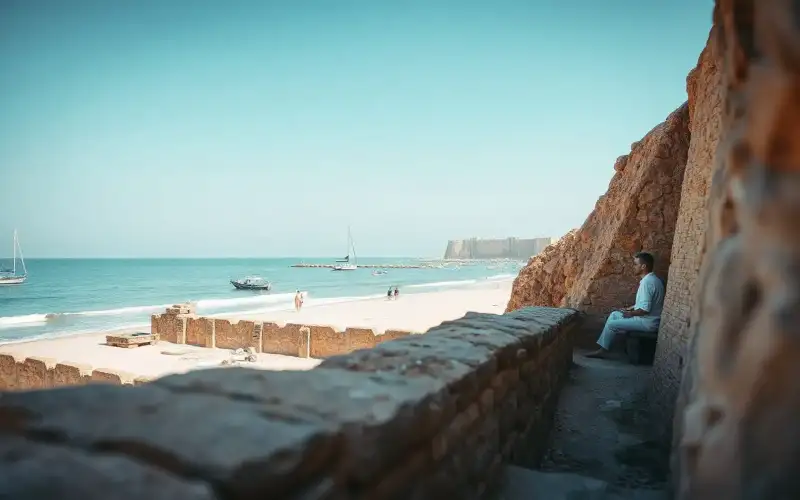
Golden Beach, known locally as Nangomi, sits at the far eastern tip of the Karpas Peninsula—a spit of land that extends toward the Turkish coast like a finger pointing at Asia Minor. I first visited this beach in 1998, when the track leading there was barely passable in a standard car. Nearly three decades later, the access situation has improved marginally, but Golden Beach remains stubbornly untamed. This guide walks you through everything required to reach it, what conditions you'll encounter, and whether the effort justifies the reward for your particular travel style.
Unlike the developed resorts of Larnaca or Paphos, Golden Beach offers no tavernas, no sunbed rentals, no lifeguards, and no fresh water. What it does offer is solitude, pale sand that genuinely glimmers in certain light, and the peculiar satisfaction of having reached somewhere most tourists never will. By the end of this guide, you'll know exactly what you're getting into.
Prerequisites: What You Must Have Before Attempting Golden Beach
Vehicle Requirements
First, the honest assessment: a standard saloon car will struggle on the final approach to Golden Beach. The track deteriorates significantly in the last 3–4 kilometres, particularly after winter rains or strong winds that shift sand across the surface. A vehicle with decent ground clearance—a small SUV, a jeep, or even a well-maintained estate car with good suspension—is strongly recommended. I've seen hire companies in Famagusta refuse to insure vehicles on this route, so check your rental agreement before attempting it.
The main road from Bogaz to the beach is now tarmacked for roughly 15 kilometres, which represents genuine progress since 2015. However, once you pass the small settlement at Agia Trias, the surface becomes progressively rougher. Deep sand patches, occasional rocks, and washboard corrugations require careful driving. In summer, the surface hardens and becomes more navigable. In winter or immediately after rain, it becomes treacherous.
Fuel and Supplies
There are no petrol stations between Bogaz (approximately 35 kilometres away) and Golden Beach. Fill your tank completely before leaving Bogaz. The round trip from Bogaz to Golden Beach and back is roughly 70 kilometres, so you'll need a vehicle capable of managing that distance on a full tank, particularly if you're driving carefully over rough terrain.
Bring all food, water, and supplies with you. The nearest shop is in Bogaz. I recommend carrying at least 2 litres of water per person—more in summer. The beach has no shade except what you create yourself, and the sun reflects intensely off pale sand. Sunscreen, a hat, and a lightweight shelter (a beach umbrella or pop-up tent) are not luxuries here; they're essential.
Navigation and Maps
Mobile phone signal is present but inconsistent. Google Maps works reasonably well on the main road but becomes less reliable on the final track. Download offline maps before leaving Bogaz. The coordinates for Golden Beach are approximately 35.6438°N, 34.5833°E. Bring these written down or saved in your phone's notes. Several travellers have reported getting turned around on the various tracks that branch off the main route.
Time of Year Considerations
Summer (June–September) offers the most reliable access, though the beach becomes uncomfortably hot by midday. May and October provide better temperature balance and fewer crowds, but weather becomes less predictable. November through March sees occasional heavy rain that can render the final track impassable for days. If you're visiting during winter, check local weather forecasts and ask at your accommodation in Famagusta whether the track is currently passable.
Physical Fitness
The beach itself is easily accessible once you've parked. However, the drive requires concentration and patience. If you have mobility issues or find rough driving stressful, you may find the experience frustrating rather than enjoyable. There's no medical facility within 40 kilometres, so travellers with significant health concerns should consider alternative beaches.
Permits and Restrictions
As of 2026, there are no specific permits required to visit Golden Beach. However, the Karpas Peninsula remains politically sensitive territory. The beach lies in the Republic of Cyprus–controlled area, but proximity to the buffer zone means certain areas are restricted. Stay on the main track and at the beach itself. Do not wander into unmarked areas or attempt to cross any barriers you encounter.
Step-by-Step: How to Reach Golden Beach
Step 1: Start From Famagusta or Bogaz
The most straightforward approach begins in Bogaz, a small fishing village approximately 35 kilometres northeast of Famagusta. From Famagusta's main square, head north on the main road toward Bogaz. The drive takes roughly 45 minutes to an hour depending on traffic. Bogaz itself is worth a brief stop—the harbour still functions as a working fishing port, and the waterfront tavernas serve fresh fish at reasonable prices. This is your last opportunity to fill your fuel tank and purchase supplies.
If you're staying elsewhere on the island, Bogaz is accessible from Larnaca (approximately 90 kilometres, 90 minutes) or from Nicosia (approximately 70 kilometres, 75 minutes). The roads are well-maintained until you reach the Karpas Peninsula.
Step 2: Navigate From Bogaz Toward Agia Trias
Leave Bogaz heading east on the main road. This stretch is tarmacked and straightforward. You'll pass through small villages including Kantara (notable for the medieval castle ruins visible on the hillside) and Tatlisu. The landscape becomes progressively more rural—fewer buildings, more scrubland and pine forest. This 15-kilometre section takes approximately 20 minutes.
At Agia Trias, a small settlement with a few houses and a small church, the character of the road changes noticeably. This is your final checkpoint. Some travellers stop here to assess whether conditions ahead appear manageable.
Step 3: Commit to the Final Track
Beyond Agia Trias, the road deteriorates into a track. Deep sand becomes more frequent. Washboard corrugations develop from repeated vehicle passage. The landscape opens up—fewer trees, more exposed scrubland. This section covers roughly 3–4 kilometres but typically requires 15–25 minutes depending on road conditions and your driving style.
Drive slowly. Rushing increases the risk of getting stuck or damaging your vehicle. If you encounter another vehicle coming toward you, one of you will need to reverse to a wider section. This rarely happens, but it's worth being prepared. The track has occasional passing places marked by flattened areas.
Step 4: Locate the Car Park Area
Golden Beach doesn't have a formal car park. You'll see a widened area of compacted sand and gravel where multiple vehicles have parked over the years. This is approximately 100 metres from the actual beach. Park here and proceed on foot. The final approach is easy walking across relatively flat terrain.
There's no formal security, though theft from vehicles is extremely rare given the remoteness. Still, don't leave valuables visible. Most visitors lock their cars and leave them unattended for 2–4 hours.
Step 5: Access the Beach Itself
Walk from the car park toward the beach. The final 100 metres may involve crossing soft sand, which can be tiring if you're carrying heavy items. Wear appropriate footwear—trainers or sandals with ankle support work better than flip-flops on this terrain. Once you reach the beach proper, you have roughly 3 kilometres of pale sand stretching in both directions, backed by low dunes and sparse vegetation.
What to Expect: Beach Conditions and Facilities
Swimming and Water Conditions
Golden Beach faces north toward open sea. Summer water temperatures reach approximately 24–25°C, which most people find comfortable for extended swimming. Winter temperatures drop to 15–16°C, manageable for hardy swimmers but uncomfortable for most. The beach shelves gradually—you can walk out roughly 50 metres before reaching waist depth. Currents exist but are generally moderate. However, there are no lifeguards, so swimmers must assess conditions themselves and exercise appropriate caution.
Sand and Beach Quality
The sand genuinely is pale gold in colour, particularly when wet or in certain light. It's fine and clean, without the pebbles or seaweed that characterise some Cyprus beaches. The beach remains remarkably undeveloped—no sunbeds, no facilities, no commercial activity whatsoever. This is precisely what attracts certain travellers and deters others.
Shade and Shelter
The beach has virtually no natural shade. Low vegetation behind the dunes provides minimal shelter. Bring a beach umbrella, pop-up tent, or similar portable shelter. The sun here is intense, and there's no escape except returning to your vehicle or entering the water.
Facilities Summary
| Facility | Available? | Notes |
|---|---|---|
| Lifeguards | No | Swim at your own risk |
| Sunbeds/Umbrellas | No | Bring your own shelter |
| Toilets | No | Plan accordingly |
| Fresh Water | No | Bring adequate supplies |
| Food/Drinks | No | Pack everything from Bogaz |
| Medical Facility | No | Nearest clinic is 40+ km away |
| Mobile Signal | Inconsistent | Download offline maps |
Troubleshooting: Common Problems and Solutions
Vehicle Gets Stuck in Sand
If your vehicle becomes stuck, do not spin the wheels excessively—this buries you deeper. Deflate the tyres slightly to increase surface area and improve traction. Rock the vehicle gently forward and backward to build momentum. If this fails, you'll need to wait for another vehicle to pass (rare) or call for recovery. Carry a basic recovery kit: a length of rope or tow strap, and a shovel if possible.
Running Low on Water or Supplies
If you miscalculate supplies, your options are limited. You could return to your vehicle and drive back to Bogaz, though this wastes your visit. Better strategy: bring more than you think you'll need. Err on the side of excess.
Mobile Phone Signal Loss
If your phone loses signal, this is normal and not an emergency. You're not lost—you know where you are (Golden Beach, Karpas Peninsula). Return to your vehicle, which is parked nearby. Signal typically returns as you drive back toward Bogaz. For safety, inform someone where you're going and when you expect to return.
Bad Weather Deteriorates the Track
If you arrive and the final track appears dangerously waterlogged or severely corrugated, you have the option to turn back. There's no shame in this. The beach will still be there another day. Your safety is more important than reaching Golden Beach on a particular day.
Making the Most of Your Visit
Plan to spend 3–4 hours at Golden Beach. This allows time for the drive, parking, beach time, and return journey without rushing. Bring a book or simply sit and observe the landscape—the Karpas Peninsula has a particular quality of light and emptiness that rewards quiet attention. Photograph the beach in late afternoon when the sun angles lower and the sand's colour becomes more pronounced.
The beach's appeal lies precisely in what it lacks. If you need tavernas, sunbeds, and commercial activity, this isn't your destination. If you value solitude, undeveloped coastline, and the satisfaction of reaching somewhere genuinely remote, Golden Beach delivers. It's a beach that separates the curious from the committed, and that's exactly as it should be.

Comments (3 comments)