
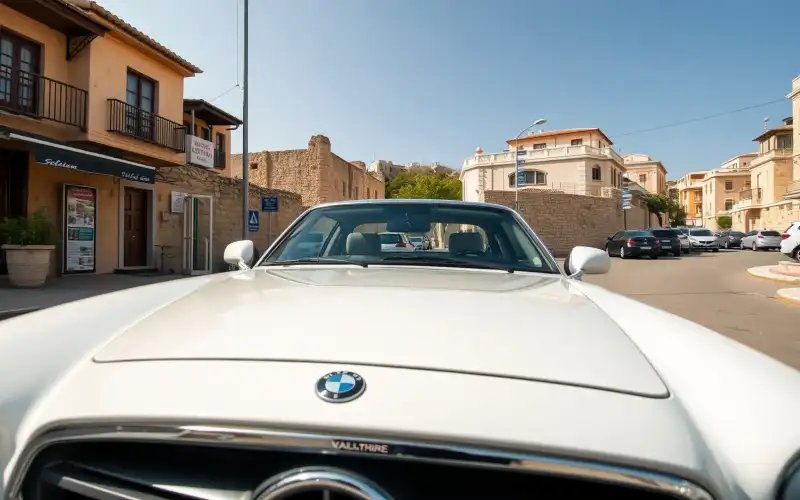
I stood in the Larnaca airport car hire lot on a March morning in 2024, holding a crumpled piece of paper that the rental company had just thrust into my hands. It was a waiver in Greek, with one English sentence scrawled at the bottom: "Damage to undercarriage not covered." That moment—squinting at incomprehensible clauses while the sun climbed higher—taught me more about hiring a car in Cyprus than any guidebook could. Two years and three separate trips later, I've learned where the real pitfalls hide, which rental companies actually stand behind their vehicles, and why having your own wheels is the only sensible way to explore Famagusta, Salamis, and the Karpas peninsula properly.
The Case for Self-Drive in Famagusta District
Most British visitors to Cyprus stick to the west—Paphos, Limassol, the obvious circuits. The eastern coast, particularly the Famagusta district and the Karpas peninsula, remains refreshingly uncluttered by the tour-bus crowds. But there's a catch: public transport here is skeletal at best. The intercity buses run on schedules that seem designed more for local shoppers than tourists, and taxis from Famagusta town to Salamis will cost you 35–45 euros for a fifteen-minute journey. Do that twice daily for a week, and you're looking at 500 euros before you've seen anything worth photographing.
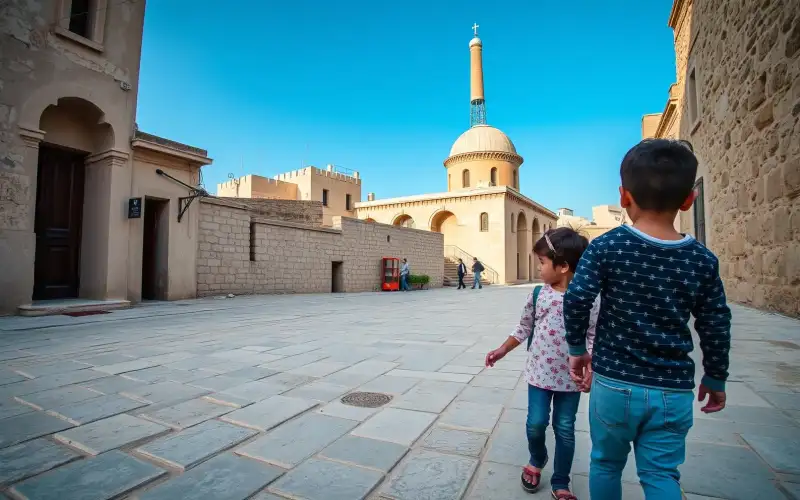
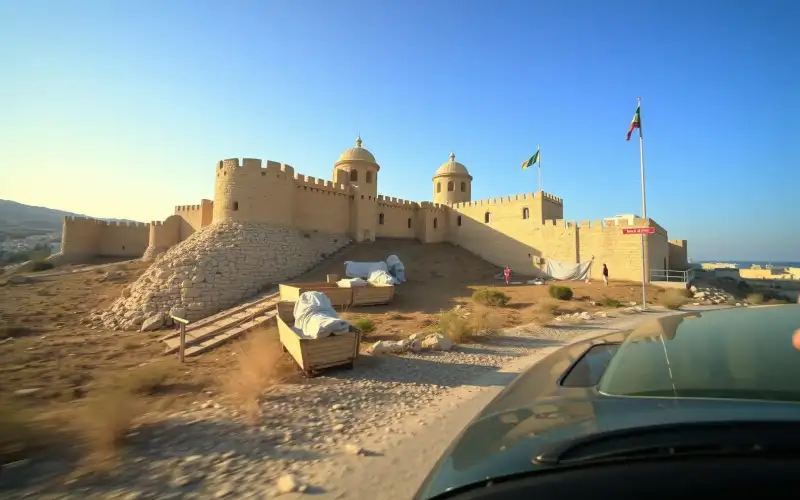
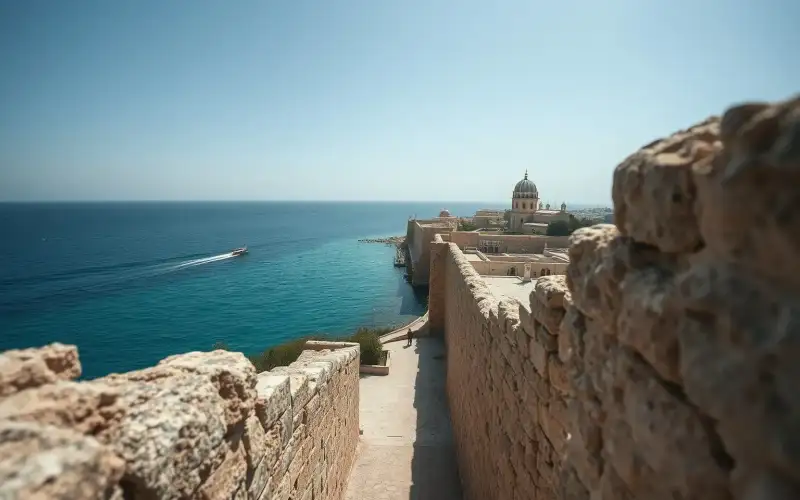
The real reason to hire a car, though, isn't economics. It's freedom. Salamis—the sprawling Greco-Roman ruins that most guidebooks barely mention—sits eight kilometres north of Famagusta town. The Karpas peninsula stretches a further forty kilometres northeast, a landscape of golden cliffs, empty beaches, and villages where tourism hasn't yet arrived. You can't experience these places on a schedule. You need to stop when light hits sandstone just right, when a village bakery smells like it did in 1975, when you spot a turning that looks promising and want to follow it for ten minutes to see where it leads.
That's what a hire car gives you. That, and the ability to reach Apostolos Andreas monastery—perched on the Karpas's northernmost tip—without paying 80 euros for a guided tour or spending three hours on a minibus with strangers.
Which Companies Actually Deliver
I've rented from five different companies across my three trips. Two of them I'd hire from again. The others taught me lessons the hard way.
The large international chains—Hertz, Avis, Budget—operate from Larnaca airport and have desks in Famagusta town. They're reliable in the sense that the car will be mechanically sound and the paperwork will be clear. But they're also expensive. A week's rental of a basic Hyundai i10 in March 2026 cost me 285 euros with Hertz, insurance included. The same car from a local operator in Famagusta—a family business called Sunrise Car Rentals, run by a man named Dimitri—was 165 euros. The Hertz car was newer (2024 model) and came with a full tank. The Sunrise car was a 2019 model with a quarter tank. But it had air conditioning that actually worked, and Dimitri spent twenty minutes walking me through the insurance details rather than handing me a clipboard and walking away.
My second trip, in September 2024, I booked through a website aggregator—one of those comparison sites that promises the best rates. The company, which I'll call Company X to avoid legal tedium, quoted me 140 euros for a week. When I arrived at their lot near the Larnaca airport, they informed me that the quoted price didn't include insurance, taxes, or a mandatory damage waiver. The actual cost was 285 euros. The car—a Renault Clio—had a check-engine light that came on five minutes after I drove off the lot. I spent two hours on the phone arguing with their office before they agreed to swap it for another vehicle.
The lesson: book directly with established local companies or through the international chains. Avoid the aggregators. They're not cheaper; they're just more complicated.
Companies Worth Your Time
- Sunrise Car Rentals (Famagusta)—Family-run, honest pricing, good maintenance. Dimitri speaks English and actually cares if you have a problem. Expect to pay 160–200 euros per week for a basic car in peak season.
- Hertz (Larnaca and Famagusta)—Pricier but transparent. No surprises at pickup. Cars are newer and well-maintained. 280–350 euros per week depending on model and season.
- Europcar (Larnaca)—Middle ground. Slightly cheaper than Hertz, slightly less reliable than Sunrise. Around 220–280 euros per week.
I haven't used smaller operators beyond Sunrise, so I can't recommend them in good conscience. But if you're staying in Famagusta for more than a week and want to support a local business, Dimitri's worth a conversation.
The Border Crossing Paperwork Nobody Explains
Here's where most guides fall short: they either gloss over the border crossing entirely or make it sound like a bureaucratic nightmare. The truth is somewhere in between, but it's important to understand before you sign a rental agreement.
If you're renting a car in the Republic of Cyprus (the internationally recognised south), you cannot legally drive it into the north without a permit. The permit is called a "green card" or "international motor insurance certificate," and it costs about 25 euros. Your rental company should provide it automatically. Ask for it explicitly when you pick up the car. If they say it's not necessary or that you don't need it, walk away and find another company. They're either lying or incompetent.
When you cross at the Astromeri checkpoint (the main crossing between Larnaca and Famagusta), you'll need your passport, your driving licence, and the green card. The process takes about ten minutes. Turkish Cypriot officials will examine your documents, ask where you're going, and wave you through. They're not hostile; they're just thorough. I've crossed four times now, and it's been straightforward every time.
The complication arises if your hire car is damaged while you're in the north. Your insurance—purchased from a Republic company—may not cover damage incurred in northern Cyprus. This is the trap that caught me on my second trip. I scraped the passenger-side mirror on a narrow street in Famagusta town (entirely my fault—I misjudged the width). The damage was minor, maybe 150 euros to repair. But when I returned the car, the rental company's insurance assessor informed me that damage in the north required a separate claim through a Turkish Cypriot insurer, which would take weeks to process and might not be covered at all.
I ended up paying 200 euros out of pocket to avoid the hassle. The lesson: when you pick up your car, ask explicitly what happens if you damage it in the north. Get the answer in writing. Some companies have agreements with northern insurers; others don't. Know which you're dealing with before you drive across the border.
What to Bring and What to Expect
| Document | Required | Notes |
|---|---|---|
| Passport | Yes | Keep it with you at all times. Photocopies are not accepted at the checkpoint. |
| UK Driving Licence | Yes | Physical card only. Digital versions not yet accepted by Turkish Cypriot authorities. |
| Green Card (International Insurance) | Yes | Provided by rental company. Ask for it before you leave the lot. |
| Rental Agreement | Yes | Keep a copy in the car. Includes vehicle registration details. |
| GB/UK Sticker or Number Plate | Recommended | Not legally required, but helpful. Most hire cars have them already. |
The checkpoint itself is modern and efficient. There's a small café if you need to use the toilet. The crossing takes longer during peak hours (8–10 a.m., 4–6 p.m.) but rarely more than fifteen minutes even then. I've never been searched or questioned beyond the routine document check.
Road Conditions and What Your Tyres Will Tell You
The main roads in Famagusta district and the Karpas peninsula are surprisingly well-maintained. The highway from Larnaca to Famagusta is modern and fast—you can cover the fifty-five kilometres in under an hour. Once you're in Famagusta town and heading north toward Salamis or east toward the Karpas, things get more variable.
The road to Salamis is excellent. It's a newer road, built in the last decade, and it's smooth enough that you could eat breakfast while driving it. The same goes for the main coast road that runs through the Karpas toward Agia Trias and beyond. But venture onto the secondary roads—the ones that lead to smaller villages or hidden beaches—and you'll encounter potholes, uneven surfaces, and stretches where the asphalt has broken up into something resembling a lunar landscape.
This is where having a hire car with decent suspension matters. The Hyundai i10 I rented from Sunrise bounced over these roads like a toy. A larger car—a Toyota Corolla or a Nissan Qashqai—would have handled them more gracefully. If you're planning to explore extensively, ask for a car with higher ground clearance. It costs a few euros more but saves your spine.
Speed limits are enforced sporadically. The limit on the main highway is 100 kph; in towns, it's 50 kph. I've seen speed cameras on the Famagusta-Larnaca road, but they're not frequent. More common are the military checkpoints, particularly near sensitive border areas in the Karpas. These are routine—they'll wave you through after a glance at your documents—but they do slow traffic.
Driving standards vary wildly. In towns, expect aggressive honking and drivers who treat red lights as suggestions. On the open road, people drive sensibly. I've never felt unsafe, but I've also never let my attention wander. Turkish Cypriot drivers are competent but impatient, particularly with tourists who drive slowly. If you're cautious, stay in the right lane and let faster traffic pass.
Costs Beyond the Rental Rate
The headline rental price is only part of the equation. Here's what I've actually spent on my three trips, broken down honestly.
Petrol is cheaper in the north than in the Republic. In March 2026, I paid 1.09 euros per litre at a station near Famagusta town, compared to 1.35 euros in Larnaca. For a week's driving covering roughly 400 kilometres, I spent about 45 euros on fuel. Parking in Famagusta town is free in most areas, though there's a paid lot near the old town that costs 2 euros for four hours.
Tolls don't exist on the roads I've driven. The green card is a one-time cost of about 25 euros, included in most rental agreements. Damage waivers—the insurance excess reduction—typically cost 12–15 euros per day. I've paid it on every rental because the standard excess (the amount you'd pay if the car is damaged) is usually 1,000–1,500 euros, which is substantial.
The hidden costs are the ones that catch you. If you damage the car, you're liable. If you get a parking ticket, you're liable. If you scratch the paintwork and the rental company's assessor decides it's significant, you're liable. On my second trip, I was charged 85 euros for a small dent on the rear bumper that I genuinely hadn't caused—it was there when I picked up the car, but I hadn't documented it properly. The lesson: photograph the car's condition before you drive away. Every angle, every scratch, every dent. It takes five minutes and could save you hundreds.
Why It's Still Worth It
After three trips, two minor incidents, one insurance argument, and countless hours navigating roads that range from excellent to challenging, I still believe hiring a car is the right choice for Famagusta. The alternative—relying on taxis, tours, or the sporadic buses—means missing the Karpas peninsula entirely or experiencing it in a tour-group blur.
The freedom to stop at Salamis for as long as you want, to drive to a village bakery at dawn, to find a beach that isn't on any map—that's worth the complications. The cost, spread across a week, is reasonable. The paperwork, while annoying, isn't actually difficult once you know what to expect.
My advice: book with a company you can trust, get your green card in writing, photograph the car before you leave the lot, and drive carefully. The roads are safer than they look, the border crossing is straightforward, and the landscape you'll see from behind the wheel is worth every euro you spend. Just don't expect the process to be as slick as hiring a car in London. This is Cyprus, and things work differently here—slower, more complicated, but ultimately more rewarding.

Comments (4 comments)