
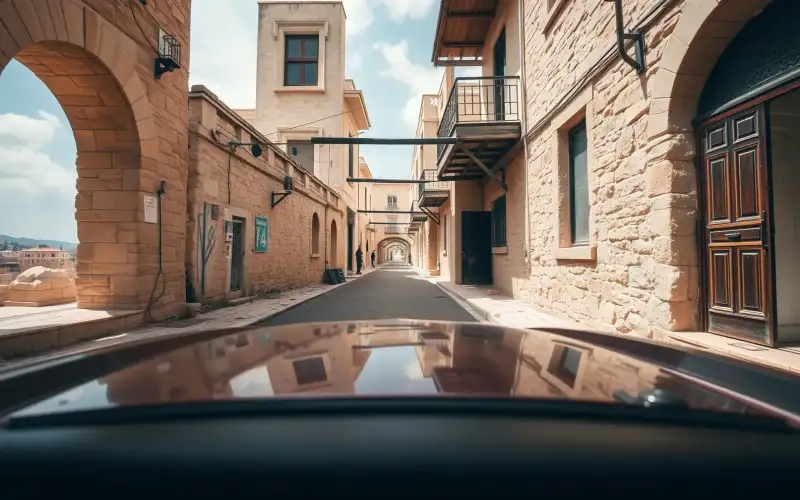
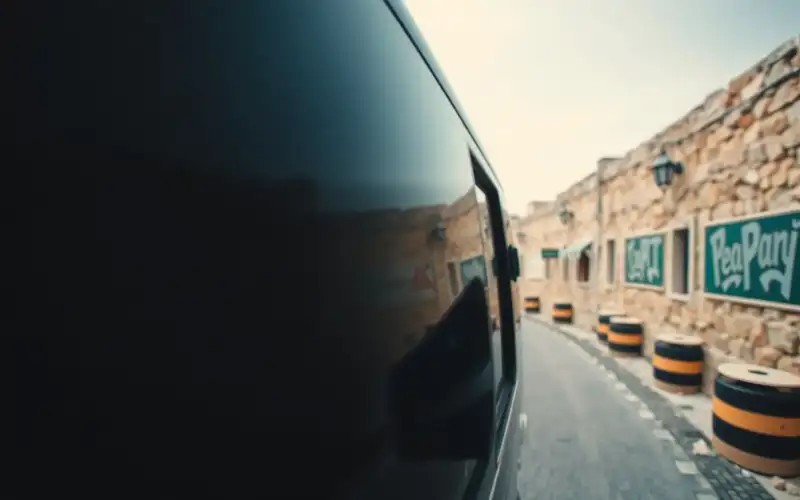
I was sitting in a minibus outside Famagusta's Larnaca Gate at seven in the morning, sweating through my shirt, when the driver announced we'd be skipping the Karpas entirely. "Too rough," he said. "Tour groups don't go there." That's when I knew: if you want the real Karpas Peninsula, you cannot rely on public transport, taxis, or organised tours. You need your own wheels.
I've driven that peninsula more times than I can count—sometimes twice in a single week during the shoulder seasons. I've navigated the bone-jarring tracks to Golden Beach at dawn, watched wild donkeys cross the road near Dipkarpaz without flinching, and camped in places where the nearest human settlement is a forty-minute drive away. Every time I've taken someone else along who arrived expecting buses or taxis to work, they've been disappointed. Every time I've handed someone the keys to a hired car, they've come back saying it was the highlight of their trip.
The Problem: How Tourism Infrastructure Fails the Karpas
The Karpas Peninsula is Cyprus's forgotten corner—and that's precisely what makes it worth visiting. But that same remoteness creates a transport nightmare for anyone without their own car. The infrastructure simply isn't designed for casual visitors.
Why Buses Don't Work
The main Famagusta-to-Dipkarpaz route exists, sure. But it's infrequent, designed for locals commuting to work, not tourists wanting flexibility. Services run roughly twice daily in each direction during summer; in winter, you're looking at a single morning bus that leaves at 6:30 a.m. from the main station near the old town. Even if you catch it, the driver won't wait at Golden Beach while you swim. You're locked into their schedule—arrive at a site, spend exactly ninety minutes, move on. That's not travel. That's box-ticking.
I watched a couple from Manchester last April trying to photograph the wild donkeys near Agia Triada. The bus driver gave them fifteen minutes. Fifteen minutes. They'd driven from London, spent a week in Paphos, and they got fifteen minutes with the animals that drew them to the peninsula in the first place. They never even made it to the beach.
Taxis Are Ruinously Expensive
A taxi from Famagusta to Golden Beach costs around €80–€100 one way. If you want the driver to wait—which you do, because otherwise you're stranded—you're paying €0.80 per minute. A three-hour beach visit costs you €230 before you've bought a coffee. A hired car for the day is €35–€50. Do the maths.
I've met travellers who've spent €400 on taxi fares for a single day's exploration. They could have hired a car for four days at that price. The economics are brutal. Taxis work for airport transfers. They don't work for exploring a peninsula that requires stopping frequently, wandering down unmarked lanes, and spending time in places where there's no phone signal.
Tour Groups Move Too Fast and Miss Everything
The organised tours—and there aren't many—follow a rigid itinerary. Salamis ruins, lunch at a taverna in Bogaz, maybe a quick stop at the Apostolos Andreas monastery, back to Famagusta by six. They're designed to pack experiences into a day, which means you're constantly moving, constantly herded, constantly aware that twenty other people are waiting for you to finish taking photos.
The real Karpas isn't a checklist. It's the silence of driving through scrubland at midday with nothing but cicadas and the engine noise. It's stopping because you spotted something interesting—a ruined cottage, a rough track leading down to a cove, a flock of donkeys grazing near the road. It's sitting on a beach alone for two hours, reading, swimming, thinking. Tour groups cannot accommodate that rhythm. They're built for efficiency, not for the kind of slow travel that actually lets you absorb a place.
Why This Matters: What You'll Actually Miss
The Karpas Peninsula contains some of Cyprus's most extraordinary landscapes and least-visited archaeological sites. But they're scattered across rough terrain, often with minimal signage. Without a car—specifically, without your own car that you can park wherever you like and leave for as long as you want—you'll miss most of them.
Golden Beach Requires Serious Track Navigation
Golden Beach (Alagadi) is the peninsula's most famous attraction. It's where loggerhead and green sea turtles nest. It's genuinely beautiful—six kilometres of pale sand, backed by dunes, with water so clear you can see fish from the shore. But reaching it means driving eight kilometres down a rough track from the main road near Yeni Erenkoy. The surface is compacted earth and loose gravel. A standard saloon car can manage it slowly, but a minibus driver won't risk it, a taxi driver will charge you a fortune for the damage risk, and a tour bus simply won't attempt it.
I drove it in a basic Nissan Micra last September. Took twenty minutes. Bouncy, yes. Impossible, no. But you need your own vehicle to even try.
The Wild Donkeys Are Unpredictable
The peninsula's semi-wild donkey population roams freely, particularly around Dipkarpaz and the northern coast. They're not aggressive, but they're curious and they don't respect roads. You might see them anywhere—standing in the middle of the road near Agia Triada, grazing beside a ruined monastery, standing in the shallows at a remote beach. They're best photographed from a car, where you can approach slowly and stop without disturbing them. On foot or in a scheduled tour, you'll see them briefly as the vehicle passes. In your own car, you can spend twenty minutes watching them, waiting for the light to hit them right, letting your companion get out and shoot photos from different angles.
The Abandoned Villages Tell Stories That Require Time
Scattered across the peninsula are villages abandoned during the 1974 conflict and its aftermath—places like Varosha (the fenced-off resort area) and smaller hamlets in the interior. Some are slowly being repopulated; others remain frozen in time. To really understand them, you need to walk around, peer through windows, sit quietly and imagine what life was like. You can't do that from a bus window. You can't do it in a taxi that's running the meter. You need time, and time requires your own transport.
Remote Beaches Are Accessible Only by Car
The peninsula's north coast has beaches that see perhaps a handful of visitors per week. Nangomi, Galinoporni, Ronnas—these aren't names you'll find in most guidebooks. They're accessible by rough tracks, they have no facilities, and they're genuinely quiet. A bus won't go there. A taxi driver will look at you like you're mad if you ask. But in a hired car, you can navigate to them, spend a few hours alone with the sea, and feel like you've discovered something genuine.
The Solution: Why a Hired Car Changes Everything
Freedom of Movement
A hired car gives you absolute control over your itinerary. You want to stop at a viewpoint for two hours? Stop. You want to skip a major site because you're not interested? Skip it. You want to drive down a rough track just to see where it leads? Go ahead. You're not locked into anyone else's schedule, pace, or priorities. This freedom is the difference between tourism and travel.
Cost Effectiveness Over Multiple Days
A compact car hire costs €35–€50 per day from Famagusta. A week is €200–€250. Over that week, you'll save thousands compared to taxis. You'll also see exponentially more—not because you're rushing, but because you're not paying per minute to explore.
Access to Unmarked Sites
The peninsula's best sites often lack clear signage or established parking areas. Without your own car, you either won't find them or you'll find them on a guided tour where you're told what to think about them. With a car, you discover them yourself. That discovery—that moment when you round a bend and suddenly see a monastery perched on a cliff, or a beach you didn't know existed—that's irreplaceable.
Comfort and Flexibility
You can carry water, snacks, a proper camera, a book, spare clothes, whatever you need. You can leave your accommodation at your own pace, take detours, stop for lunch wherever appeals to you, stay late at a site if the light is good. A bus schedule doesn't accommodate any of that. A taxi charges you for waiting. A hired car is simply yours.
Practical Guidance: How to Do It Right
Where to Hire
Book through a major international company—Hertz, Avis, Budget—either before you arrive or at Larnaca Airport. Local firms in Famagusta exist, but international companies offer better insurance clarity and 24-hour support if something goes wrong. Expect to pay €40–€60 per day for a compact manual car; automatics are pricier. Book at least a week ahead in summer.
What Vehicle to Choose
A small hatchback or compact sedan is ideal. It's fuel-efficient, easy to park, and capable of handling the peninsula's rougher tracks. You don't need a 4x4 for the Karpas—I've seen elderly couples in Fiat 500s reaching Golden Beach. What you need is something you're comfortable driving on occasionally rough surfaces.
Driving Practicalities
Roads in the Karpas are generally well-maintained on main routes. The N2 from Famagusta to Dipkarpaz is a decent highway. Secondary roads deteriorate as you head north and east. Drive slowly on rough sections—20 km/h is fine. Watch for wild donkeys, especially at dawn and dusk. Fuel up in Famagusta before heading out; there's a petrol station in Dipkarpaz but options are limited. Bring water, a phone charger, and a physical map because mobile signal is patchy.
Insurance and Documentation
Your UK driving licence is valid. International Driving Permit isn't essential but doesn't hurt. Check your car hire insurance covers rough tracks—most do, but confirm. Keep the hire agreement and your insurance documents visible. Police checkpoints exist; they're routine and straightforward if your paperwork is in order.
What You'll Experience That Others Won't
I spent a morning last May parked at Golden Beach, alone except for a couple of fishermen. I watched the light change across the water for three hours. I swam, I read, I simply sat. A tour group arrived at noon, spent forty minutes, and left. I stayed until four. That afternoon cost me nothing extra—I had the car. It would have cost a taxi driver €120 to wait for me.
That's the real argument for hiring a car on the Karpas. It's not just about access to remote sites or saving money, though both matter. It's about time. It's about being able to move at your own pace, to linger where you want, to discover things accidentally, to have experiences that aren't scheduled or packaged or designed for group consumption.
The Karpas Peninsula is one of the few genuinely undeveloped, underpacked corners of Cyprus. It won't stay that way forever. The roads will improve, the tourism infrastructure will expand, the wild spaces will shrink. Right now, in 2026, you can still hire a car and explore it on your own terms. You can still find donkeys and empty beaches and abandoned villages and the kind of silence that most of Europe has forgotten.
But you need your own wheels to do it. Everything else—buses, taxis, tours—will keep you on the surface. A hired car lets you actually experience the place.
Comments (4 comments)