
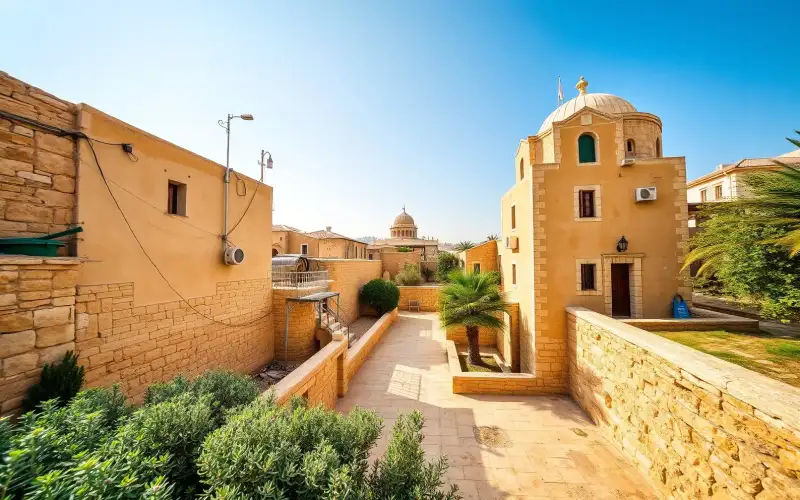
I was sitting in a half-empty taverna in Famagusta's old town, nursing a glass of Commandaria, when the owner asked me the question I'd been dodging for weeks: "Who are you staying with?" It's a deceptively simple question that reveals everything about how you should actually book a hotel in this corner of Cyprus. The answer—whether you're here with a partner, three kids, or just yourself—changes almost everything: price, location, what you'll do at night, how long you'll stay put versus how many ruins you'll chase.
After driving the Karpas coastline and staying in everything from a crumbling seafront villa to a family compound with a pool the size of a small lake, I've learned that Famagusta's accommodation landscape doesn't fit neatly into star ratings or TripAdvisor scores. It's fragmented, specific, and deeply tied to what you actually want from a week in the east. This guide breaks down the three main traveller archetypes and where they genuinely belong.
Overview: The Three Famagusta Hotel Worlds
Famagusta district spans roughly 1,200 square kilometres, from the walled city itself through Salamis and north along the Karpas peninsula. The hotels here serve radically different purposes depending on who's sleeping in them. A couple wanting candlelit dinners and a private beach cove has almost nothing in common with a family of five hunting for kids' clubs and buffet breakfast, yet both might be staying within 5 kilometres of each other.
The pricing structure tells you something important: couples and solo travellers often pay more per night than families, because they're not splitting rooms. A boutique hotel charging €180 for a double room in July is effectively €90 per person—but a family suite sleeping four at €250 is €62.50 per head. Solo travellers, meanwhile, get stung hardest. Single supplements at mid-range hotels run 30-50% of the double rate, so a €120 double might cost you €165 alone.
Location matters differently for each type too. Couples gravitate toward the Varosha seafront or Salamis' quieter northern reaches. Families cluster near the town centre where there's infrastructure—supermarkets, pharmacies, restaurants that don't require a 30-minute drive. Solo travellers, in my experience, want to be near other solo travellers, which means mid-range hotels with social spaces and staff who don't assume you're lonely.
For Couples: Romance, Privacy, and Honest Limitations
The Boutique Seafront Play
Famagusta's most romantic hotels aren't the biggest. They're small, often family-run, and scattered along the Varosha coastline or tucked into Salamis' northern cliffs. Think 12-25 rooms maximum, usually housed in converted villas or purpose-built Mediterranean structures with stone and whitewash. Expect to pay €160-240 per night in high season (July-August), €100-160 in shoulder months (April-June, September-October).
What you get: direct beach or sea access, often a restaurant run by the owner's family, staff who remember your name by day two, and the ability to watch the sunset without fighting through 200 other guests. What you don't get: a kids' club, a gym with equipment from this decade, or a spa that isn't a single room with a massage table. The Wi-Fi might drop. The air conditioning might be temperamental. The pool, if there is one, is small.
The sweet spot for couples is April through June or September through October. July and August bring heat that makes afternoon activities feel like penance, and prices jump 30-40%. I spent a June evening on a terrace overlooking Salamis' northern shore, eating grilled sea bream that the owner had caught that morning, and paying €28 for the whole plate. That same meal in August would have been €38 and served alongside a queue of sunburned package tourists.
The Mid-Range Boutique Compromise
If you want boutique atmosphere but also reliable Wi-Fi, a functioning gym, and a restaurant that serves more than one style of food, you're looking at €140-200 per night. These hotels—typically 30-50 rooms—sit in the gap between true boutiques and resort chains. They're often in Famagusta town itself or on the quieter stretches of the Karpas peninsula.
The trade-off is obvious: more facilities, less intimacy. You might share a small pool with 40 other guests instead of having a private beach cove. The restaurant serves buffet breakfast instead of a made-to-order plate. But you get consistency, cleaner rooms, and staff trained to handle complaints rather than just absorb them with a shrug.
Reality Check: What Couples Actually Need to Know
Famagusta isn't Santorini. There's no sunset-viewing platform packed with Instagram photographers. The beaches, while excellent, aren't always pristine—you'll find the odd plastic bottle and occasionally seaweed. Many couples I've spoken to arrive expecting Greek island romance and find instead a quieter, rougher authenticity. That's actually the point, but it's worth knowing upfront.
The nightlife is minimal outside the town centre. If you want dinner and drinks after 9 p.m., you're either eating at your hotel or driving into town. The Karpas peninsula, while stunning, has almost no restaurants once you head north past Agia Trias. Plan accordingly.
One more thing: many boutique hotels here don't have lifts. If you have mobility issues or simply don't want to climb stairs with luggage, ask before booking. It's not uncommon for a "charming stone villa" to mean a spiral staircase and a bathroom on a different level.
For Families: Space, Activities, and the Buffet Question
The Resort Play: Salamis and Town Centre
Family-focused hotels in Famagusta cluster in two zones: Salamis (quieter, more space, better for younger kids) and Famagusta town centre (more restaurants, easier access to shops, better for teenagers). Both areas have properties with multiple pools, kids' clubs, and family suites that actually fit a family without everyone sleeping in shifts.
Salamis resorts typically run €130-200 per night for a family suite (sleeping 4-5) in high season. You're getting a compound feel—multiple pools, tennis courts sometimes, a kids' area, and a restaurant that serves pasta alongside kebabs. The beach access varies. Some hotels have private stretches; others require a short walk or shuttle. The pools are the real draw for families with children under 10. Kids can splash for hours while you read.
Town centre family hotels are slightly cheaper (€110-180 for a suite) but feel more urban. You're closer to restaurants, supermarkets, and the old walled city if you want to drag the kids around ancient walls. The trade-off is noise—town centre hotels hear traffic, delivery trucks, and late-night diners. Families with teenagers often prefer this. Families with toddlers often regret it.
The Practical Family Breakdown
Here's what actually matters for families in Famagusta:
- Kids' clubs: Only the larger resorts (50+ rooms) run dedicated clubs. They're typically 9 a.m. to 1 p.m. and 4 p.m. to 7 p.m., with activities ranging from craft sessions to pool games. Don't expect childcare past 7 p.m.—this isn't a babysitting service.
- Pools: Shallow pools for small children are rare. Most family hotels have one shallow end and one deep end. Bring floats or water wings if your kids aren't confident swimmers.
- Restaurants: Buffet breakfasts are standard. Buffet dinners are common but not universal. À la carte options usually cost extra or require advance booking. Kids' menus exist but are often limited to pasta, chicken, and chips.
- Beaches: Family hotels near Salamis have better beach access than town centre options. The water is calm and warm May through October. November through March is too cold for most families with young kids.
- Space: Family suites vary wildly. Some are genuinely two rooms plus a living area. Others are one large room with a partition. Ask for floor plans before booking.
The Hidden Family-Friendly Gem: The Apartment Complex
Famagusta has a growing number of apartment hotels—self-catering studios and one-bedroom units rented nightly or weekly. These often cost less than traditional hotels (€90-150 per night) and give families far more flexibility. You can cook breakfast, eat lunch at the apartment, and only eat out for dinner. With kids, this is often cheaper and less stressful than three daily restaurant meals.
The catch: these complexes usually have minimal staff, no restaurants, and pools that are smaller than resort pools. They work brilliantly for families who want independence and don't mind self-catering. They're terrible for families expecting hotel service and social activities.
For Solo Travellers: Connection, Value, and Honest Challenges
The Social Hotel Strategy
Solo travellers in Famagusta face a genuine problem: single supplements. A double room at €120 might cost you €165 alone—a 37% surcharge for sleeping solo. It's unfair and standard. The best workaround is choosing hotels where solo travellers naturally congregate, which means mid-range properties with social spaces, active bar scenes, and staff who actively facilitate introductions.
These hotels—typically 40-80 rooms, €110-150 per night—have a few key features: a central bar area where guests mingle, a restaurant with communal seating options, organized activities (walking tours, wine tastings), and staff trained to introduce solo guests. They're not luxury, but they're designed for people who didn't come here to sit alone in a room.
The best examples sit on the Karpas peninsula's quieter stretches or just outside Famagusta town. They attract a mix of solo travellers, couples, and small groups—mostly British, German, and Dutch, mostly aged 50-75, mostly interested in history and nature rather than nightlife. If that's you, these hotels are genuinely excellent value.
The Budget Solo Play
If budget is your primary concern, Famagusta has guesthouses and budget hotels charging €60-90 per night. These are basic—clean rooms, shared or private bathrooms, minimal facilities—but they exist and they work. They're often run by local families and offer the most authentic experience. You'll eat breakfast at the owner's kitchen table. You'll get genuine recommendations rather than marketing-speak.
The downside: minimal English, no tourist infrastructure, and you're entirely responsible for finding things to do. If you're comfortable with that, the value is exceptional. If you need hand-holding, it's frustrating.
The Reality of Solo Travel in Famagusta
Famagusta isn't a party destination. There's no backpacker scene, no organized pub crawls, no obvious social infrastructure for solo travellers. The restaurants are good but designed for families or couples. The beaches are excellent but often quiet. If you come here expecting to meet 50 people and make lifelong friends, you'll be disappointed.
What actually happens: you meet other solo travellers at breakfast or the bar. You have conversations about ruins and hiking routes. You make a few genuine connections, not hundreds of superficial ones. You spend time alone—reading, walking, thinking—without it feeling lonely because you chose it. If that appeals to you, Famagusta is perfect. If you need constant social stimulation, book a resort with a kids' club atmosphere aimed at adults.
One practical note: solo female travellers report feeling safe throughout Famagusta district. The area is quiet and locals are genuinely welcoming. Standard travel sense applies—don't walk alone at midnight, don't flash expensive items—but you won't experience harassment or theft if you're reasonably careful.
Who It's For: A Direct Breakdown
Couples Should Choose Boutique Seafront Hotels If:
You want romance, privacy, and don't mind basic facilities. You're comfortable with small pools, simple restaurants, and potentially temperamental Wi-Fi. You have €150-240 per night to spend. You're visiting April-June or September-October. You want to feel like you've found a secret rather than a branded experience.
Families Should Choose Resort Hotels If:
You have young children (under 12) and want structured activities and safe pools. You want buffet meals and minimal decision-making about restaurants. You're okay with a more tourist-oriented experience. You have €130-200 per night for a family suite. You're visiting May-September when the weather is reliably warm.
Solo Travellers Should Choose Social Mid-Range Hotels If:
You want to meet other travellers without the chaos of a party scene. You're interested in history, nature, and slow travel. You have €110-150 per night and don't mind a single supplement. You're aged 45+. You're comfortable with British and European guests and want recommendations from staff who actually know the area.
The Verdict: What Famagusta Actually Offers in 2026
Famagusta's hotel landscape has matured significantly in the past five years. The wild west of unregulated guesthouses is fading. Chain hotels are appearing on the outskirts. But the core appeal—small, locally-run properties serving specific traveller types—remains intact. That's actually the point.
For couples, Famagusta offers genuine intimacy at reasonable prices. You won't find Santorini-level romance, but you'll find quiet beaches, good food, and the kind of space to actually talk to each other without fighting through crowds. Book a boutique hotel, eat at the restaurant, and let the peninsula unfold slowly. Budget €1,200-1,800 per week for accommodation and food for two.
For families, Famagusta offers space, safety, and fewer tourists than the west coast. The resorts aren't fancy, but they work. Kids genuinely enjoy the pools and beaches. You'll spend less than you would in Paphos or Limassol. Budget €800-1,400 per week for a family suite and meals.
For solo travellers, Famagusta offers the rarest thing in modern travel: the chance to be alone without being lonely. You'll meet people naturally, not through forced activities. You'll learn things from locals, not from guidebooks. You'll spend less than you would in a party destination. Budget €700-1,050 per week for accommodation and meals.
The catch, across all three types: Famagusta requires patience. It's not a destination that reveals itself immediately. The best restaurants aren't in guidebooks. The best beaches require local knowledge or driving. The best experiences happen when you slow down enough to notice them. If you want instant gratification and pre-packaged experiences, go to Paphos. If you want to actually understand a place, Famagusta is waiting.
"The east of Cyprus isn't less touristy because it's worse—it's less touristy because it's real." That's what a hotel owner told me in 2024, and it still holds in 2026. The hotels here reflect that reality. They're not trying to be everything to everyone. They're trying to be exactly what you need, if you know what you're actually looking for.
One final practical note: book directly with hotels when possible. Single supplements, family discounts, and room upgrades are often negotiable if you call rather than book through an aggregator. Many family-run properties will knock 10-15% off rates for stays longer than five nights. Some will offer free airport transfers if you book breakfast. These deals don't appear online—they exist in conversations with people who actually run the places.
Famagusta's hotels aren't flashy. They're practical, specific, and designed for people who know what they want. If that's you, you'll find exactly what you're looking for. If you're still figuring it out, take the time to figure it out before booking. The difference between a perfect stay and a mediocre one often comes down to choosing the right hotel for who you actually are, not who you think you should be.

Comments (4 comments)