
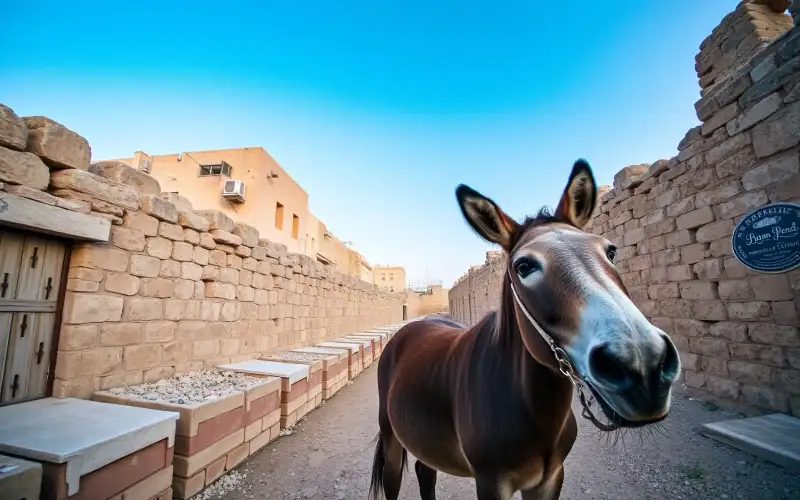
The Donkey Myth: What Really Lives on Karpas
Everyone arrives on the Karpas peninsula asking about donkeys. The feral herds are real enough—descendants of abandoned working animals from the 1960s—but they've become such a draw that visitors miss what's genuinely remarkable about this landscape. I spent three weeks here in April 2025, watercolours in hand, trying to paint the light on Alagadi beach at dawn. By day three, I'd stopped looking at donkeys entirely. Instead, I was watching a Eurasian hoopoe work the scrubland with its crest raised, and a loggerhead turtle hauling itself onto the sand at dusk.
The peninsula stretches 70 kilometres northeast from Boğaz, narrowing as it extends into the sea like a finger pointing toward the Turkish mainland. It's one of Cyprus's least developed regions, which is precisely why the wildlife here survives. The statistics are quietly staggering: over 190 bird species recorded, several endemic reptile subspecies found nowhere else on Earth, and one of the eastern Mediterranean's most important sea turtle nesting grounds. Yet most visitors see only donkeys and empty beaches.
This imbalance matters. When wildlife becomes a backdrop to a single charismatic species, conservation suffers. The donkeys themselves are now a management problem—their grazing has degraded native vegetation, and tourist feeding has made them aggressive and dependent. Meanwhile, the creatures that actually need protection go unnoticed.
Spring Migration: The Warblers Arrive
April and May transform the Karpas into a stopover station for millions of migrating songbirds. This is when the peninsula's true significance becomes visible. Birds moving between African wintering grounds and European breeding territories use the eastern Mediterranean as a corridor, and the Karpas—with its mix of scrubland, pine forest, and coastal wetlands—is a crucial refuelling point.
The warblers are the main event. Blackcap, garden warbler, willow warbler, and lesser whitethroat arrive in waves, sometimes within hours of each other. On a single morning walk from Alagadi to Nangomi in mid-April, I counted seven warbler species. The sound is extraordinary—a cacophony of thin, high calls that makes the scrub seem alive in a way daylight alone doesn't convey. Local birdwatchers gather at Alagadi wetlands, which sit just inland from the turtle beach, and the overlap is instructive: the same habitat that feeds exhausted migrants also shelters breeding terrapins and provides shallow water for wading birds.
Where to Look and When
Alagadi wetlands are accessible via the main road through Boğaz; park near the beach and walk inland along the track. Early morning—before 7 a.m.—is essential. The birds are most active in the first few hours after dawn, and the light is also better for photography. Bring binoculars rated for close focus (birds in scrub are often only 5-10 metres away) and a field guide specific to eastern Mediterranean species. The Avibase Cyprus checklist and the Collins Bird Guide are standard references.
Peak migration runs mid-April through May, with a secondary wave in August and September as birds return south. The spring migration is more intense and more reliable. Accommodation in Boğaz or Yeni Erenköy puts you within 20 minutes of the best spots. The Sunray Hotel in Boğaz (€55-75 per night, 2026 rates) is basic but convenient; rooms have air conditioning and the owner, Mehmet, knows the bird calendar better than most ornithologists.
The Rarer Sightings
Most visitors won't encounter the truly rare species—the hoopoe, the roller, the occasional eagle. But they exist here. A friend who birded the peninsula in 2024 recorded a red-footed falcon near Dipkarpaz, a species normally confined to central Asia. The Karpas sits on a migration route that occasionally carries vagrants thousands of kilometres off course. This unpredictability is part of the appeal for serious birdwatchers, though it also means you need patience and luck in equal measure.
Reptiles: The Hidden Specialists
If you want to encounter wildlife that's genuinely endemic—found nowhere else in the world—ignore the birds and look down. The Karpas is home to several reptile subspecies that evolved in isolation on this peninsula, including the Cyprus grass snake and a distinct population of the Levantine viper. Neither is aggressive, but both require respect and knowledge to observe safely.
The Cyprus grass snake is the more common encounter. It's a non-venomous, slender green or brown species that hunts small lizards and frogs in the scrubland and around water sources. I found one coiled in dry grass near Nangomi in April—perhaps 60 centimetres long, with an almost comical expression of alarm when I approached. The snake didn't strike; it simply moved away with surprising speed. The local name is ofis, and locals are generally unfazed by them, though tourists often mistake them for vipers and panic unnecessarily.
The Levantine viper is genuinely venomous and requires caution. It's a heavy-bodied, patterned snake, typically 50-80 centimetres long, and it's responsible for occasional bites to locals and workers in rural areas. However, it's also reclusive and bites are rare. If you're hiking in rocky or scrubby terrain, wear closed boots and watch where you place your hands. The viper will almost always retreat if given the chance.
Lizards and Geckos
The real reptile diversity lies in the lizards. The Karpas is home to at least five endemic or near-endemic lizard species, including the Cyprus rock lizard and several gecko species. These are small creatures—most under 20 centimetres—but they're abundant and relatively easy to spot if you move slowly and quietly.
The Cyprus rock lizard is striking: dark with bright blue spots on the males, cryptic brown on females. They favour rocky outcrops and stone walls, particularly around abandoned villages like Dipkarpaz and Afendrika. The best way to observe them is to sit quietly near a sunny wall for 10-15 minutes and let them forget you're there. They'll emerge to bask, and you can watch their behaviour—territorial displays, courtship, hunting. This is wildlife observation at its most intimate and least intrusive.
Geckos are nocturnal, so you'll need a torch and patience. The Turkish gecko (Hemidactylus turcicus) is common around buildings and hunts insects attracted to lights. If you're staying in a village like Yeni Erenköy or Boğaz, ask your accommodation to leave an outside light on after dark, then step out with a torch after 9 p.m. You'll likely see geckos hunting moths and other insects. It's a small thing, but it's genuine wildlife interaction without disturbance.
Marine Life: Turtles and Beyond
The Karpas peninsula is one of the most important nesting grounds for loggerhead and green sea turtles in the entire Mediterranean. Alagadi beach, in particular, receives hundreds of nesting females each summer (June through August). This is a conservation success story—Cyprus's turtle populations have recovered significantly since the 1970s—but it's also fragile and requires responsible observation.
Loggerhead turtles (Caretta caretta) are the primary nesters here. Females return to the beach where they were born, often 30-40 years later, to lay their own eggs. A nesting female is an extraordinary sight: a creature weighing 80-120 kilograms, hauling herself up the beach in the dark, digging a pit with her hind flippers, and depositing 80-120 leathery eggs. The process takes 1-2 hours and is deeply moving to witness. However, it's also a moment of vulnerability. Artificial light, noise, and human presence can disorient nesting females and cause them to abandon the nest.
Responsible Turtle Observation
If you want to see nesting turtles, work with a licensed guide or conservation organisation. The Cypriot government permits guided night walks on Alagadi beach during the nesting season, but only with registered operators who follow strict protocols. These include:
- No artificial light except red-filtered torches (white light disorients turtles)
- Maintaining at least 5 metres distance from a nesting female
- No photography with flash
- Silence—excessive noise can cause a female to abandon nesting
- Strictly limited group sizes (usually 4-6 people per guide)
The cost is typically €20-30 per person for a 2-3 hour walk. Several hotels in Boğaz and Yeni Erenköy can arrange this, or contact the Alagadi Turtle Conservation Project directly. The experience is humbling in a way that most wildlife encounters aren't. You're witnessing a creature performing an ancient behaviour, unchanged for millions of years, in a landscape that's barely changed in the past century.
Daytime Marine Encounters
You don't need to wait for night to see marine life. The waters around the Karpas are home to dusky groupers, barracuda, octopus, and occasionally dolphins. Snorkelling at Alagadi or Nangomi beach on a calm day (typically April-May or September-October) will reveal small fish, crustaceans, and occasionally larger species. The water is clear and relatively unpolluted, which makes these encounters possible.
More casual visitors might spot sea turtles in the water while swimming, though this is less common than nesting observation. Green turtles, in particular, feed in shallow coastal waters. If you encounter a turtle while swimming, the rule is simple: observe from a distance and don't touch. Turtles are legally protected, and harassment carries fines.
Conservation and Responsible Wildlife Watching
The wildlife of the Karpas exists in a precarious balance. The peninsula remains relatively undeveloped because it's remote and economically marginal, not because it's protected. There are no national parks, no formal wildlife reserves (though Alagadi has some protection). The habitats persist largely because tourism hasn't yet overwhelmed them, and because local communities have maintained traditional land use patterns.
This means that individual traveller behaviour matters enormously. The cumulative effect of hundreds of visitors feeding donkeys, disturbing nesting sites, or collecting lizards for photographs can degrade habitats and alter animal behaviour. Responsible wildlife observation means:
- Observing from a distance—use binoculars or a camera with a telephoto lens rather than approaching closely
- Never feeding wild animals, including donkeys
- Staying on established paths to avoid trampling vegetation and disturbing ground-nesting birds
- Using guides for sensitive sites like turtle nesting beaches
- Supporting local conservation efforts through donations or volunteer work
- Reporting wildlife sightings to local conservation groups—data collection helps inform protection efforts
The Karpas Peninsula Conservation Association and the Alagadi Turtle Conservation Project both welcome visitor participation. Even a small donation supports habitat management and research. More meaningfully, visiting responsibly and talking about what you've seen helps shift the narrative away from the donkeys and toward the peninsula's genuine ecological significance.
Practical Information: When and Where to Go
The best season for wildlife on the Karpas is April-May (spring migration and early turtle nesting) or September-October (return migration). Summer is hot and many birds have moved north, though turtle nesting continues through August. Winter is quiet, though some waterfowl species arrive for the season.
Accommodation options are limited but improving. Beyond the Sunray Hotel in Boğaz, there's the Karpasia Peninsula Hotel (€60-80 per night, basic but friendly) and several guesthouses in Yeni Erenköy and Dipkarpaz. For a more comfortable stay, consider basing yourself in Famagusta (40 minutes' drive south) and day-tripping to the peninsula. The Salamis Bay Conti Resort (€120-180 per night) offers better amenities and is within reasonable driving distance of all the wildlife sites.
Hiring a car is essential—public transport is minimal. A small rental (€25-35 per day) gives you flexibility to explore at your own pace. The main road runs the length of the peninsula; secondary tracks branch off to beaches and villages. A basic map and a willingness to get lost are sufficient navigation tools.
Bring binoculars, a field guide, sturdy walking boots, sun protection, and a torch for nocturnal wildlife. A camera is optional but rewarding if you're interested in photography. Most importantly, bring patience. Wildlife observation isn't about ticking boxes; it's about sitting still long enough to see how a place actually lives.


Comments (4 comments)