
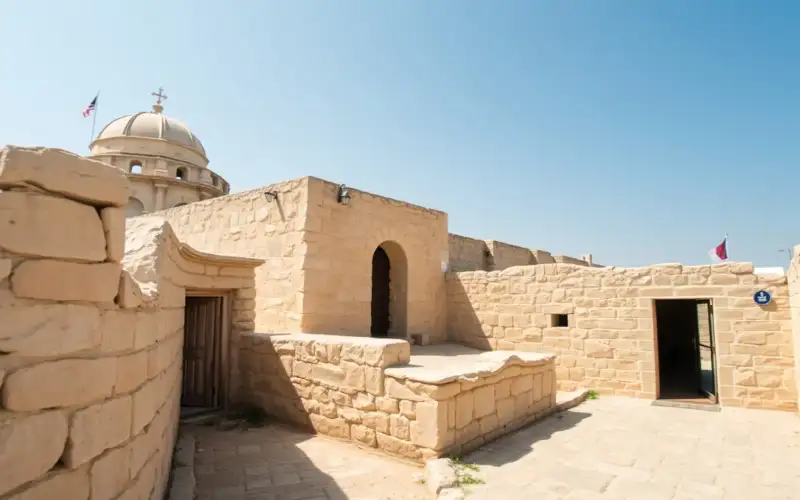
I watched a fisherman haul his nets at dawn in Bogazi last March—the kind of scene you'd expect to find in a 1970s photograph, not a 2026 Mediterranean resort. Twenty metres away, his wife swept the terrace of their family taverna while tourists slept. Two hours south, in Protaras, the beach clubs were already testing their sound systems. This contrast between the two destinations defines everything you need to know about choosing between them.
East Cyprus offers something the crowded western resorts lost decades ago: the possibility of genuine quiet. Bogazi and Protaras represent opposite ends of that spectrum, separated by only 35 kilometres of road yet worlds apart in temperament. For British families planning 2026 holidays in this region, understanding the character of each place matters more than any amenity list.
The Bogazi Experience: Fishing Village Authenticity
Bogazi sits 45 kilometres northeast of Famagusta, a working fishing village that has resisted the full resort treatment. The population hovers around 800 year-round residents, though summer brings perhaps another 200 seasonal workers. The beach stretches for roughly 1.2 kilometres, backed by a single road where tavernas occupy converted fishermen's houses.
The sand here is coarser than Protaras—darker, with visible shell fragments and the occasional pebble patch. Water clarity runs excellent from May through September, with visibility often exceeding 15 metres. The seabed shelves gradually, making it genuinely safe for young swimmers, though the undertow strengthens during southwesterly winds in July and August. I've tested it with my own children; the slope is forgiving enough that toddlers can wade 40 metres out and still touch bottom.
Accommodation in Bogazi divides into three categories. Family-run hotels number five or six, typically 2-3 storeys, with rates ranging from €65–€95 per night for a double room with kitchenette in 2026. Rooms tend toward basic but spotless: tiled floors, functional bathrooms, balconies overlooking either the beach or the village square. The larger properties—Bogazi Beach Hotel and Bogazi Village Hotel—offer pools (small, chlorinated, adequate for cooling off rather than swimming laps) and breakfast buffets. Self-catering apartments cluster near the beach road; expect €55–€75 nightly for a one-bedroom unit, often with weekly discounts dropping to €350–€420. These suit families planning to cook some meals and stretch budgets.
Dining reflects the village's fishing heritage. Restaurants number seven or eight, all within 200 metres of the beach, all family-owned. Prices run genuinely moderate: grilled fish (caught that morning, usually) costs €14–€18 per portion. A family meal—mezze platter, grilled octopus, salad, bread, house wine, coffee—totals roughly €45–€55 for two adults and two children. Quality varies less than you'd expect; the competition is local reputation, not tourist footfall. Taverna Bogazi (run by Stavros for 31 years) serves the most consistent food. Yiannis's place, nearer the northern beach end, offers better sunset views and slightly fresher fish, though service moves at village pace—expect 45 minutes from order to plate.
The atmosphere shifts dramatically with season. May through June feels genuinely quiet—perhaps 30–40% occupancy across all accommodation. July and early August bring Cypriot families from Nicosia and Larnaca; the beach becomes moderately busy by 11 a.m., clearing again by 5 p.m. September returns to near-spring emptiness. British visitors cluster in May, June, and September; you'll hear English on the beach, but not dominatingly.
Protaras: The Established Resort
Protaras lies 12 kilometres south of Bogazi, a resort that emerged in the 1980s and solidified through the 1990s and 2000s. The municipality encompasses roughly 3,000 permanent residents, swelling to 15,000–20,000 in peak summer. The beach stretches 1.8 kilometres, fronted by a continuous promenade of shops, restaurants, bars, and water sports operators.
The sand here is finer and whiter than Bogazi—pumiced limestone rather than shell-based. Beaches divide into distinct zones: Fig Tree Bay (the signature stretch, with the iconic fig tree on a small headland), Sunrise Beach (quieter, northern end), and Louma Beach (southern, rockier). Water clarity matches Bogazi in summer, though the higher visitor density means more visible debris and occasional algae blooms in very hot years. The seabed shelves similarly gradually, making it safe for families.
Accommodation spans the full spectrum. Five-star properties include Protaras Plaza and Sunrise Pearl, with rooms from €120–€200 nightly, full amenities, kids' clubs, and multiple pools. Mid-range 3-star hotels (Vrissiana, Hara, Anastasia) charge €85–€130 for family rooms with balconies and breakfast included. Budget options—studios and one-bedroom apartments—run €60–€85 nightly. Self-catering apartments dominate the market; expect €50–€90 for a one-bedroom unit, with weekly rates around €320–€500. The scale of choice here dwarfs Bogazi: you'll find 40+ accommodation options within 500 metres of the beach.
Dining divides into categories. Beachfront establishments cater to tourists: Greek mezze, fish and chips, pizza. Prices run €12–€16 for main courses, with tourist markup factored in. A family meal here costs €50–€70 for four people. Inland, beyond the promenade, local tavernas serve Cypriot food to Cypriot prices (€8–€12 per main), but require walking 300–400 metres from the beach. The promenade itself offers 25+ restaurants, ranging from souvlaki stands to Italian trattorias to upscale fish houses. Quality varies; reputation matters less than location and foot traffic.
The atmosphere is unmistakably resort-oriented. The beach fills by 10 a.m. in summer, with loungers rented from competing operators. Water sports proliferate: parasailing, jet skis, banana boats, paddleboards. Beach bars pump music from 11 a.m. onward. The promenade buzzes with families shopping, eating gelato, browsing tourist shops selling inflatable toys and beach towels. It's lively, energetic, and thoroughly internationalized—you'll hear English, German, Russian, and Swedish as much as Greek.
Beach Quality and Water Conditions: A Data Comparison
| Factor | Bogazi | Protaras |
|---|---|---|
| Beach Length | 1.2 km | 1.8 km (multiple sections) |
| Sand Type | Coarse, shell-based, darker | Fine, limestone-based, whiter |
| Summer Water Clarity | 15+ metres visibility | 12–15 metres visibility |
| Seabed Gradient | Gentle, consistent | Gentle, consistent |
| Peak Season Crowding | Moderate (30–40% capacity) | Heavy (80–95% capacity) |
| Lounger Availability (July–Aug) | Always available, no rental needed | Requires early arrival or rental (€4–€6/day) |
| Water Sports Options | None organized | Extensive (parasailing, jet skis, paddleboards) |
Both beaches suit families with young children. The gradual seabed slope in each location means toddlers can wade safely. Bogazi's coarser sand drains faster after rain, reducing pooling. Protaras's finer sand feels more luxurious underfoot but retains moisture longer. For families with children under five, Bogazi's lack of water sports activity creates a notably calmer environment—no jet skis roaring past every 20 minutes.
Dining, Shopping, and Evening Life
Bogazi's evening rhythm follows the fishing cycle. Restaurants fill between 7 and 9 p.m., empty by 11 p.m. There are no bars in the modern sense—no cocktail lists, no DJs. The village square hosts a small supermarket (open 7 a.m.–9 p.m.), a bakery, a butcher, and a greengrocer. Shopping for self-catering is straightforward but limited; you'll find basics but not specialty items. The nearest larger supermarket sits in Yialousa, 8 kilometres away.
Protaras offers the opposite. The promenade stays busy until midnight or later. Bars number 15+, ranging from family-friendly cocktail lounges to high-energy clubs. Live music venues operate nightly in summer. Shopping includes tourist boutiques, beachwear shops, supermarkets (Carrefour, Lidl), pharmacies, and rental agencies. You can buy anything from souvenirs to replacement phone chargers within five minutes' walk of the beach. The atmosphere supports extended evenings: families eat at 8 p.m., children play on the beach or in playgrounds until 10 p.m., adults enjoy drinks while watching the sunset.
For families with young children (under eight), Protaras's extended evening activity can feel overwhelming. Bogazi's quietness, conversely, means early bedtimes and limited entertainment options for teenagers. This matters when planning your holiday rhythm.
Practical Considerations for 2026
Transport from Famagusta International Airport (45 kilometres west) takes roughly 50 minutes to Bogazi, 40 minutes to Protaras via the main coast road. Rental car costs €25–€35 daily in 2026; both destinations are drivable without a car, but having one opens inland exploration significantly. Protaras has regular minibus service (€1.50 per journey) connecting to Famagusta; Bogazi's service is less frequent (roughly hourly in summer, 2–3 daily in shoulder seasons).
Medical facilities: Protaras has a private clinic (Protaras Medical Centre) staffed year-round. Bogazi's nearest doctor operates in Yialousa, 8 kilometres away. For serious emergencies, both destinations connect to Famagusta General Hospital (45 kilometres), roughly 50 minutes by ambulance.
Weather patterns favour both locations identically: May and June average 28–30°C with calm seas; July–August reach 32–34°C with occasional strong southwesterly winds; September remains warm (29–31°C) with calmer conditions. Both can experience brief rain in April and October, but July through September are reliably dry.
Which Destination Suits Your Family?
Choose Bogazi if your family prioritizes genuine quiet, lower costs, authentic local interaction, and slower rhythms. It suits parents wanting to read undisturbed, families with very young children who need calm environments, and travellers seeking to experience Cyprus as it functioned before mass tourism. Budget roughly €800–€1,200 weekly for a family of four (accommodation, food, local transport) in 2026.
Choose Protaras if your family enjoys activity, appreciates evening entertainment options, values convenience and choice, and doesn't mind moderate crowding. It suits families with older children wanting water sports and beach clubs, parents who enjoy dining variety and evening socializing, and travellers wanting resort infrastructure without the chaos of Limassol or Paphos. Budget roughly €1,200–€1,800 weekly for equivalent family accommodation and meals.
The honest answer: both destinations deliver exactly what they advertise. Bogazi genuinely offers peace; Protaras genuinely offers activity. Neither is objectively superior—only different. The choice depends entirely on what rhythm your family needs during a 2026 holiday. I've returned to Bogazi a dozen times specifically because I want the quiet. Others book Protaras year after year for the energy. Both decisions are correct.

Comments (4 comments)