
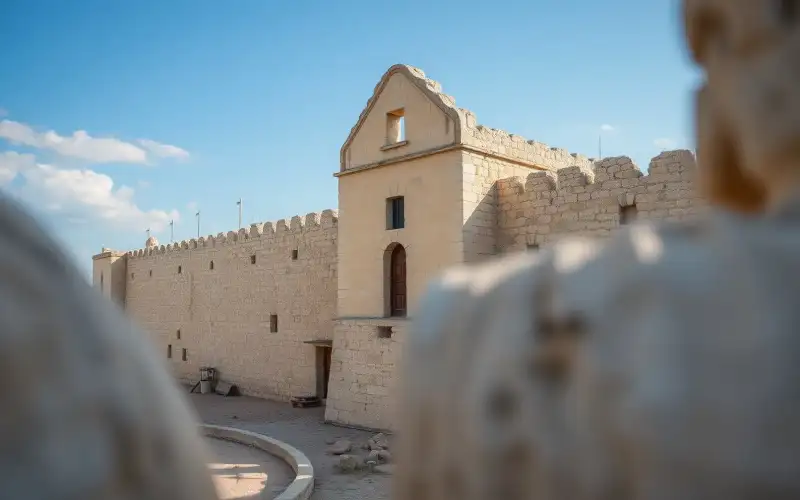
I first walked through Famagusta's Venetian gates on a March morning in 1998, and the sensation hasn't faded. The city exhales history—literally. Damp stone, salt wind, the particular silence of a place that has been contested, conquered, and abandoned in turns. Nearly three decades later, returning in 2026, I found the walls unchanged, though the traveller's wallet must stretch further. This guide maps a route that costs roughly £25–30 per person for entry fees, leaving money for coffee and the occasional cold beer in a shaded courtyard.
The walled city of Famagusta occupies roughly 1.5 square kilometres within medieval ramparts built by the Venetians (1492–1570) and reinforced by the Ottomans. What makes it exceptional, and occasionally unsettling, is its incompleteness. Entire neighbourhoods lie empty. Buildings stand roofless. Yet within those gaps lives a clarity about medieval urbanism that you won't find in prettier, more manicured sites. The walking tour I've laid out here takes 4–5 hours at a leisurely pace, with stops for rest and refreshment.
Getting to the Walled City and Orientation
Famagusta town sprawls across the coastal plain, but the walled city sits at its heart. If you're arriving by bus—the most budget-conscious option—services from Larnaca (two hours, roughly £8 return) and Nicosia (90 minutes, £6–7) drop you near the main commercial streets. From the bus station on Leoforos Vasileos Georgiou, head north towards the Venetian walls. You'll see them rising above the modern town within 10–15 minutes of walking.
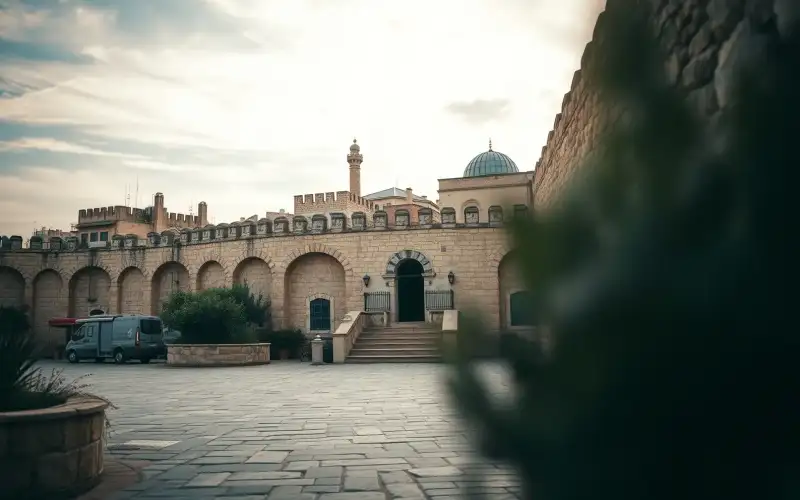
The best entry point is the Land Gate (Porta Terraferma), the main northern entrance. There's a small café here where locals gather, and the gate itself is a muscular piece of Renaissance military architecture—a ravelin flanked by bastions, designed to withstand cannon fire. Entry is free; the walls are public. The gate's interior still bears Ottoman inscriptions and, if you look closely, Venetian mason's marks beneath.
Bring water. The streets inside offer little shade, and summer temperatures (June–September) exceed 35°C. A litre bottle costs £1–1.50 from any small shop. Wear comfortable shoes with good grip; the flagstones are worn smooth and can be slippery. A basic map is useful—the municipality distributes them free at the tourist information office on Vasileos Georgiou Street, or you can download one beforehand.
Othello Castle: The Heart of Power
From the Land Gate, head southeast along Namik Kemal Street (the main thoroughfare). Within 200 metres, you'll see the castle rising to your right—a square, crenellated fortress occupying the northeast corner of the walled city. This is Othello Castle, also known as the Citadel, built originally by the Lusignans in the 14th century and expanded by the Venetians. Shakespeare never visited, but the name stuck after a 19th-century traveller conflated it with the play's setting. The castle is real. The literary connection is theatre.
Entry costs £4.50 (2026 rates) for adults. The ticket booth is at the base of the main ramp. Opening hours are 9 a.m. to 5 p.m. daily, though in winter (November–March) it closes at 4 p.m. Allow 90 minutes to explore properly.
The interior is austere—whitewashed walls, arrow slits, stone staircases worn by centuries of footsteps. The ground level contains the old magazine (ammunition store) and guard chambers. A spiral staircase leads to the upper levels, where views across the walled city and the coast beyond justify the climb. From the eastern bastion, you can see the Karpas peninsula stretching north, and on clear days, the Turkish coast. The castle's most poignant feature is its emptiness. No furnishings, no reconstructions—just the raw geometry of military necessity.
The Venetian engineers who designed this understood that a castle's strength lay not in height but in thick walls and overlapping fields of fire. The bastions at each corner were angled to eliminate blind spots. It's functional beauty, and it speaks across centuries without sentimentality.
Lala Mustafa Mosque and the Cathedral of Saint Nicholas
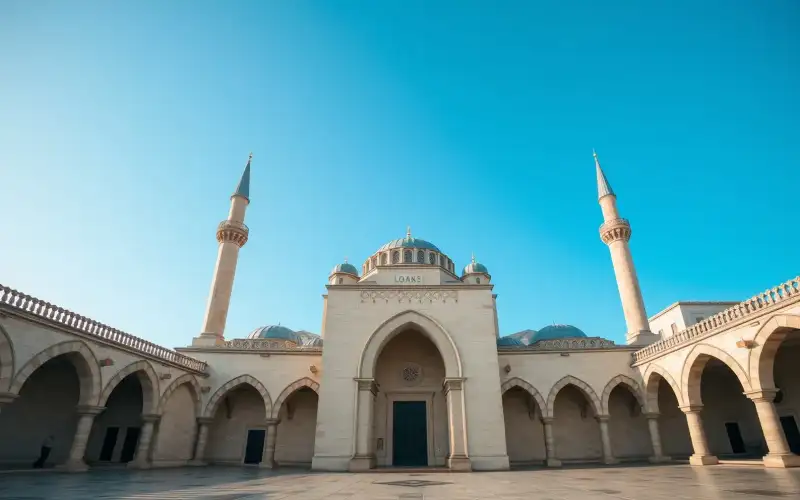
Exit the castle and return to Namik Kemal Street, heading south. After 300 metres, the street opens into a broad plaza. Dominating the east side is the Lala Mustafa Mosque—the converted Cathedral of Saint Nicholas, built by the Lusignans in the 14th century and consecrated in 1326. When the Ottomans took Famagusta in 1571, the cathedral became a mosque. The transformation was practical rather than destructive; minarets were added, the interior was whitewashed, and Christian imagery was removed or covered. The structure itself survives intact.
Entry to the mosque is free, but there are customs to observe. Remove your shoes (there's a shelf by the entrance) and dress modestly—shoulders and knees covered. Women may be offered a headscarf. The interior is vast, with a single nave and ribbed vaults typical of Cypriot Gothic. The acoustics are remarkable; even a whispered conversation carries. The mihrab (prayer niche) faces southeast towards Mecca, set into the eastern wall. The minaret, added in the Ottoman period, can be climbed for £2, offering views identical to those from Othello Castle but from a different angle.
The mosque is open to visitors outside prayer times. Friday prayers at noon and evening prayers at sunset are closed to tourists, but morning hours and mid-afternoon are generally accessible. Check locally if you're visiting on a Friday. The call to prayer (adhan) echoes across the walled city five times daily—a sound that defines the acoustic landscape and reminds you that this is not a museum but an active place of worship.
The Venetian Palaces and Domestic Architecture
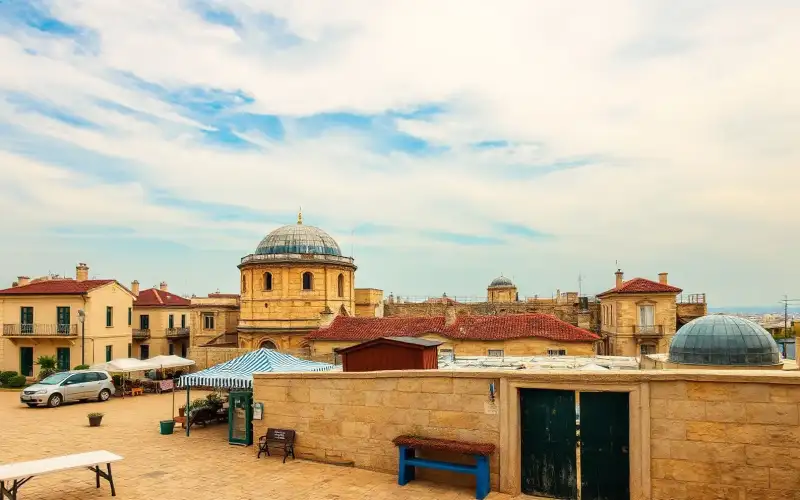
From the mosque, explore the residential quarters to the south and west. The streets here—Lala Mustafa Caddesi, Istiklal Caddesi—are lined with ruined or partially occupied buildings that reveal how medieval merchants and officials lived. Many date from the Venetian period (15th–16th centuries) and show the characteristic features of Cypriot-Venetian architecture: rusticated stone facades, Gothic windows with trefoil or quatrefoil tracery, and internal courtyards.
The Palazzo del Provveditore (Governor's Palace) stands on the southwest side of the walled city, near the Ravelin Bastion. It's a ruin now, but the ground plan is legible—a central courtyard surrounded by vaulted chambers. Entry is free, though the structure is unstable; be cautious on stairs. The palace's scale suggests the wealth and authority of Venetian administrators. The stonework, where preserved, shows fine ashlar masonry and moulded cornices.
Nearby, the Palazzo Bembo and other merchant houses cluster in what was once the commercial heart. Many are privately owned and not accessible, but their exteriors tell the story of a prosperous trading city. The windows are small on the ground floor (security and climate control) and larger above (living quarters). This pattern repeated across Mediterranean port cities—Dubrovnik, Rhodes, Acre—suggesting a shared understanding of urban living adapted to both medieval warfare and merchant pragmatism.
Practical Walking Route and Budget Breakdown
Here's the route I recommend, timed for a full morning or afternoon:
Start: Land Gate (free entry). Explore the gate's interior and the fortifications on either side. 20 minutes.
Othello Castle: Head southeast along Namik Kemal Street. Entry £4.50. Spend 90 minutes exploring the interior and ramparts.
Lala Mustafa Mosque: Return to Namik Kemal Street, head south to the plaza. Free entry (modest dress required). Spend 30 minutes inside, plus 15 minutes for the minaret if you choose (£2 extra).
Residential quarters: Wander the streets west and south of the mosque. No entry fees. Spend 60–90 minutes exploring at your own pace. The Palazzo del Provveditore and other ruins are free to enter, though some are unstable.
Return via the walls: Walk the perimeter of the ramparts on the western and southern sides. The walls are accessible in many places, and the views inward and outward are exceptional. 45 minutes.
Total entry costs: £6.50–8.50 (castle and mosque). Add £2 if climbing the minaret. A light lunch at a local café costs £4–6. Budget for water and coffee: £2–3. Total per person: £15–20 for a full day of exploration.
Seasonal Considerations and Avoiding Crowds
Famagusta receives fewer visitors than Paphos or Nicosia, but timing matters. April, May, September, and October offer ideal conditions—warm but not scorching, and fewer tour groups. July and August are punishing; the walled city becomes an oven, and the few tourists present feel it keenly. Winter (December–February) is mild but occasionally wet; some buildings become less accessible due to water damage and slippery surfaces.
Visit early morning (8–9 a.m.) or late afternoon (3–5 p.m.) to avoid midday heat and the occasional cruise-ship excursion. The castle and mosque rarely feel crowded, even in peak season, but the quiet is part of the appeal. You'll encounter local residents, schoolchildren, and the occasional elderly couple retracing steps from decades past. The walled city is lived-in, not performed.
What You'll Miss and Why That Matters
The walled city is incomplete. The northern and eastern quarters, beyond the walls, lie in a buffer zone. You cannot visit them on this tour. This is a political reality—Cyprus remains divided—and it shapes the experience. The city you explore is the southern portion, within the Republic of Cyprus's control. It's a truncated view of what Famagusta was, and acknowledging that incompleteness is part of understanding the place honestly.
Similarly, many buildings are off-limits: private residences, unstable structures, or sites deemed unsafe. You'll see their exteriors and imagined interiors, but not their present reality. This too is instructive. Medieval cities were not preserved in amber; they were lived in, altered, sometimes abandoned. Famagusta's ruins are not romantic decay—they're the aftermath of economic collapse, political upheaval, and the simple fact that people moved elsewhere.
Practical Tips for Budget Travellers
Bring your own water and snacks. The cafés inside the walled city are few and prices are slightly elevated (a coffee costs £1.50–2, a sandwich £3–4). Pack a picnic from the supermarkets on Vasileos Georgiou Street—you'll find excellent local cheese, bread, and olives for £4–5 total.
The tourist information office provides free maps and can advise on current opening hours and any temporary closures due to restoration work. In 2026, the castle's eastern bastion was undergoing masonry repairs; check before you go.
Photography is permitted everywhere except inside the mosque during prayer times. The light is best in early morning (soft, golden) and late afternoon (warm, dramatic). The castle's interior is poorly lit; a torch or phone light helps navigate the staircases safely.
If you're interested in deeper history, the Famagusta Museum (separate from the walled city, entry £3) houses artefacts from the Lusignan and Venetian periods. It's a modest collection but contextualizes what you've seen on the walking tour. Allow 45 minutes.
Conclusion: Why Famagusta Matters
Famagusta's walled city is not Instagram-friendly. It offers no pristine reconstructions, no costumed interpreters, no gift shops selling ceramic replicas. What it offers instead is a genuine encounter with how medieval people built, defended, and lived in a contested space. The Venetians and Ottomans left their marks in stone and spatial logic. The Lusignans before them shaped the fundamental layout. And the people who live here now—a mix of Greek Cypriots, recent migrants, and the occasional long-term expatriate—continue the city's pragmatic adaptation to circumstance.
Walking these streets, you're not consuming history as a product. You're moving through a place where history is still being negotiated. The silence, the empty buildings, the active mosque, the castle's stark geometry—these are not curated experiences. They're the unedited present, layered with the past. For a traveller willing to sit with ambiguity and spend an afternoon wandering without a clear destination, Famagusta rewards attention. And it costs almost nothing to find out.

Comments (4 comments)