
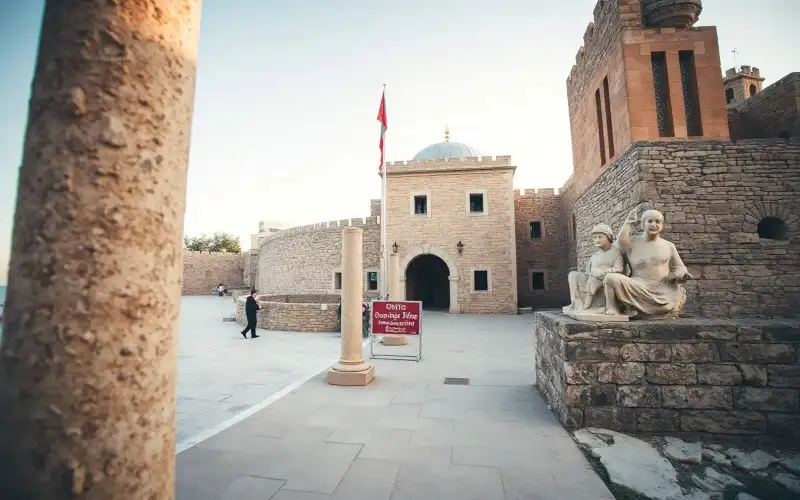
The first time I climbed the inner staircase of Othello Castle, my torch caught the names of British soldiers carved into the stone—some dated 1956, others 1960. One read simply 'Home soon, Jim.' Jim never made it home. The fortress that inspired Shakespeare's tragedy has witnessed centuries of real human drama that no playwright could quite capture, and standing in that spiral staircase, you understand why this castle grips visitors so intensely.
Othello Castle—officially the Citadel of Famagusta—sits at the heart of the walled city like a stone fist. Built by the Lusignans in the 14th century and fortified by the Venetians between 1490 and 1570, it remains one of the Mediterranean's most imposing medieval fortresses. The castle's connection to Shakespeare's Othello is partly historical accident, partly romantic invention, but entirely compelling for the 15,000 visitors who pass through its gates annually.
What Makes Othello Castle Worth Your Time
Let's be direct: you're not coming here for comfort or convenience. The castle offers no café, no gift shop, no air conditioning, and the stairs are steep enough to test your knees. What you get instead is authenticity, atmosphere, and views across Famagusta's old city that haven't changed much since 1570.
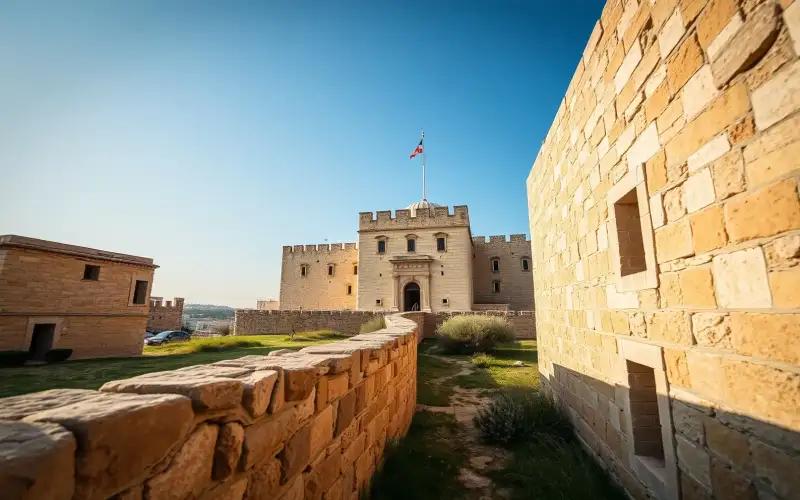
The fortress covers approximately 3 hectares and comprises three concentric defensive rings. The outer walls stretch nearly 3 kilometres around the entire walled city—these aren't just Othello Castle's walls but Famagusta's walls, built to withstand Ottoman siege. What makes the castle itself special is the central citadel, a compact but massively fortified square keep that served as the last defensive position. When the Ottomans breached the outer walls in 1570 after a 48-day siege, the defenders retreated here and fought for another 16 days before surrendering.
For British travellers aged 45 to 70, particularly those with interest in medieval military architecture or Mediterranean history, the castle offers something increasingly rare: a genuinely unreconstructed historical site. There are no interpretive panels explaining what you're looking at, no theatrical lighting, no reconstructed banquets. You navigate by your own curiosity and a basic site map available at the entrance.
The Shakespeare Connection: Fact and Fiction
Shakespeare never visited Cyprus. He never visited Famagusta. He likely never visited the Mediterranean at all. Yet somehow Othello Castle has become inseparable from his play, and the castle is now marketed globally as 'Othello's Castle.'
The connection rests on a single thread: Cinthio's Italian novella Un Capitano Moro (1565), which Shakespeare used as the source material for his 1603 play. Cinthio set his story partly in Cyprus, and mentioned a military commander stationed there. By the 18th century, British and European travellers visiting Famagusta began making the logical leap—if the story involved Cyprus, and this castle was Cyprus's most famous fortress, then this must be Othello's castle.
The reality is more complicated. In 1570, when the Ottomans conquered Famagusta, the Venetian commander was Marcantonio Bragadin, a 73-year-old aristocrat who died in captivity. There's no evidence Shakespeare knew his name or story. Yet Bragadin's life—a decorated officer defending a fortress against overwhelming odds—has more in common with tragic heroism than Shakespeare's fictional general.
That said, the literary connection has value. It brings visitors who might not otherwise care about 16th-century military architecture. And once you're here, standing on the battlements where real soldiers died, the Shakespeare story becomes almost irrelevant. The castle speaks for itself.
What You'll Actually See Inside
The castle interior is sparse. Bring comfortable walking shoes and a torch if you have one—the interior passages are dimly lit, and the uneven stone floors have caught many ankles.
The ground floor contains the main courtyard, surrounded by vaulted chambers that once housed soldiers, ammunition, and supplies. These chambers are largely empty now, though you can still see the stone channels where water ran during the siege. The Venetians designed the fortress to withstand prolonged bombardment and starvation, so storage and water management were critical. Walk slowly here and let your eyes adjust—the stone work is extraordinary, with perfectly dressed blocks fitted without mortar.
The four corner bastions are the castle's most impressive features. Each rises approximately 40 metres and contains multiple levels connected by spiral staircases. The southern bastion (facing the sea) offers the most dramatic views across Varosha, the sealed-off resort area that's been frozen since 1974. From the northern bastion, you look directly down onto the streets of the old city, where you can see the Lala Mustafa Pasha Mosque (originally the Cathedral of St Nicholas) and the maze of narrow streets where local families still live.
The walls themselves are the real attraction. The Venetians built these ramparts specifically to withstand cannon fire—notice how the walls slope outward at the base, designed to deflect artillery rounds. The gun emplacements are still visible, small rectangular openings where cannons once pointed seaward. During the 1570 siege, the Ottomans deployed approximately 150 cannons against these walls. The defenders had roughly 30.
The eastern bastion contains a small chamber that some guides claim was the 'Othello room,' but there's no historical basis for this. It's simply a defensive position like any other. The western bastion has a more interesting history—it was rebuilt by the British in the 1880s and you can see the difference in the stonework, newer and more regular than the original Venetian blocks.
Practical Information for 2026 Visitors
Opening Hours and Admission
The castle opens daily from 09:00 to 17:00 (May to September) and 09:00 to 16:00 (October to April). Admission is €5 for adults, €2.50 for seniors and students. Family tickets (two adults, two children) cost €12. These prices are current as of January 2026, though the site occasionally adjusts fees.
The ticket office is located at the main entrance on the southern side of the fortress. There's no advance booking system—you simply pay on arrival. Most visits last 60 to 90 minutes, though history enthusiasts often spend two hours or more exploring the upper ramparts.
Access and Facilities
The castle is accessible on foot from Famagusta's old town. If you're staying in the modern city (Varosha area), the walk takes approximately 15 minutes. There's limited parking immediately outside the castle—perhaps four or five spaces—but the surrounding streets have free parking within 100 metres.
The site has no café, no toilets, and no shade. Bring water. In summer months (June to September), the stone absorbs heat intensely and the exposed ramparts offer no shelter. The best time to visit is early morning (09:00 to 11:00) or late afternoon (15:00 onwards), when the light is better for photography and the temperature is more manageable.
Mobility note: The castle is not wheelchair accessible. The ground floor courtyard is flat and accessible, but all upper levels require climbing steep spiral staircases with narrow treads. The ramparts themselves have low walls (approximately 1.2 metres high) which may be concerning for those with vertigo.
What to Bring
A torch is genuinely useful—the interior passages are dark, and while your eyes adjust, a light source helps you navigate safely. Comfortable walking shoes are essential; the stone floors are uneven and potentially slippery if damp. A hat or sun protection is critical in summer. There's nowhere to buy water inside the castle, so bring at least one litre per person.
A camera is worthwhile. The views from the bastions are exceptional, particularly late afternoon light across the old city. Mobile phone reception is adequate throughout the site (Vodafone and Cyta both have good coverage).
The Siege of 1570: What Actually Happened
Understanding the 1570 Ottoman siege transforms your visit from a pleasant historical walk into something more visceral. The fortress you're standing in was built specifically to withstand this attack, and the evidence is everywhere.
The siege began on 1 May 1570 and lasted 48 days. The Ottoman force numbered approximately 200,000 soldiers and sailors, supported by 150 cannons. The Venetian garrison consisted of roughly 3,600 soldiers and 1,600 civilian defenders. The mathematics were brutal.
The Ottomans breached the outer walls on 1 August. Marcantonio Bragadin, the Venetian commander, withdrew his remaining forces—perhaps 1,200 soldiers—into the citadel and fought for another 16 days. The final surrender came on 1 September. Bragadin was executed shortly after, reportedly flayed alive, though contemporary accounts vary on this detail.
What matters for your visit is that every wall, every bastion, every gun emplacement you see was tested in this siege and proved inadequate. The fortress you're walking through is a monument to the limits of medieval military architecture against early modern artillery. The Ottomans took the fortress, and held it for the next 350 years.
Visiting the Wider Walled City
Don't leave Famagusta after visiting the castle. The walled city itself is the attraction—the castle is simply its centrepiece. The old town covers approximately 1.5 square kilometres and contains medieval churches, Venetian palaces, and narrow streets that genuinely feel unchanged since the 16th century.
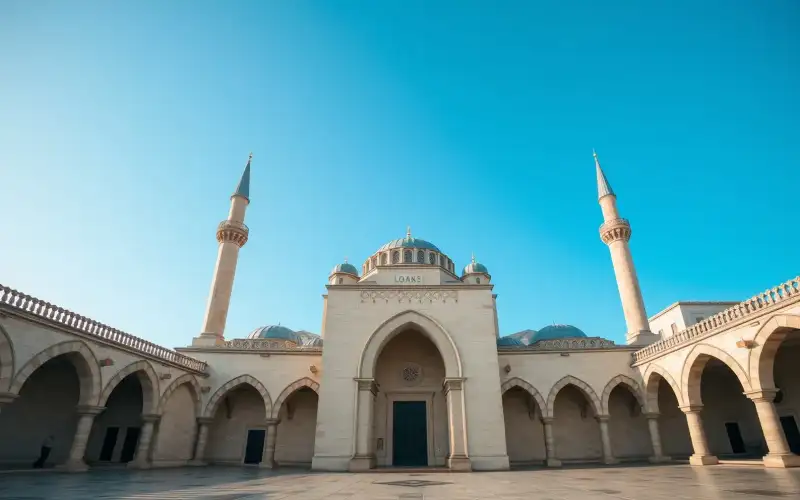
The Lala Mustafa Pasha Mosque stands immediately north of the castle. Originally built as the Cathedral of St Nicholas in the 14th century, it was converted to a mosque after 1570 and remains one of the finest Gothic structures in the eastern Mediterranean. You can't enter the interior as a tourist, but the exterior architecture is worth photographing.
The Venetian Palace (Palazzo del Provveditore) stands on the eastern side of the old town. It's currently undergoing restoration, so access is limited, but the exterior façade shows the transition between Venetian and Ottoman architectural styles.
Allow at least three hours to walk the entire perimeter of the old town walls. The walk is approximately 3 kilometres and can be done on top of the walls themselves in most sections. The views change constantly—medieval architecture on one side, modern Famagusta and the sealed Varosha zone on the other.
When to Visit: Seasonal Considerations
Spring (April to May) and autumn (September to October) are ideal. Temperatures range from 20 to 28 degrees Celsius, and the site is less crowded than summer. The light is also better for photography—less harsh shadows, more atmospheric quality to the stone.
Summer (June to August) is challenging. Temperatures regularly exceed 35 degrees Celsius, and the exposed ramparts offer no shade. If you visit in summer, arrive by 09:30 and plan to leave by 12:00. The afternoon heat makes the upper ramparts genuinely uncomfortable.
Winter (November to March) is perfectly pleasant for walking, though some mornings are damp and the stone can be slippery. Rainfall is occasional but not uncommon. The castle closes at 16:00 in winter, so you have limited daylight for a full visit.
Avoiding Common Mistakes
Don't expect to see 'Othello's bedroom' or other Shakespeare-related exhibits. The castle contains no theatrical reconstructions or literary displays. It's an archaeological site, not a literary museum.
Don't visit without proper footwear. The spiral staircases are narrow and steep, and the stone is worn smooth in places. Many visitors attempt the climb in sandals or flip-flops and regret it.
Don't underestimate the physical demands. The castle has approximately 200 steps to reach the top of the bastions, and the spiral staircases are narrow and claustrophobic. If you have knee problems or mobility issues, limit yourself to the ground floor courtyard and the lower ramparts.
Don't skip the outer walls. Many visitors focus exclusively on the central citadel and miss the broader defensive system that makes the fortress historically significant. The outer ramparts offer better views and less crowding.
Practical Details for Planning Your Visit
| Detail | Information |
|---|---|
| Admission Price | €5 adults, €2.50 seniors/students |
| Opening Hours (Summer) | 09:00–17:00 (May–September) |
| Opening Hours (Winter) | 09:00–16:00 (October–April) |
| Best Time to Visit | April–May or September–October |
| Walking Time | 60–120 minutes (core site) |
| Accessibility | Not wheelchair accessible; stairs required for upper levels |
| Parking | Limited on-site; free parking nearby |
| Facilities | No café, toilets, or shops |
Famagusta's old town is 20 kilometres northeast of Larnaca International Airport, roughly 45 minutes by car. If you're staying in Ayia Napa (approximately 40 kilometres south), allow 50 minutes to drive to the castle. Public transport exists but is limited—the EMEL bus service runs from Larnaca and Ayia Napa, but frequencies are sparse outside summer months. A hire car is genuinely necessary if you want flexibility.
The nearest accommodation is in Famagusta's modern city centre, approximately 2 kilometres from the old town. Hotels range from budget chains (€40–60 per night) to mid-range options (€80–120). The old town itself has no hotels, though several guesthouses operate in restored Venetian properties.
Final Thoughts: Why This Castle Matters
Othello Castle endures because it's real in ways that most tourist attractions aren't. The walls were built by people who believed they could stop an invasion. They were wrong, but their engineering was sound enough that it took 200,000 soldiers 64 days to break through. The names carved into the staircases by 20th-century soldiers remind you that history isn't finished—it's ongoing, layered, complicated.
The Shakespeare connection is a useful marketing hook, but the castle's actual significance lies in what it reveals about late medieval military technology, Venetian imperial ambition, and the Ottoman conquest of the eastern Mediterranean. These are serious historical themes, and they're written into every stone.
If you're the kind of traveller who prefers substance over spectacle, who wants to understand rather than simply consume, then Othello Castle repays close attention. Bring water, wear proper shoes, spend time in the corners, and let the fortress tell you its story.
Comments (4 comments)