
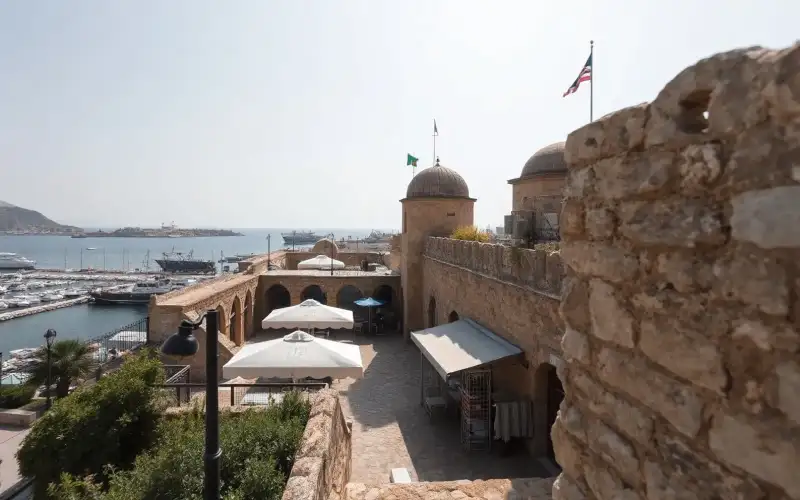
I first saw Varosha from the Venetian walls of Famagusta on a blazingly hot afternoon in 2019, binoculars in hand, trying to make sense of what I was looking at. Rows of apartment buildings frozen mid-decay, a beachfront hotel with its windows like hollow eyes, roads leading nowhere. My local guide—a Famagusta native whose family had lived three streets away—said nothing for a long moment. Then: "It's been fifty-two years." That was then. Now, in 2026, Varosha remains one of the eastern Mediterranean's most complex and emotionally charged places. Understanding it requires patience, respect, and a willingness to hold complexity without rushing to judgment.
What Happened to Varosha: The Essential Timeline
Varosha wasn't always a ghost town. Until 1974, it was thriving—a cosmopolitan beach resort of roughly 39,000 people, with hotels, apartment blocks, shops, and a seafront promenade that drew tourists from across Europe. It was, by most accounts, one of Cyprus's economic jewels. Then came the Turkish military intervention in July 1974, following a coup attempt on the island. The intervention displaced roughly 200,000 people and fundamentally altered Cyprus's geography and politics.
The immediate aftermath was chaos. Varosha, located in what became the Turkish-controlled northern part of the island, was sealed off. Greek Cypriot residents fled or were evacuated. The city was declared a "closed military area" and has remained largely inaccessible for over five decades. No one has lived there permanently since. The buildings—hotels, homes, shops, schools—have stood empty, their interiors slowly reclaimed by salt air, moisture, and time. It's not ruins in the classical sense; it's a suspended moment, a city paused mid-breath.
The legal status is contested. The Republic of Cyprus (the internationally recognised government) views Varosha as occupied territory and considers the closure illegal under international law. Turkish Cypriot authorities maintain security restrictions, citing military and heritage preservation concerns. In 2020, a small section of Varosha's beachfront—roughly 3.5 percent of the total area—was partially opened to the public, primarily Turkish Cypriot and Turkish nationals. This modest opening, after decades of total closure, marked a symbolic shift, though access for international visitors remains tightly restricted.
Why Access Is So Limited: The Practical and Political Reality
If you're planning a trip to Famagusta in 2026 and hoping to wander freely through Varosha, you need to understand why that's not possible. The restrictions aren't arbitrary bureaucracy; they reflect genuine complications layered across decades.
Military designation. The area remains officially classified as a closed military zone. Turkish Cypriot authorities maintain this status for security reasons, though the actual military presence is minimal. The designation is the legal mechanism that keeps civilian access controlled.
Property ownership disputes. Roughly 95 percent of Varosha's property was owned by Greek Cypriots before 1974. Those properties remain legally registered to their original owners or their descendants—many of whom still live in the Republic of Cyprus or abroad. Any reopening or development raises immediate questions about restitution, compensation, and property rights. There's no simple solution.
Heritage and archaeological concerns. Varosha, despite its modern appearance, sits atop layers of older history. The broader Famagusta area contains medieval Venetian structures, Ottoman-era buildings, and earlier archaeological deposits. There are genuine preservation questions about how any reopening or redevelopment would be managed.
Political sensitivity. The Cyprus question—the division of the island and the status of Turkish-occupied territory—remains unresolved. Varosha is symbolic territory in those negotiations. Any change to its status carries political weight that extends far beyond tourism.
What You Can Actually See and Do in 2026
So what's realistic for a traveller visiting Famagusta? Several options exist, though none involve stepping into Varosha itself.
View from the Venetian Walls
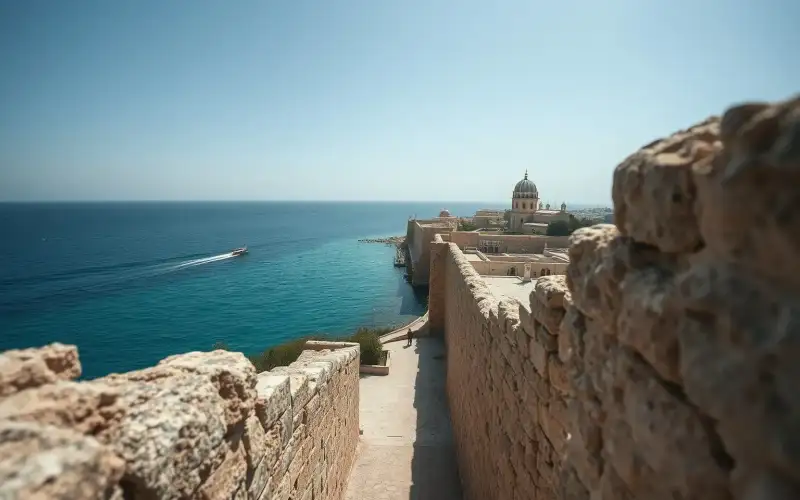
The Venetian walls of Famagusta are among the best-preserved medieval fortifications in the eastern Mediterranean. Walk the top of the walls on the eastern side—the section closest to Varosha—and you'll have a clear, elevated view across the abandoned city. It's haunting and oddly beautiful. The walls are open daily, dawn to dusk, and entry is roughly 5 Turkish Lira (about £1.20). Bring water; there's no shade. Early morning or late afternoon is best for photography and for avoiding the heat.
The Beachfront Promenade (Partial Access)
Since 2020, a small section of Varosha's beach has been open for swimming and walking. Access is typically available to Turkish nationals and Turkish Cypriot residents, though the regulations have occasionally been relaxed for international visitors on a case-by-case basis. If you're staying in the north and want to attempt access, check current conditions with your accommodation or a local guide. Expect to show your passport. The beach itself—soft sand, clear water—is beautiful, though the backdrop of abandoned hotels creates an unsettling contrast.
Guided Tours and Local Perspectives
Several tour operators in Famagusta and across the north offer guided experiences that include views of Varosha from accessible vantage points, combined with broader Famagusta history. These guides—often locals with family connections to the area—provide context and nuance that photographs cannot. Expect to pay 40-60 Turkish Lira (roughly £9-14) for a half-day tour. The value isn't in getting close to Varosha; it's in understanding the human story behind the empty buildings.
The Famagusta Old Town
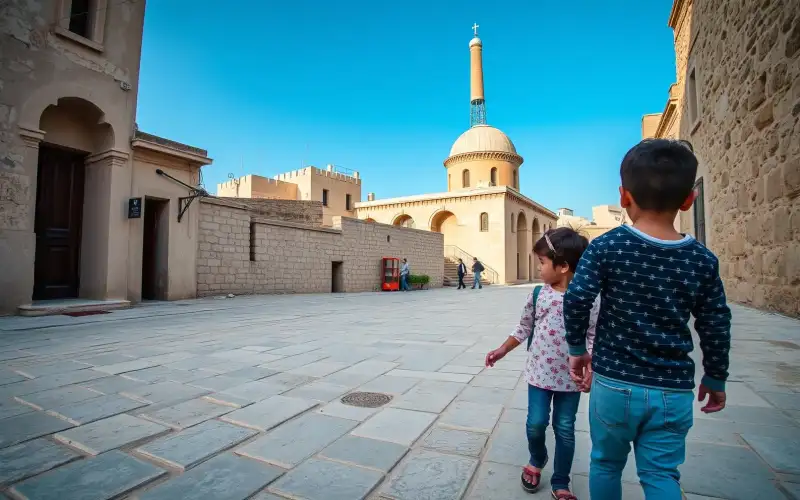
If you're interested in the broader history and atmosphere, spend time in Famagusta's old town, just west of Varosha. The Lala Mustafa Pasha Mosque (originally the Gothic Cathedral of St. Nicholas), the Venetian palaces, the narrow streets lined with Ottoman and Venetian architecture—this is where you can touch the actual layers of history. Many of the people who lived in Varosha before 1974 had roots in this older town. Walking here, you're walking through the same landscape they knew.
The Broader Context: What Happened to the People
Understanding Varosha's emptiness requires understanding where its people went. The 1974 displacement affected roughly 200,000 individuals across Cyprus. Greek Cypriots from the north were relocated to the south; Turkish Cypriots from the south moved north. Families were separated. Homes were abandoned on both sides. Varosha's residents—mostly Greek Cypriot, though with Turkish Cypriot and foreign residents too—scattered across the Republic of Cyprus, Europe, and further afield.
Many maintained legal claims to their properties. Some returned to Cyprus; others built lives elsewhere and never came back. The emotional weight of Varosha, for those families, is immense. For travellers, it's important to recognise that behind every empty apartment is a story of displacement, loss, and unresolved grief. This isn't just an architectural curiosity; it's a wound that hasn't fully healed.
Turkish Cypriots, too, experienced displacement and loss, though often less visibly in international narratives. The 1974 events affected communities across the entire island. Any respectful engagement with Varosha requires holding space for multiple perspectives and multiple losses.
Visiting Responsibly: Practical Advice for 2026
If you're planning to visit Famagusta and encounter Varosha, here's what I'd suggest based on years of travelling this region:
Do your homework first. Read about the history before you arrive. Don't treat Varosha as a novelty or a photo opportunity. Understanding the context changes how you experience it.
Hire a local guide. The difference between seeing Varosha from the walls alone and hearing a guide explain what you're looking at—who lived there, what happened, what the empty buildings mean—is enormous. It costs little and adds immeasurably to your understanding.
Respect restricted areas. If you're told an area is off-limits, it is. Don't try to sneak through gaps in fences or cross barriers. The restrictions exist for legal and security reasons.
Listen more than you talk. If you meet locals willing to share their stories, listen. Don't impose your own interpretations or political views. Famagusta has been shaped by complex historical forces; locals understand those forces in ways outsiders cannot.
Photograph thoughtfully. You can photograph Varosha from public vantage points. But ask yourself why you're taking the photo and what you'll do with it. Are you documenting history or collecting tragedy as a souvenir?
The Bigger Picture: What Might Change
In 2026, Varosha remains largely as it has been since 1974—frozen, contested, and inaccessible. There have been periodic discussions about potential reopening, redevelopment, or international oversight, but nothing concrete has materialised. The political complexities are profound. Any significant change would require agreement between the Republic of Cyprus and Turkish Cypriot authorities, mediated by Turkey and potentially involving international bodies. That kind of agreement hasn't emerged in fifty years, and there's no clear pathway to it in the near term.
What's more likely is that Varosha will continue as it is—a place you can see but not enter, a historical monument to a specific moment in Mediterranean history, a reminder of how quickly a thriving city can become a ghost town, and how difficult it is to reverse that process once the machinery of conflict and displacement has been set in motion.
Final Thoughts: Why Varosha Matters
Varosha isn't a typical tourist attraction. There are no restaurants, no gift shops, no guided walks through the streets. You can't experience it the way you'd experience Venice or Istanbul. Instead, it's a place that teaches through absence—through what's not there, through the silence of empty buildings, through the stories of people who once lived there and can never return.
For British travellers exploring Famagusta and the Karpas peninsula—especially those drawn to the slower, less-touristy east of Cyprus—Varosha offers something valuable: a chance to engage with recent history, to understand how geography and politics intersect, and to recognise that travel is never separate from the broader human story. You can see Varosha from the Venetian walls. You can hear its history from local guides. You can stand on its beach if access permits. But you cannot undo what happened there, and that's precisely the point. Varosha stands as a testament to the costs of conflict and the difficulty of reconciliation. That's a lesson worth learning.

Comments (4 comments)