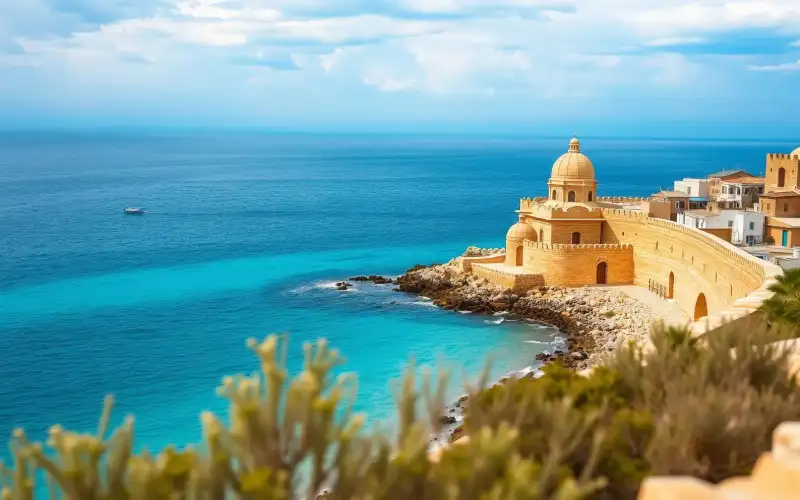
I arrived at Glossa Beach on a Tuesday morning in June 2026, expecting to find the usual Mediterranean chaos—umbrellas crammed shoulder-to-shoulder, sunbeds rented out three deep. Instead, I found something closer to calm. A handful of families dotted the pale sand, a single cafe was setting up chairs, and the water caught the light like hammered silver. The beach vendor, Dimitris, was arranging sunbeds in neat rows. "You're early," he said. "By August, every centimetre will be taken." That conversation shaped everything I wanted to understand about Famagusta's beaches in 2026—not just where the sunbeds are, but what you're actually paying for, where the toilets work, and which stretches still feel like they belong to Cyprus rather than a package holiday.
The Famagusta Beach Landscape: What's Changed Since 2024
Famagusta's beaches have undergone quiet shifts in the past two years. The rise of day-use pricing, the arrival of new beach clubs, and the slow gentrification of amenities have altered what a beach day actually costs and feels like. In 2026, you're no longer just choosing between "crowded" and "empty." You're choosing between business models.
The city's main beaches—Glossa, Varosha (the accessible eastern edge), and the stretches toward Salamis—now operate on a tiered system. Some beaches charge per sunbed and umbrella separately. Others bundle them. A few remain free but offer almost nothing in terms of facilities. Understanding these distinctions isn't trivial when you're planning a week in the region.
The Pricing Revolution
In 2024, most Famagusta beaches charged 5-8 euros per sunbed and 3-5 euros for an umbrella. In 2026, those prices have climbed. Glossa Beach now charges 7 euros for a sunbed, 5 euros for an umbrella—or 11 euros for both together, a slight discount. Varosha Beach, which reopened sections in 2023, operates through a private concessionaire charging 8 euros per sunbed, 6 euros per umbrella, with a small discount for combined rental. The Salamis area beaches, less developed, charge 4-6 euros per sunbed.
What matters here is not just the headline price but what comes with it. A sunbed at Glossa includes access to the cafe, toilets, and a shower. A sunbed at some of the quieter Karpas beaches includes nothing but the bed itself.
Glossa Beach: The Organised Choice
Glossa is Famagusta's flagship beach, and it behaves like one. The main stretch runs for roughly 400 metres, with 150-180 sunbeds available on most days, increasing to 200+ in peak August. The beach is organised by a single concessionaire, which means consistency—for better and worse.
Facilities and What You Actually Get
The cafe sits at the north end of the beach, serving coffee, soft drinks, beer, and basic food (souvlaki, Greek salads, sandwiches). Prices are standard for a beach venue: 2.50 euros for a coffee, 4 euros for a beer, 7-9 euros for a souvlaki. The toilets are cleaned three times daily, and there are two shower stations with fresh water. The changing rooms are small but functional. Parking is free and plentiful—a 50-metre walk from the sand.
The beach itself shelves gently, making it safe for children and weak swimmers. The sand is fine and pale, not the coarse grey you find further east. In June and early September, it's comfortable. In July and August, it's packed. I visited on a Wednesday in mid-July 2026 and counted 160+ people on a beach built for maybe 250 at comfort level.
Who Should Go
Glossa suits families, groups, and anyone wanting a predictable day. You know what you're getting: facilities, a cafe, other people, and shade. It's not cheap, but it's not a rip-off either. Budget 30-40 euros for a couple wanting sunbeds, umbrellas, and lunch.
Varosha Beach: The Complicated Option
Varosha is harder to categorise because it's still being managed under a patchwork of agreements. The eastern section, near the old city, reopened in phases starting in 2023. In 2026, roughly 800 metres of beach are accessible to the public. The western sections remain restricted.
Current Access and Amenities
The open section has two concessioned areas, each operating independently. The northern concession (closer to the old town) has 120 sunbeds, a small cafe, and basic toilets. The southern concession has 100 sunbeds, a larger cafe with a kitchen, proper shower facilities, and changing rooms. Both charge 8 euros per sunbed, 6 euros per umbrella. The southern concession is newer and cleaner; the northern one has more character and fewer crowds.
The cafe at the southern concession serves better food—proper meze platters, fresh fish, local wine—at prices 20% higher than Glossa. A grilled fish plate costs 12-14 euros. The toilets are modern and well-maintained. Parking is free but limited; on busy days, you may need to walk 200 metres.
The Varosha Equation
Varosha offers something Glossa doesn't: proximity to history. The abandoned Varosha district looms behind the beach, a haunting reminder of the 1974 division. Some visitors find this context compelling. Others find it depressing. The beach itself is wider than Glossa, the water slightly warmer, and the crowds marginally smaller. If you're interested in the political-historical texture of the place, Varosha rewards that curiosity. If you're after pure relaxation, Glossa is simpler.
Salamis Area Beaches: The Middle Ground
Just north of Famagusta proper, the Salamis archaeological site sits next to several smaller beaches. These are less developed than Glossa but more amenitised than the Karpas peninsula.
Beach Selection and Facilities
| Beach Name | Sunbeds Available | Sunbed Price | Cafe | Toilets | Showers |
|---|---|---|---|---|---|
| Salamis North | 80-100 | 5 euros | Yes, basic | Yes | Yes |
| Salamis South | 60-80 | 4 euros | Kiosk only | Yes | No |
| Agia Trias | 40-50 | 4 euros | No | Yes | No |
Salamis North is the most developed. It has a proper cafe serving Greek breakfast, coffee, and lunch items. The sunbeds are older but functional. The beach is narrower than Glossa and the sand coarser, but the water is clean and the crowd considerably smaller. On a July day, you might find 60-70 people across 80-100 available sunbeds.
Salamis South is quieter still. The cafe is a kiosk selling drinks and ice cream. Toilets exist but are basic. There are no showers. In return, it's cheaper and less organised, which some people prefer. The beach is rocky in places but has sandy patches.
Agia Trias is the smallest and most basic. It's free to use; no sunbeds are available, though you can bring your own. There's a toilet block, but no cafe and no showers. It appeals to people who want to swim without paying for infrastructure they won't use.
The Karpas Peninsula: For Those Wanting Escape
The Karpas—the long, narrow finger of land extending northeast from Famagusta—contains some of Cyprus's least developed beaches. Getting there requires patience. The road is narrow and winding. But the reward is space.
Key Beaches and What to Expect
Nangomi Beach, roughly 35 kilometres from Famagusta town, is a long sweep of sand backed by low dunes and scrub. There are no sunbeds, no cafe, no toilets. Parking is a dirt area at the road's edge. The beach is beautiful and empty. In July 2026, I visited on a Saturday and counted maybe 15 people across a beach that could comfortably hold 200. You'll need to bring water, snacks, and a sun umbrella. The drive takes 50-60 minutes from Famagusta town.
Golden Beach (Chrysi Akti), further along the peninsula, has a single small cafe run by a local family. They sell drinks, sandwiches, and occasionally grilled fish. Sunbeds are not available, but the cafe owner will let you sit at a table. The toilets are a basic structure behind the cafe. No showers. The beach is wide, sandy, and feels genuinely remote. Parking is free. The drive is 45-55 minutes.
Dipkarpaz Beach, at the peninsula's tip, is the most undeveloped. There is a small settlement, a church, and a few houses. The beach itself is rocky and narrow. A single fisherman's cafe operates irregularly. There are no formal facilities. This is for swimmers who want to feel they've discovered something untouched.
The Karpas Calculus
The Karpas beaches suit a specific traveller: someone with a car, flexibility about facilities, and a preference for solitude over comfort. You'll spend 90+ minutes driving each way. You'll have no cafe food unless you bring it. But you'll have space, quiet water, and a sense of having left tourism behind. For a 45-70-year-old reader wanting slow travel, this can be exactly right.
Budget Breakdown: What a Beach Day Actually Costs
Let me sketch out realistic daily costs for different approaches in 2026.
Glossa Beach, Two People, Full Day
- Two sunbeds: 14 euros
- Two umbrellas: 10 euros
- Two coffees: 5 euros
- Two lunches (souvlaki): 18 euros
- Two beers: 8 euros
- Parking: Free
- Total: 55 euros (27.50 per person)
Varosha Beach, Two People, Full Day
- Two sunbeds: 16 euros
- Two umbrellas: 12 euros
- Two coffees: 6 euros
- One meze platter, one fish plate: 26 euros
- Two beers: 8 euros
- Parking: Free
- Total: 68 euros (34 per person)
Salamis North, Two People, Full Day
- Two sunbeds: 10 euros
- Two umbrellas: 8 euros
- Two coffees: 4 euros
- Two lunches: 14 euros
- Two beers: 6 euros
- Parking: Free
- Total: 42 euros (21 per person)
Nangomi (Karpas), Two People, Full Day
- Sunbeds: 0 euros (bring your own)
- Umbrella: 0 euros (bring your own)
- Cafe: 0 euros (no cafe)
- Petrol (50-minute drive each way): 8-10 euros
- Packed lunch: 10 euros
- Total: 18-20 euros (9-10 per person)
The Karpas beaches are dramatically cheaper if you're willing to self-cater and self-furnish. The Salamis beaches offer good value without sacrificing too much comfort. Glossa and Varosha are premium experiences with corresponding costs.
Practical Details: When to Go and What to Bring
June and September are the sweet spots. The water is warm, the crowds are manageable, and the sun is fierce but not punishing. July and August are hot, crowded, and expensive—sunbeds sell out by 10 a.m. on popular beaches.
For Glossa and Varosha, arrive by 9 a.m. if you want a prime sunbed. For Salamis, 10 a.m. is fine. For Karpas, timing is irrelevant; you'll find space whenever you arrive.
Bring water. The cafes sell it, but at tourist prices. Bring sun cream—the Cypriot sun is not forgiving. Bring a book or a newspaper if you want to read; WiFi at beach cafes is patchy. Bring cash; some smaller beach operations don't take cards.
The Honest Assessment
Famagusta's beaches are not as dramatic as the western coast. They're not as developed as Ayia Napa. But they offer something those places don't: a slower rhythm, less aggressive commercialisation, and the possibility of actually talking to a local vendor rather than a franchise manager. Glossa is the beach for people wanting organised comfort. Varosha is the beach for people interested in the political-historical context. Salamis offers the middle path. The Karpas offers escape for those willing to work for it. None of these is objectively "best." The best beach is the one that matches what you actually want from a day in the sun.


Comments (3 comments)