
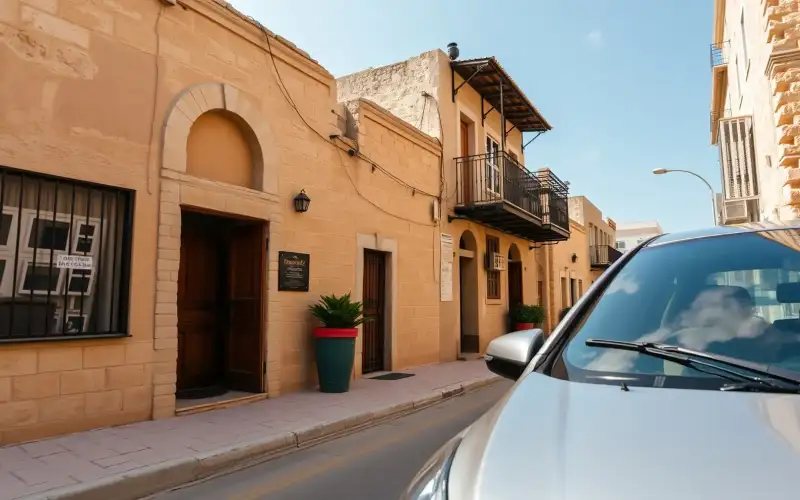
Last autumn, I watched a British couple in their sixties spend twenty minutes arguing with a rental agent in Famagusta about whether their insurance would cover driving north of the Green Line. The agent kept shaking his head. They kept pointing at their paperwork. Nobody was happy. By the time they left, they'd decided to stay put in the south—missing the raw, sculptural beauty of the Karpas peninsula entirely. That conversation stuck with me because it represents the single biggest confusion facing anyone trying to explore this corner of Cyprus properly.
Hiring a car here isn't complicated, but it requires clarity on a few specific points that most generic travel guides gloss over. This is the guide I wish I'd had when I first arrived.
1. Where to Rent: The Main Options in Famagusta
You have three realistic choices for car hire in Famagusta town centre. The first is the international chains—Hertz, Avis, Europcar—which maintain desks at Larnaca airport (about 90 minutes south) and smaller offices in Famagusta itself. Expect to pay £35–£55 per day for a basic economy car during high season (May–September). Low season rates (October–April) drop to £22–£35.
The second option is local operators like Thrifty Cyprus or smaller family-run agencies clustered around Varosha Street and near the old harbour. These often undercut the chains by 15–20 percent and, crucially, their staff actually know the local road conditions and can give you honest advice about which routes are passable. I've found them far more helpful when it comes to the Green Line insurance question.
The third route—and this matters if you're staying in Karpas villages like Dipkarpaz or Agia Trias—is to arrange pickup through your accommodation. Several guesthouses and small hotels have partnerships with local agencies and can negotiate better rates. Expect £25–£40 per day for the same vehicle.
Book at least three weeks ahead if you're visiting May to September. In winter (November–March), you can often arrange something within a week, though availability shrinks considerably in August and around Christmas.
2. The Insurance Question: North of the Green Line
This is where most guides fail you. Here's the reality: standard comprehensive insurance purchased in the Republic of Cyprus (the south, where Famagusta technically sits) does not automatically cover you if you cross into the north. The Green Line, controlled by the UN buffer zone, is a political boundary that insurance companies treat as a hard stop.
Your options are these. First, you can purchase a separate north Cyprus extension from your rental company—usually £8–£15 per day, sometimes a flat £40–£60 for a week. Ask explicitly for this when booking. Write it into your contract. Take photos of the paperwork. Second, you can buy a separate insurance policy from a north Cyprus provider before you arrive, though this is fiddly for British visitors and rarely worth the administrative hassle. Third, you can simply not cross the line and explore only the south.
Here's what I tell people: if you're serious about the Karpas peninsula—and you should be—budget for the north extension. The landscape there is worth every penny. The road from Famagusta north through Kantara and Bogaz to Dipkarpaz is one of the finest slow drives in the eastern Mediterranean. You'll pass abandoned villages, Byzantine churches, and coastline that hasn't been photographed to death. You cannot do this legally without proper insurance.
One practical note: the checkpoint at Astromeritis (the main crossing point nearest Famagusta) is straightforward for British passport holders, but expect 10–15 minutes of queuing. Your rental agreement must explicitly permit north Cyprus driving. If it doesn't, don't attempt the crossing—you'll have no recourse if something goes wrong.
3. Fuel: Prices, Stations, and Range Planning
As of 2026, petrol in Cyprus costs approximately €1.35–€1.48 per litre in the south, slightly higher in the north (€1.50–€1.65). A full tank in a 1.4-litre economy car costs around £50–£60 south, £55–£65 north. Diesel is marginally cheaper—roughly €1.28–€1.40 per litre—and most rental companies offer diesel vehicles at no extra cost.
Fuel stations cluster thickly around Famagusta town and along the main coastal road (the E90 highway). Once you venture into the Karpas interior or the foothills near Kantara, gaps widen considerably. The stretch from Bogaz to Dipkarpaz—roughly 45 kilometres—has only two proper stations: one at Bogaz and one at Yeni Erenköy. Plan accordingly.
My rule: never let your tank drop below a quarter full when driving the peninsula. The roads are good, but mechanical breakdowns happen, and you don't want to be stranded 30 kilometres from the nearest fuel.
Fill up in Famagusta before heading north. Fuel is fractionally cheaper there, and you'll avoid the minor stress of hunting for a station in unfamiliar territory.
4. Road Conditions and Driving Standards
The good news: main roads are well-maintained. The E90 coastal highway and the road north through Bogaz are modern, clearly marked, and safe. Speed limits are 50 km/h in towns, 80 km/h on regional roads, 100 km/h on motorways. Police enforce these with speed cameras, particularly around Famagusta and on the approach to the north checkpoint.
The less comfortable news: driving standards vary wildly. Cypriot drivers—both north and south—tend toward the assertive. Overtaking on blind corners happens. Horns sound frequently. Pedestrians sometimes assume they have right of way everywhere. Stay alert, especially on the narrower roads climbing toward Kantara or threading through Karpas villages.
Winter (December–February) occasionally brings rain heavy enough to flood low-lying sections, particularly near Bogaz and around Yeni Erenköy. Roads don't ice, but visibility can deteriorate fast. Summer heat is never an issue for driving, though air conditioning in rental cars varies in quality.
One specific detail: the road from Famagusta to Salamis archaeological site (15 kilometres) is excellent. The road from Salamis north to Kantara (another 25 kilometres) narrows and climbs but remains passable in any vehicle. Beyond Kantara toward Bogaz, the road flattens and straightens again. The final 30-kilometre stretch to Dipkarpaz is scenic and straightforward.
Potholes are rare on main routes but common on village side roads. If you're exploring smaller settlements—places like Agia Trias or Trikomo—assume rougher surfaces and drive accordingly.
5. Parking: Where to Leave Your Car Safely
Famagusta town centre has three paid car parks. The largest is near the old harbour (€1.50 per hour, €8 per day). A second sits behind the main shopping street, Lala Mustafa Pasha Street (€1.50 per hour, €7 per day). Both are monitored and safe. Street parking exists but fills quickly during summer midday hours.
If you're staying in Karpas villages, parking is rarely a problem. Most guesthouses offer free parking. Village streets are quiet enough that leaving a car unattended overnight carries minimal risk, though I'd still lock it and avoid leaving valuables visible.
At archaeological sites—Salamis, Kantara Castle, the ruins at Agia Trias—parking is free and abundant. At popular beaches like Nangomi or Alagadi (turtle beach), summer parking can be tight between 10 a.m. and 3 p.m., but turnover is fast.
One warning: never leave a car unattended in Famagusta's Varosha district (the fenced-off abandoned resort area). It's technically accessible but politically sensitive, and you risk complications with authorities.
6. Essential Routes: The Drives That Matter
The Famagusta-to-Salamis run (15 kilometres, 20 minutes) is non-negotiable. The archaeological site sprawls across several kilometres, and you'll want transport between sections. Drive early—by 8 a.m.—to beat crowds and heat.
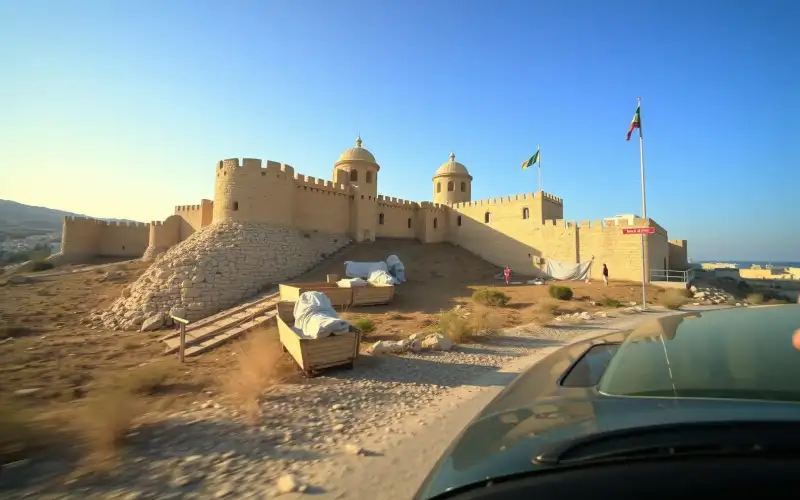
The Famagusta-to-Kantara Castle loop (60 kilometres, 90 minutes one way) takes you inland through changing landscape. You'll climb from sea level to 600 metres, passing through pine forest and scrubland. The castle itself (entry €4.50, open 9 a.m.–4 p.m. daily) offers views across the peninsula. The drive up is steep but manageable in any standard car.
The Kantara-to-Bogaz-to-Dipkarpaz coastal route (80 kilometres, three hours with stops) is the journey. You'll hug the northern coast, passing abandoned villages and hidden beaches. Bogaz itself—a small fishing village—is worth an hour's stop for lunch and a walk along the waterfront. Dipkarpaz, the peninsula's northernmost settlement, feels genuinely remote despite being only 40 kilometres from the checkpoint.
The return journey via the inland road (through Trikomo and Agia Trias) offers a different perspective—flatter, more agricultural, less dramatic but still rewarding. Total distance: roughly 100 kilometres, two hours.
For a single day trip from Famagusta, I'd suggest the Salamis-and-back option (three hours) or the Kantara loop (four hours). For a full day or overnight, the Bogaz-Dipkarpaz drive is essential.
7. Practical Details: Documents, Costs, and Booking Tips
You'll need your UK driving licence, passport, and a credit card for the deposit (usually £100–£300, held but not charged unless there's damage). An International Driving Permit isn't legally required but can smooth interactions with police if stopped. Get one from your local Post Office before leaving Britain (£5.50, takes 10 minutes).
Third-party liability insurance is compulsory. Comprehensive insurance is optional but wise given road conditions. Collision damage waiver (CDW) typically costs £8–£12 per day and reduces your financial liability if you hit something. The north Cyprus extension, as mentioned, adds £8–£15 daily or £40–£60 weekly.
Total budget for a week's car hire: £180–£280 for vehicle rental plus £100–£150 for fuel plus £50–£100 for insurance add-ons. That's roughly £330–£530 for a week's independent mobility—expensive compared to guided tours but incomparably more flexible.
Book directly with rental companies rather than through comparison sites. You'll often get better rates, and customer service is simpler if something goes wrong. Confirm everything in writing: vehicle type, insurance coverage, fuel policy (most are full-to-full), mileage limits (unlimited is standard), and any north Cyprus provisions.
Pick up your car early in the day. This gives you flexibility if paperwork takes longer than expected and lets you start exploring with daylight ahead. Return the vehicle with a full tank and in clean condition to avoid petty surcharges.
8. Hidden Costs and What to Avoid
Rental companies sometimes charge for extra drivers (£5–£10 per person), young driver fees if you're under 25 (£10–£20 per day), and sat-nav hire (£8–£12 per day—don't bother, Google Maps works perfectly). Some charge for fuel top-ups at inflated rates. Bring your own phone charger and avoid these.
Parking fines in Famagusta start at €20 for minor violations and can reach €100 for serious infractions like parking in disabled spaces. Speeding fines begin at €50. Neither is common for careful drivers, but they happen.
Tolls don't exist on Cypriot roads. Ferry crossings to the north don't require advance booking. Breakdowns are covered by most rental agreements, but you'll pay for any damage caused by negligence.
Avoid hiring from unmarked agencies or individuals offering cash-only deals. The savings rarely justify the risk of disputed damage claims or insurance complications.
9. Seasonal Considerations and Best Times to Drive
Spring (April–May) is ideal. Temperatures hover around 25–28°C, wildflowers bloom across the Karpas, and tourist traffic remains manageable. Roads are dry and visibility excellent.
Summer (June–August) brings heat (32–36°C) and crowds. Driving is fine, but parking becomes competitive, and restaurants fill quickly. Air conditioning in rental cars becomes essential rather than pleasant.
Autumn (September–October) remains warm (26–30°C) with thinner crowds. September sees occasional afternoon rain, but it rarely disrupts driving. October is nearly perfect—warm, quiet, and dry.
Winter (November–March) is wet and occasionally overcast, but never cold. Temperatures range 12–18°C. Roads remain passable, but occasional heavy rain can flood low-lying sections near Bogaz. Winter is cheapest for car hire but requires slightly more caution.
10. GPS, Maps, and Navigation
Google Maps works reliably across both north and south Cyprus. Download offline maps before you arrive—coverage is good, but mobile data can be patchy in remote areas. Offline maps save battery and stress.
Sat-nav hire from rental companies is unnecessary. Your phone will navigate you accurately from Famagusta to any Karpas village or archaeological site. Street names and addresses are consistent enough that you'll rarely encounter confusion.
One note: some very small village roads don't appear on Google Maps. If you're exploring beyond Dipkarpaz or hunting for specific churches or ruins, ask locals for directions. They're invariably helpful and often delighted to chat.
11. Fuel Types and Vehicle Choices
Nearly all rental cars are petrol or diesel. Petrol engines (1.2–1.6 litres) are standard and adequate for Cypriot driving. Diesel vehicles (1.5–2.0 litres) offer slightly better fuel economy and are worth requesting if fuel cost concerns you. Hybrid and electric vehicles are increasingly available but still limited; book well ahead if that's your preference.
Automatic transmissions are standard with most rental companies. Manual cars exist but are less common and sometimes cost slightly more. Driving an automatic in Cyprus is simpler given traffic conditions.
SUVs and larger vehicles aren't necessary for any route covered here. An economy hatchback or compact sedan handles everything perfectly. Larger vehicles use more fuel, cost more to rent, and are harder to park in Famagusta's tighter streets.
12. Breakdown Support and Emergency Contacts
Most rental agreements include breakdown cover through the Cyprus Automobile Association (CAA). Keep the emergency number (1414, or +357 2242 1414 from a mobile) in your phone. Response times are typically 30–45 minutes in populated areas, longer in remote Karpas locations.
If you break down, stay with your vehicle, turn on hazard lights, and call the number provided in your rental documents. Don't attempt major repairs yourself. Rental companies usually cover towing and basic repairs at approved garages.
Petrol stations and larger villages have mechanics. Quality varies, but major damage is rare in well-maintained rental cars. Minor issues—flat tyres, battery problems—are usually resolved within an hour.
13. Border Crossings and North Cyprus Practicalities
The Astromeritis checkpoint (the main crossing north of Famagusta) is open 6 a.m.–midnight daily. Queuing typically takes 10–15 minutes during daylight hours, longer at dawn and dusk. Bring your passport and vehicle documents. No visas are required for British citizens, though the north's political status means you're technically entering a disputed territory—this rarely causes practical problems but is worth acknowledging.
Fuel is slightly more expensive north but still reasonable. Mobile phone networks switch automatically; your British provider will charge roaming rates, so consider a local SIM if you're staying north for extended periods.
Driving standards north are similar to the south. Police presence is visible but low-key. Speed cameras exist on main roads. The landscape becomes progressively wilder as you move away from the checkpoint toward Bogaz and Dipkarpaz.
14. Alternative Transport and When Not to Hire a Car
If you're staying in central Famagusta and have no interest in the Karpas, a car is unnecessary. The town is walkable, and taxis are cheap (€3–€6 for most journeys). Minibuses serve routes to Salamis and nearby villages for €1.50–€3.
If you're planning a single guided tour—say, a day trip to Kantara and Bogaz—hiring a car might be overkill. Several tour operators in Famagusta offer full-day excursions for £40–£60 per person. You'll have less flexibility but no navigation stress.
For independent exploration of multiple sites over several days, a car is invaluable. The time saved and routes opened are worth the rental cost.
15. Final Practical Checklist Before You Drive
Before leaving the rental office, check the vehicle's condition. Walk around it with the agent, photograph any existing damage, and ensure this is noted in your contract. Test the air conditioning, wipers, and lights. Confirm fuel level (should be full). Locate the spare tyre, jack, and warning triangles.
Understand your insurance coverage completely. Ask the agent to explain what's covered and what isn't. Get written confirmation of the north Cyprus extension if you're purchasing it. Keep all paperwork in the car.
Download offline maps and save emergency numbers. Set your phone's language to English if it defaults to Greek. Plan your first drive to somewhere you know—Salamis, perhaps—rather than immediately attempting the Karpas.
Fill up before long journeys. Check weather forecasts, especially in winter. Tell your accommodation where you're driving and when you expect to return. Cypriot roads are generally safe, but basic precautions matter.
Drive at your own pace. The point of hiring a car here is freedom—to stop where you want, linger where something catches your eye, explore unmarked turnings. The Karpas peninsula doesn't reward rushing. Take your time with it.
The landscape here rewards patience and a full tank. Every turning reveals something—a chapel hidden in scrubland, a beach where nobody swims, a village where time seems to have paused sometime in the 1980s. That's what the car unlocks.
Bonus Tip: The Unwritten Rules of Cypriot Driving
Cypriot drivers are assertive but not aggressive. Horns sound frequently but without malice. If someone flashes their lights at you, it usually means they're coming through—move aside. Waving thanks is expected and appreciated. Speed limits are guidelines rather than absolute rules, but as a visitor, following them keeps you out of trouble.
Pedestrians sometimes step into roads without looking. Assume nothing. Roundabouts work clockwise, and vehicles already on them have priority. Seatbelts are compulsory. Mobile phones while driving are illegal—use hands-free if you must navigate while moving.
Parking illegally is common but carries fines. Don't do it. Fuel stations close around 7 p.m. in villages; fill up during daylight. Most importantly: enjoy the drive. Cypriot roads, especially in the east, are genuinely beautiful.
The couple I mentioned at the start of this piece? They hired a car, bought the north extension, and spent three days exploring the Karpas. They sent me a postcard from Dipkarpaz. They'd found a small guesthouse, eaten fish on a near-empty beach, and watched the sunset from Kantara Castle. That's what a car makes possible here.
Comments (4 comments)