
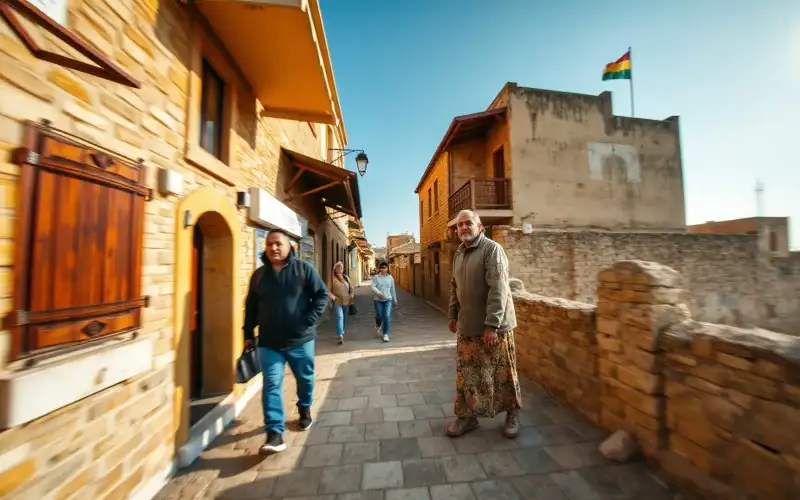
I watched a couple in their sixties abandon their visit to Salamis after fifteen minutes. The woman used a walker; the man, determined to help, couldn't navigate the uneven stone pathways and scattered rubble that archaeologists had left exposed. They turned back toward the entrance, visibly disappointed. That moment crystallised something I'd noticed across three months reporting on Famagusta in 2026: the city's extraordinary heritage is not equally accessible to all visitors, yet with careful planning and honest information, much more is possible than most guidebooks suggest.
Famagusta—and its archaeological neighbour Salamis—draw history enthusiasts from across Europe. Many are older travellers, slow explorers who've earned the time to linger. Some arrive with mobility challenges that aren't obvious from a distance: arthritis, recovering injuries, respiratory conditions, or simply the fatigue that comes with age and travel. The eastern coast of Cyprus has marketed itself as the alternative to crowded Paphos and Larnaca. But "alternative" shouldn't mean "inaccessible."
1. Salamis Archaeological Site: Realistic Access Assessment
Salamis lies 6 kilometres north of Famagusta town, a sprawling Greco-Roman city buried for centuries. The main entrance is well-signposted from the coast road. A 2026 renovation project added a new visitor centre with proper disabled parking spaces—three of them, marked clearly—and an accessible toilet. This is genuine progress.
The entrance fee is €9 for adults. The site spans roughly 120 hectares. Here is the honest part: most of Salamis remains challenging for wheelchair users and those with significant mobility restrictions. The central pathway from the entrance is compacted earth and gravel, reasonably firm underfoot, and slopes gently. For perhaps the first 400 metres—enough to see the gymnasium, the theatre seating area, and parts of the Roman baths—a wheelchair user or someone with a walking frame can proceed independently.
Beyond that point, pathways diverge and deteriorate. Stones protrude. Drainage channels cut across routes. The necropolis to the east requires climbing over ancient rubble. The harbour areas involve steep descents. A visitor with moderate mobility challenges—someone using a cane, recovering from knee surgery, managing arthritis—can cover perhaps 60% of the accessible zones with rest stops. The site provides benches at irregular intervals, though not always in shaded areas.
Practical Routes at Salamis
The gymnasium and adjacent structures form a logical loop. Allow 45 minutes at a comfortable pace. The Roman theatre, perched on a gentle slope, can be approached from below; climbing the tiers themselves is not recommended for anyone with balance concerns. The Byzantine basilica and cathedral ruins lie on the eastern flank, reachable via a path that becomes rougher but remains mostly navigable for those with walking aids.
A staff member at the 2026 visitor centre—I spoke with him in March—confirmed that visitors with mobility concerns should allow 2–3 hours maximum and should not attempt the full circuit. He suggested renting a golf cart from a local operator (€35 for two hours, pre-booked through the site office). The cart cannot access all zones, but it covers the major structures and saves considerable energy. Bring water; there is a café near the entrance, but shade is sparse once you move deeper into the site.
2. Famagusta Walled City: Medieval Maze with Variable Access
The Walled City—Famagusta's medieval core, encircled by 16th-century Venetian fortifications—is a UNESCO tentative site and the emotional heart of the city. It is also a place of tight alleys, sudden steps, and uneven surfaces that predate modern accessibility standards by half a millennium.
The main gate, the Land Gate (Porta Terraferma), opens onto Lala Mustafa Street. This is the widest thoroughfare in the old town, relatively flat, and lined with cafés and shops. A visitor with a wheelchair or walker can move along this street without major difficulty. The street extends roughly 300 metres to the sea gate. Parking for disabled visitors exists near the Land Gate; the municipal authority added two spaces in 2025.
The Cathedral of Saint Nicholas—the city's most photographed monument, converted to a mosque in the 16th century—sits just inside the Land Gate. Its interior is accessible via a single step; the doorway is wide enough for a standard wheelchair. The floor is stone, uneven in places but navigable. No interior ramps exist, so viewing is limited to the ground level, but the soaring Gothic vault and the sense of space are still powerful from below.
Secondary Streets and Accessibility Challenges
Beyond Lala Mustafa Street, the Walled City becomes increasingly difficult. Narrow alleys—some barely 1.5 metres wide—branch off at angles. Steps are frequent. Drainage channels, small enough to be invisible until you're upon them, create trip hazards. The Venetian Palace (Palazzo del Provveditore), one of the few surviving civic structures, requires climbing a flight of stairs to enter.
The Lala Mustafa Pasha Mosque (the cathedral, now in religious use) can be visited, but the courtyard has uneven paving. The Sinan Pasha Mosque, deeper in the old town, is similarly challenging to reach. If you have mobility concerns, I recommend limiting exploration to Lala Mustafa Street itself and the immediate surroundings of the Cathedral. This alone offers 60–90 minutes of meaningful engagement without exhaustion.
A local guide, Mehmet, whom I hired for a March 2026 visit, suggested an alternative: walk the perimeter of the walls on the outer path. This route, largely flat and paved in parts, offers views of the fortifications and the sea without the interior maze. It takes about 90 minutes and is far more manageable for those with mobility restrictions.
3. Beach Access: The Accessible Coastal Option
Famagusta's beaches are less crowded than those in the south, a major draw for slower travellers. For visitors with mobility challenges, beach access varies significantly by location.
Varosha Beach (the main town beach) has a paved promenade and a dedicated disabled parking area with accessible toilet facilities. A ramp leads from the parking area to the beach level. Sun loungers are available for rent (€5 per day, 2026 prices), and staff can assist in positioning them. The beach itself is sandy, firm near the waterline, softer further back. A visitor in a wheelchair can be pushed to the water's edge. The promenade café has accessible seating. This is your best bet for a full beach day without logistical stress.
Glossa Beach, 3 kilometres south, is smaller and quieter. A gravel car park sits above the beach; the descent to sand involves a steep, unpaved path unsuitable for wheelchair users or those with balance concerns. However, the view from the car park is excellent, and it's a reasonable stop for a picnic and a rest.
Karpas Peninsula beaches (Agia Trias, Karpasia) offer dramatic isolation but minimal infrastructure. Access roads are rough; parking is informal; toilet facilities are absent or extremely basic. I would not recommend these for visitors with significant mobility restrictions unless accompanied by a support person and with advance local coordination.
4. Transport and Getting Around
Famagusta town itself is compact—roughly 1.5 kilometres across—but hilly in places. The main commercial street, Lala Mustafa, is walkable for those with moderate mobility. Taxis are readily available; a journey from the town centre to Salamis costs approximately €15–18 (2026 rates). Most taxis do not have wheelchair lifts, but drivers are usually willing to assist passengers in transferring, if you arrange this in advance.
The municipal bus service (Gazimagusa Belediye Otobüsü) runs local routes but buses are not equipped with wheelchair ramps or lowering mechanisms. Hiring a private car with a driver for a day (€80–120, arranged through your hotel) is the most practical option if you wish to visit multiple sites without the stress of navigation or driving on unfamiliar roads.
5. Accommodation and Services
Several hotels in Famagusta town centre claim accessibility. The Salamis Bay Conti Resort, just outside town, has accessible rooms with grab bars and level access; confirm these details when booking, as standards vary. The city's newer hotels (built or renovated post-2020) generally meet basic EU accessibility standards. Older properties, charming as they may be, often do not.
Pharmacies are numerous and well-stocked. The main hospital (Famagusta State Hospital) is 2 kilometres from the town centre. Medical tourism is not a focus here as it is in other parts of Cyprus, so do not expect specialized accessibility services. Bring any medications you require; availability of specific brands can be limited.
6. Seasonal Considerations and Crowd Management
Famagusta is far quieter than western Cyprus year-round. In summer (June–August), temperatures exceed 35°C; for visitors with mobility challenges, heat exacerbates fatigue. Spring (April–May) and autumn (September–October) are ideal. Winter is mild but occasional rain can make uneven surfaces slippery. March and April offer the best balance: warm enough for comfort, cool enough for activity, and minimal crowds.
Visit major sites early in the day. Salamis at 8:00 a.m. is nearly empty. The Walled City is quietest before 10:00 a.m. This timing also avoids midday heat and gives you the best light for photography and observation.
7. Practical Packing and Preparation
Bring a lightweight folding walking stick or cane, even if you don't always use one. Uneven surfaces are easier to navigate with a third point of contact. Wear supportive, broken-in shoes with good grip. A wide-brimmed hat and high-SPF sunscreen are essential; there is less shade in archaeological sites than you might expect. A small rucksack or crossbody bag keeps your hands free.
Carry a printed map of Famagusta town and the Salamis site. Mobile signal is reliable, but offline maps are useful if you venture into less-developed areas. Bring your own water bottle; refill at cafés or your hotel. A lightweight camp stool (€15–25) provides a rest option in places where benches are absent.
If you use a wheelchair, notify your accommodation and any tour operators in advance. Local attitudes toward disability are generally respectful, but infrastructure planning is not always intuitive. Advance notice allows time for staff to arrange assistance or suggest practical workarounds.
Bonus Tip: Hiring a Local Guide
A half-day guided tour (€60–90 for a small group, 2026 rates) with someone who knows the terrain can transform your experience. Guides can suggest routes tailored to your mobility level, explain the historical context in detail, and help you avoid dead ends or inaccessible areas. Several guides based in Famagusta offer this service; ask your hotel to arrange one. They often have vehicles and can drive you between sites, reducing walking distances significantly.
Conclusion: Famagusta Remains Worth the Effort
Famagusta is not a fully accessible destination in the way that modern purpose-built attractions are. The Walled City is medieval; Salamis is an archaeological site, not a museum. Neither has been retrofitted for universal access, nor should they be—their authenticity depends partly on their age and the texture of their stones.
What is possible, with honest planning and realistic expectations, is a rich and unhurried experience. You can walk Lala Mustafa Street and sit in the Cathedral's shadow. You can spend a morning at Salamis, see the gymnasium and the theatre, rest on a bench overlooking the coast, and leave satisfied. You can spend an afternoon on Varosha Beach without logistical stress. You can hire a driver and see the Karpas Peninsula from a car, stopping at viewpoints.
The key is knowing your own mobility honestly, choosing sites and routes that match your capacity, and building in rest time. Famagusta rewards patience. The crowds are elsewhere. The history is real. The sea is beautiful. For a visitor with mobility challenges who takes the time to plan, the eastern coast of Cyprus offers something increasingly rare: a place where you can slow down, breathe, and let the past speak without being rushed.

Comments (4 comments)